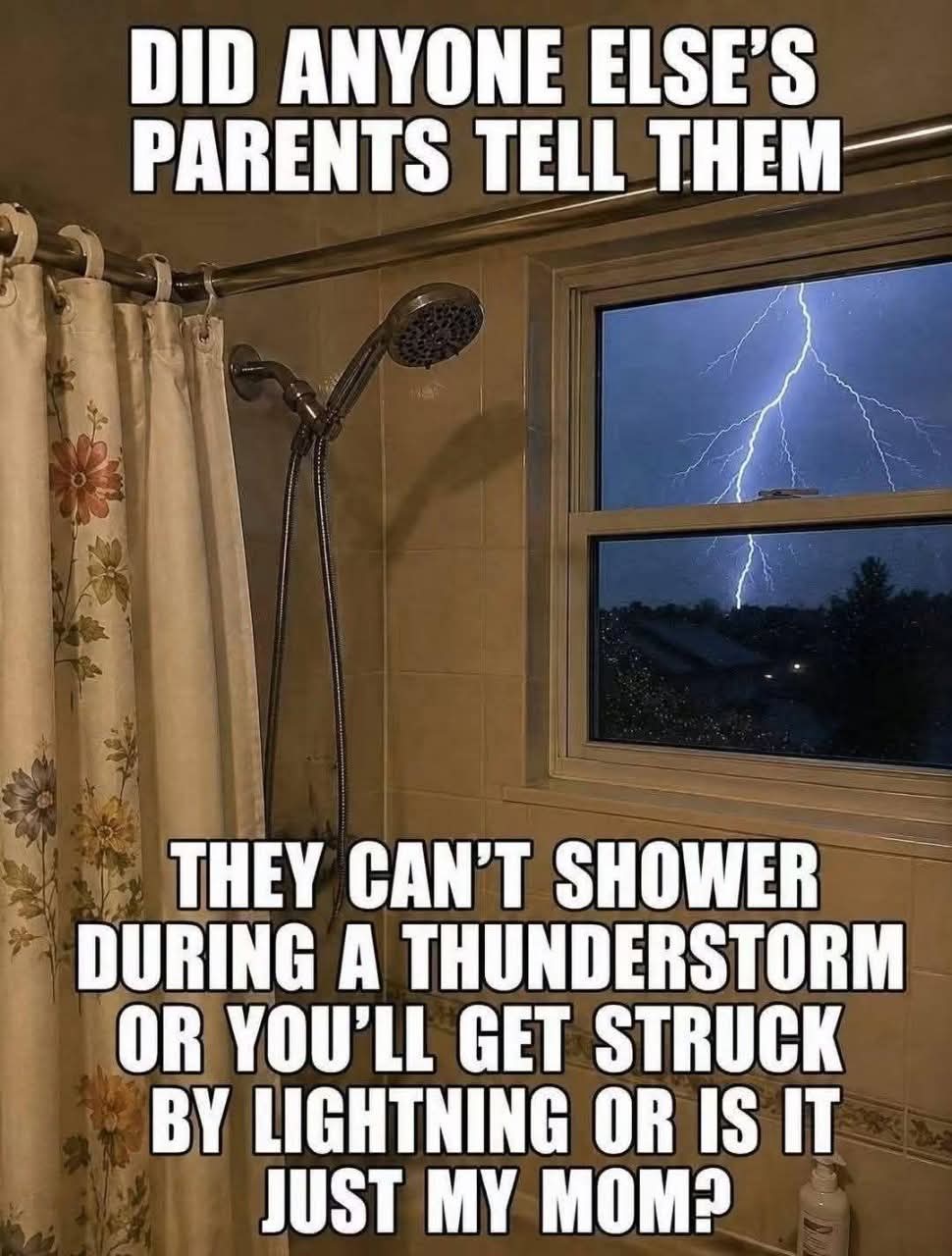
What About Taking a Bath?
A bath has the same basic concern.
You’re in direct contact with water while also potentially touching metal plumbing fixtures.
During a thunderstorm, it’s better to avoid both showers and baths until the storm has ended.
The same advice applies to activities such as washing your hands at a sink or doing dishes.
🏠 Does Being Inside Make You Completely Safe?
Being indoors during a thunderstorm is significantly safer than being outside, but indoors doesn’t mean completely protected from lightning.
Lightning can enter a building through several pathways, including electrical wiring, plumbing, telephone systems, and direct strikes to the structure.
That’s why basic thunderstorm safety advice includes staying away from plumbing, electrical equipment, windows, doors, and porches while lightning is occurring.
You don’t need to panic, though.
Your home is generally a much safer place during a storm than an open outdoor area. The goal is simply to avoid unnecessary contact with potential conductive pathways.
📱 What About Electronics?
Thunderstorms can also cause power surges that damage electronic equipment.
It’s best to avoid using electrical appliances connected to outlets during a severe thunderstorm when possible.
You should also avoid using corded phones during lightning storms.
Using a mobile phone that isn’t connected to a charger is generally not the same concern because it isn’t physically connected to your home’s electrical system.
🌩️ How Long Should You Wait?
A common safety rule is to wait at least 30 minutes after the last thunder is heard before resuming activities that put you in contact with plumbing or returning to outdoor activities.
Why 30 minutes?
Lightning can occur before or after the heaviest rain, and a storm may remain electrically active even when it appears to be moving away.
Waiting gives the storm enough time to move farther away and reduces the risk of being caught by a late strike.
👨👩👧 Why Did Parents Emphasize This So Much?
For many parents, the rule was simply easier to remember:
“Thunderstorm = no shower.”
They may not have known all the details about electrical currents and plumbing, but the advice itself was based on a legitimate safety concern.
Like many childhood rules, it probably sounded overly cautious at the time.
But when you learn that lightning can potentially travel through plumbing, suddenly your parents’ warnings make a little more sense.
⚠️ The Risk Is Small—but Avoidable
It’s important not to exaggerate the danger.
A person isn’t likely to be struck by lightning simply because they happen to be showering during every thunderstorm.
However, lightning-related injuries can be severe, and there’s no real benefit to taking the risk.
A shower can wait.
So if you hear thunder while you’re getting ready to jump into the shower, the safest choice is to postpone it until the storm has passed.
❤️ The Bottom Line
So yes—your parents weren’t completely making that rule up.
During a thunderstorm, lightning can potentially travel through a building’s plumbing or electrical systems. Because showers and baths put you in direct contact with water and plumbing fixtures, avoiding them during an active thunderstorm is a sensible precaution.
The next time thunder starts rumbling and someone says, “Don’t take a shower!”, you can tell them there’s actually a scientific reason behind the old family rule.
Stay indoors, stay away from plumbing and electrical equipment, and wait until the storm has safely passed. ⛈️🚿
