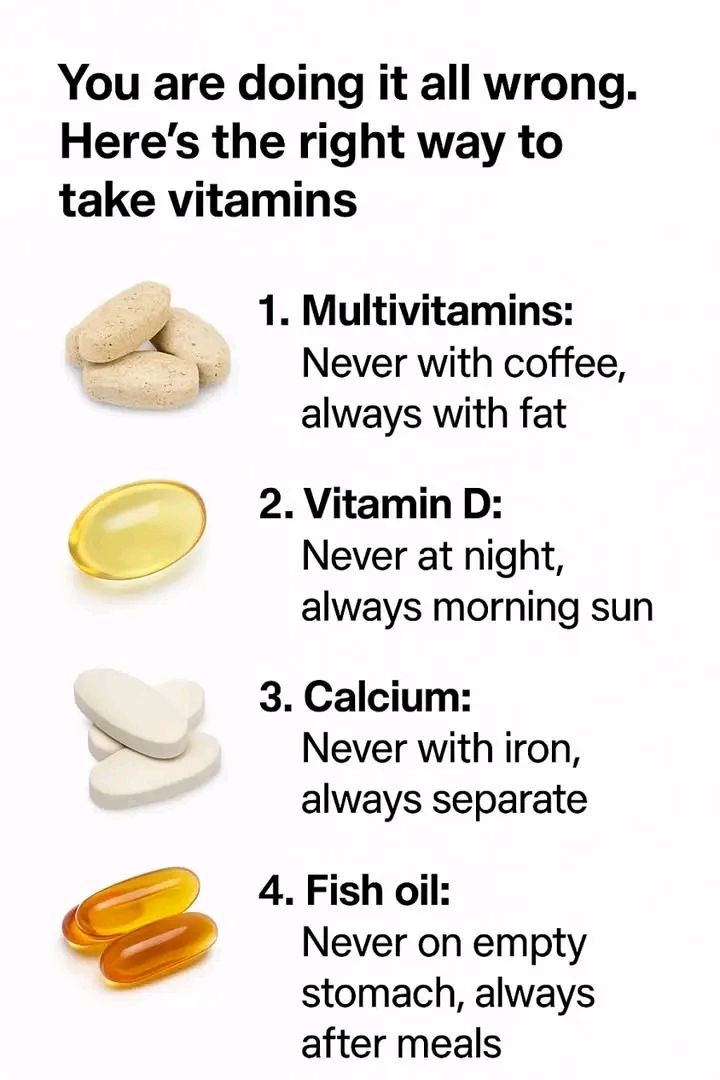
4. Calcium and Iron: Why Separation MattersCalcium and iron are two minerals that compete for absorption in the body. Taking them together can reduce the absorption of both. To maximize their benefits, it’s recommended to take calcium supplements at a different time of day than iron. For instance, if you take iron in the morning, reserve calcium for the evening. This separation allows each mineral to be absorbed more efficiently, supporting bone and blood health.
5. Fish Oil: The Benefits of Taking It After MealsFish oil supplements, rich in omega-3 fatty acids, are best taken with meals to improve absorption and minimize the risk of gastrointestinal discomfort. Consuming fish oil with a meal that contains healthy fats can enhance the bioavailability of omega-3s, supporting heart health and reducing inflammation. Research indicates that taking fish oil after a meal can also help mitigate the fishy aftertaste often associated with these supplements.
6. Understanding Water-Soluble vs. Fat-Soluble VitaminsVitamins are categorized into water-soluble and fat-soluble types, and understanding this distinction is key to proper intake. Water-soluble vitamins, like B-complex and C, dissolve in water and should be taken with water-based foods or on an empty stomach for optimal absorption. In contrast, fat-soluble vitamins (A, D, E, and K) dissolve in fat and should be taken with meals that include dietary fats to enhance absorption and prevent deficiencies.
