🥣 ?
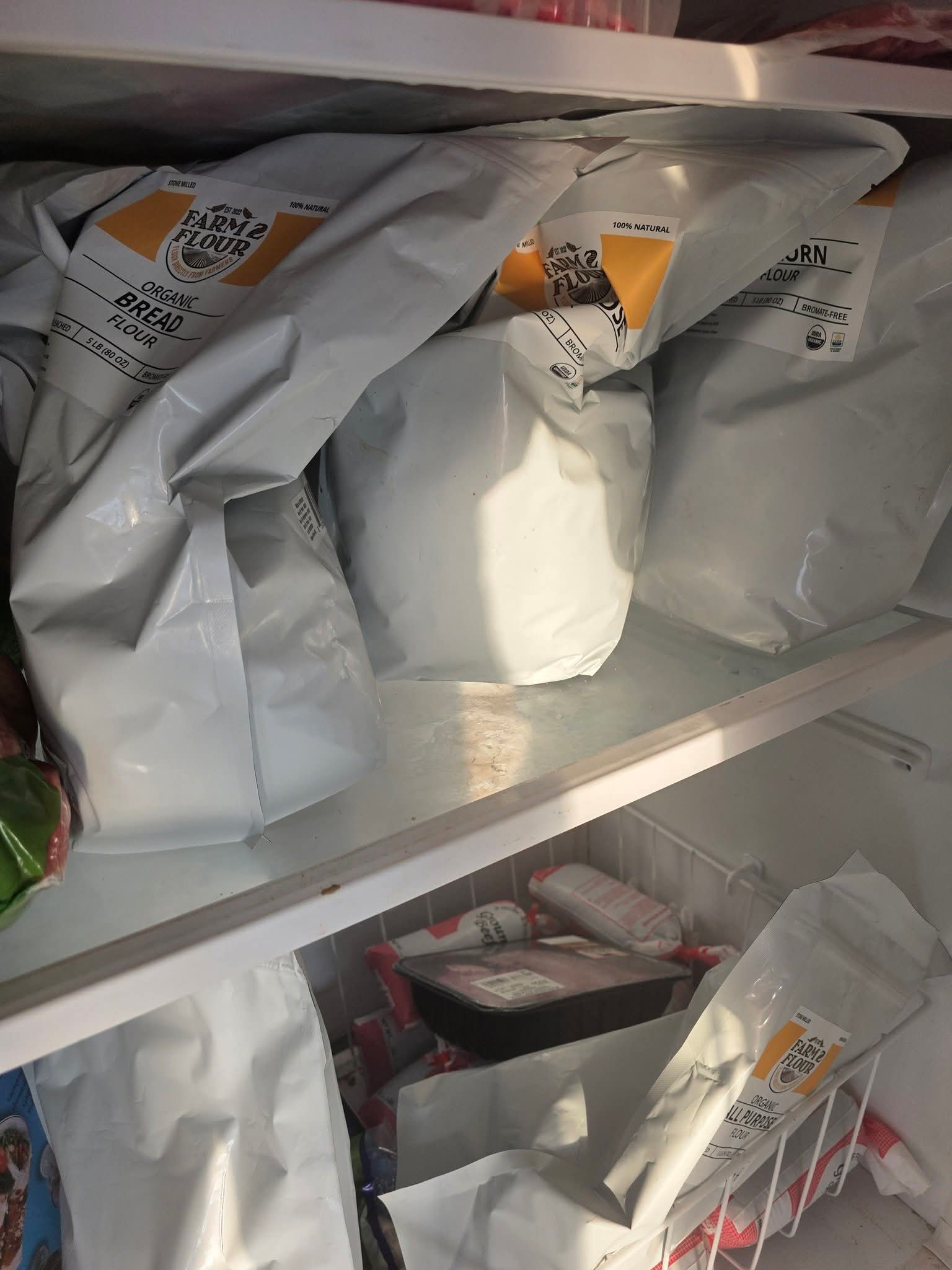
If you bought a large amount of fresh flour six months ago and put it straight into the freezer to protect it from pantry pests, you may be wondering:
“Is my flour still okay? Will it be full of moisture or clumps when I take it out?”
The good news is that properly stored flour can stay in excellent condition in the freezer for a long time. In fact, freezing is one of the most useful ways to protect flour from pantry pests and extend its storage life.
Here’s what you need to know before taking that flour back out.
🌾 Why Do People Freeze Flour?
Flour can occasionally contain tiny insect eggs or become exposed to pantry pests such as flour beetles or Indianmeal moths during storage.
You may never see the eggs because they’re extremely small.
Freezing flour is commonly used as a precaution because sufficiently cold temperatures can kill insects and their eggs.
But freezing isn’t a guarantee against future infestation. Once flour is removed from the freezer, it still needs to be stored properly.
❄️ Is Flour Still Good After 6 Months in the Freezer?
Generally, yes—if it was properly packaged and remained continuously frozen.
Six months in the freezer is not, by itself, a reason to throw flour away.
The biggest concerns are actually:
- Moisture getting into the flour
- Freezer odors being absorbed
- The flour becoming rancid, particularly whole-grain flour
- The packaging allowing air or moisture inside
If the flour was tightly sealed in moisture-resistant packaging, it may come out looking and smelling just as good as when you froze it.
💧 Will There Be Moisture?
This is probably the biggest concern.
Freezing itself doesn’t automatically make flour wet.
The problem occurs when cold flour is exposed to warm, humid air.
Imagine taking a cold container of flour out of the freezer and immediately opening it in a warm kitchen.
Water vapor from the air can condense on the cold flour or inside the container.
That’s where moisture can become a problem.
The solution?
Let the flour warm up while it is still sealed.
Take the flour out of the freezer and leave it unopened until it reaches room temperature.
This helps prevent warm, humid air from getting inside while the flour is still cold.
🥣 What About Clumps?
You may notice some small clumps after freezing.
That’s not necessarily a problem.
Flour can develop clumps from:
- Moisture
- Pressure inside the bag
- Settling during storage
- Temperature changes
Small, dry clumps can usually be broken apart by simply stirring or sifting the flour.
However, large, damp, sticky, or unusual clumps deserve closer inspection.
If the flour feels wet, has visible moisture, or shows signs of mold, it’s safest to discard it.
👃 Give It the Smell Test
Before using your flour, open the container and smell it.
Fresh flour should have a mild, pleasant grain-like smell.
If you notice:
- A musty smell
- Sour or fermented odor
- Strong chemical smell
- Paint-like or oily smell
- Any other unpleasant odor
don’t use it.
Whole-grain flours are particularly prone to developing rancid flavors because they contain more natural oils.
👀 Look for Signs of Pantry Pests
After six months in the freezer, inspect the flour before putting it back into your pantry.
Look for:
- Live insects
- Webbing
- Larvae
- Unusual specks
- Holes in the packaging
- Strange odors
Remember that finding insects in flour doesn’t necessarily mean the freezer caused the problem. Flour can become infested before purchase or after being brought home.
🌾 White Flour vs. Whole-Wheat Flour
Not all flour has the same storage life.
All-Purpose and White Flour
Refined flour generally stores longer because much of the germ and bran has been removed.
If kept properly sealed and frozen, six months is usually not a concern.
Whole-Wheat Flour
Whole-wheat flour contains more natural oils because the bran and germ remain.
Those oils can eventually become rancid.
That’s why freezing is especially useful for whole-wheat flour and other whole-grain flours.
🧊 How to Remove Flour From the Freezer
Here’s the easiest approach:
Step 1: Keep It Sealed
Don’t open the bag immediately after removing it from the freezer.
Step 2: Let It Reach Room Temperature
Allow the sealed flour to warm naturally.
Step 3: Check the Packaging
Look for tears, leaks, frost, or signs that moisture entered the container.
Step 4: Open and Inspect
Check the color, texture, and smell.
Step 5: Break Up Any Dry Clumps
Sift the flour if necessary.
Step 6: Store It Properly
If you’re not going to use it quickly, transfer it to a clean, airtight, moisture-resistant container.
🐛 What About Those “Little Worm Things”?
If you found tiny worms or larvae in flour, they may have been pantry-pest larvae, such as Indianmeal moth larvae, or another stored-food insect.
The important thing is to inspect other dry foods nearby, too.
Check things such as:
- Rice
- Pasta
- Cereal
- Oats
- Baking mixes
- Nuts
- Seeds
- Pet food
- Other grains and flours
Pantry pests can spread from one package to another.
🧹 Clean the Pantry Before Putting the Flour Back
If your flour was frozen because you suspected pantry pests, take the opportunity to clean the storage area.
Remove old packages and inspect them carefully.
Vacuum cracks, corners, shelf edges, and other areas where crumbs or spilled flour may have accumulated.
Then wipe the shelves clean and make sure everything is completely dry before returning your food.
⚠️ When Should You Throw the Flour Away?
Don’t try to rescue flour if you find:
❌ Mold
❌ Wet or damp patches
❌ A strong rancid or unpleasant smell
❌ Significant insect infestation
❌ Webbing or larvae
❌ Evidence of contamination
❌ Packaging that allowed moisture or pests inside
When in doubt, throwing away a questionable bag of flour is better than risking an unpleasant baking experience.
🥖 Can You Bake With Flour After Freezing?
Absolutely.
Once the flour has completely thawed and you’ve checked that it looks, smells, and feels normal, it can generally be used just like flour that was stored at room temperature.
If you’re making bread, cakes, cookies, pancakes, or other baked goods, you shouldn’t notice a difference simply because the flour spent six months frozen.
🌾 The Best Way to Store Flour From Now On
If you’re buying flour in bulk, consider dividing it into smaller portions.
Use airtight, moisture-resistant containers or freezer bags designed for food storage.
This gives you several advantages:
- Less exposure to air
- Less exposure to moisture
- Better protection against pantry pests
- Easier organization
- You only thaw what you need
For long-term storage, keeping flour frozen can be a very practical option.
🥣 So… Should You Take That Flour Out?
If it has remained properly frozen for six months and the packaging stayed dry and intact, there’s generally no reason to discard it simply because it has been frozen that long.
The key is what happens when you take it out.
Keep it sealed → let it come to room temperature → inspect it → smell it → check for moisture or pests → then use it if everything looks normal.
And if you see a few dry clumps, don’t panic. A quick sift can usually take care of those.
🌾 What Would You Do?
If you opened your freezer and discovered a six-month-old bag of flour, would you:
A. Take it out and use it 🥖
B. Inspect it first, then decide 👀
C. Keep it frozen longer ❄️
D. Throw it away just to be safe 🗑️
Tell us what you’d do—and share this with someone who buys flour in bulk! 🥣🌾
