Here’s a polished, website-ready article.
🌿 🌸
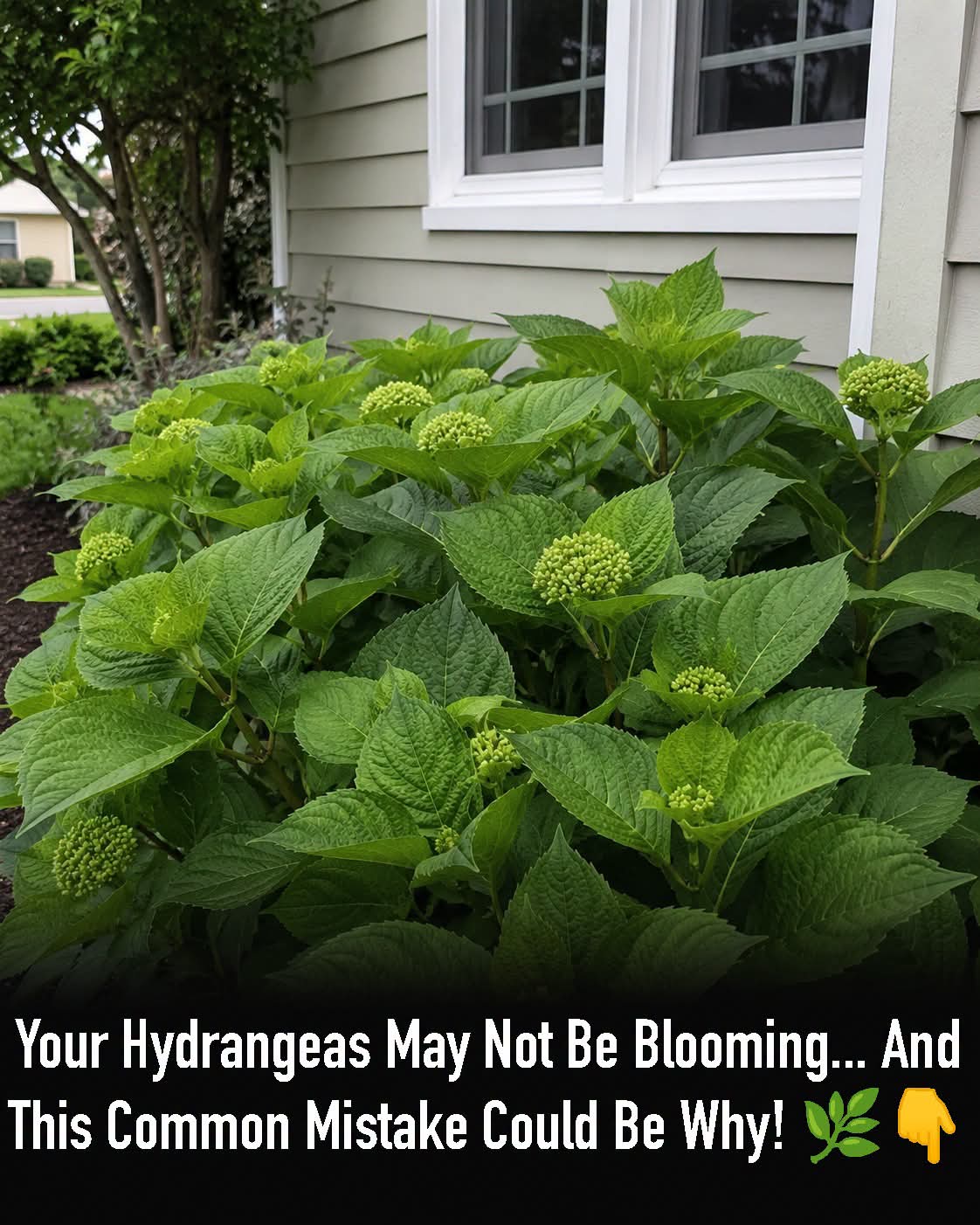
Few garden plants are as breathtaking as hydrangeas. Their large, colorful blooms can brighten any landscape with shades of blue, pink, purple, or white. But if your hydrangea is producing plenty of leaves and healthy stems without a single flower, you’re probably wondering what went wrong.
The good news is that a lack of blooms is often caused by one or two common gardening mistakes—and once you identify the problem, your hydrangea may reward you with beautiful flowers next season.
Here’s what every gardener should know.
✂️ The Biggest Mistake: Pruning at the Wrong Time
One of the most common reasons hydrangeas fail to bloom is incorrect pruning.
Many popular hydrangea varieties, including bigleaf (Hydrangea macrophylla) and oakleaf hydrangeas, produce flower buds on old wood, meaning the buds form during the previous growing season.
If you prune these shrubs in late fall, winter, or early spring, you may accidentally remove the flower buds before they have a chance to bloom.
What to Do Instead
- Learn which type of hydrangea you have.
- Only prune old-wood bloomers immediately after they finish flowering.
- Remove only dead, damaged, or diseased branches when necessary.
Some newer reblooming varieties bloom on both old and new wood, making them more forgiving if pruning mistakes occur.
☀️ Too Much or Too Little Sun
Hydrangeas need the right amount of sunlight.
Most varieties perform best with:
- Morning sun
- Afternoon shade
- Around 4–6 hours of sunlight daily
Too much intense afternoon sun can stress the plant, while too much shade may reduce flowering.
🌱 Too Much Nitrogen
If your hydrangea has lush, green leaves but no flowers, excess nitrogen may be the culprit.
Nitrogen encourages leafy growth, while phosphorus supports flower production.
Choose the Right Fertilizer
Look for a balanced fertilizer or one formulated for flowering shrubs.
Avoid over-fertilizing, especially with lawn fertilizers, which are often high in nitrogen.
❄️ Winter Damage
Late spring frosts or harsh winter temperatures can damage flower buds before they open.
This is especially common in colder climates where flower buds are exposed during unpredictable weather.
Adding mulch around the base of the plant and protecting shrubs during unexpected cold snaps may help reduce winter damage.
💧 Watering Matters
Hydrangeas enjoy consistently moist soil, especially during hot weather.
Signs they need more water include:
- Wilting leaves
- Dry soil
- Reduced flowering
Water deeply rather than lightly sprinkling the surface.
Applying mulch helps retain moisture and keeps roots cooler during summer.
🌿 The Plant May Still Be Young
Newly planted hydrangeas often spend their first year or two developing a strong root system before producing abundant blooms.
Patience is sometimes all that’s needed.
🪴 Poor Soil Conditions
Healthy soil supports healthy flowers.
Hydrangeas prefer:
- Well-drained soil
- Plenty of organic matter
- Consistent moisture
Adding compost each year can improve soil quality and encourage stronger growth.
🌸 Don’t Forget the Variety
Not all hydrangeas bloom at the same time or under the same conditions.
Common types include:
- Bigleaf Hydrangeas – Bloom on old wood (most traditional mophead and lacecap varieties).
- Panicle Hydrangeas – Bloom on new wood and are generally easier to prune.
- Smooth Hydrangeas – Also bloom on new wood.
- Oakleaf Hydrangeas – Bloom on old wood and produce distinctive cone-shaped flowers.
- Mountain Hydrangeas – Similar to bigleaf types and often bloom on old wood.
Knowing which variety you have makes caring for it much easier.
🌺 Tips for More Beautiful Blooms
- Identify your hydrangea variety before pruning.
- Water deeply during dry periods.
- Apply mulch to conserve moisture.
- Feed with a fertilizer appropriate for flowering shrubs.
- Remove only dead or damaged branches when necessary.
- Give the plant enough sunlight without exposing it to harsh afternoon heat.
The Bottom Line
If your hydrangea isn’t blooming, don’t give up. The problem is often something simple, such as pruning at the wrong time, too much nitrogen, insufficient sunlight, or weather damage to flower buds. With the right care and a little patience, your shrub can return to producing the spectacular blooms it’s known for.
Healthy hydrangeas reward gardeners with months of color, making them one of the most beloved flowering shrubs in the landscape.
🌸🌿 Have your hydrangeas bloomed this year? Share your gardening tips, photos, and favorite hydrangea varieties in the comments!
