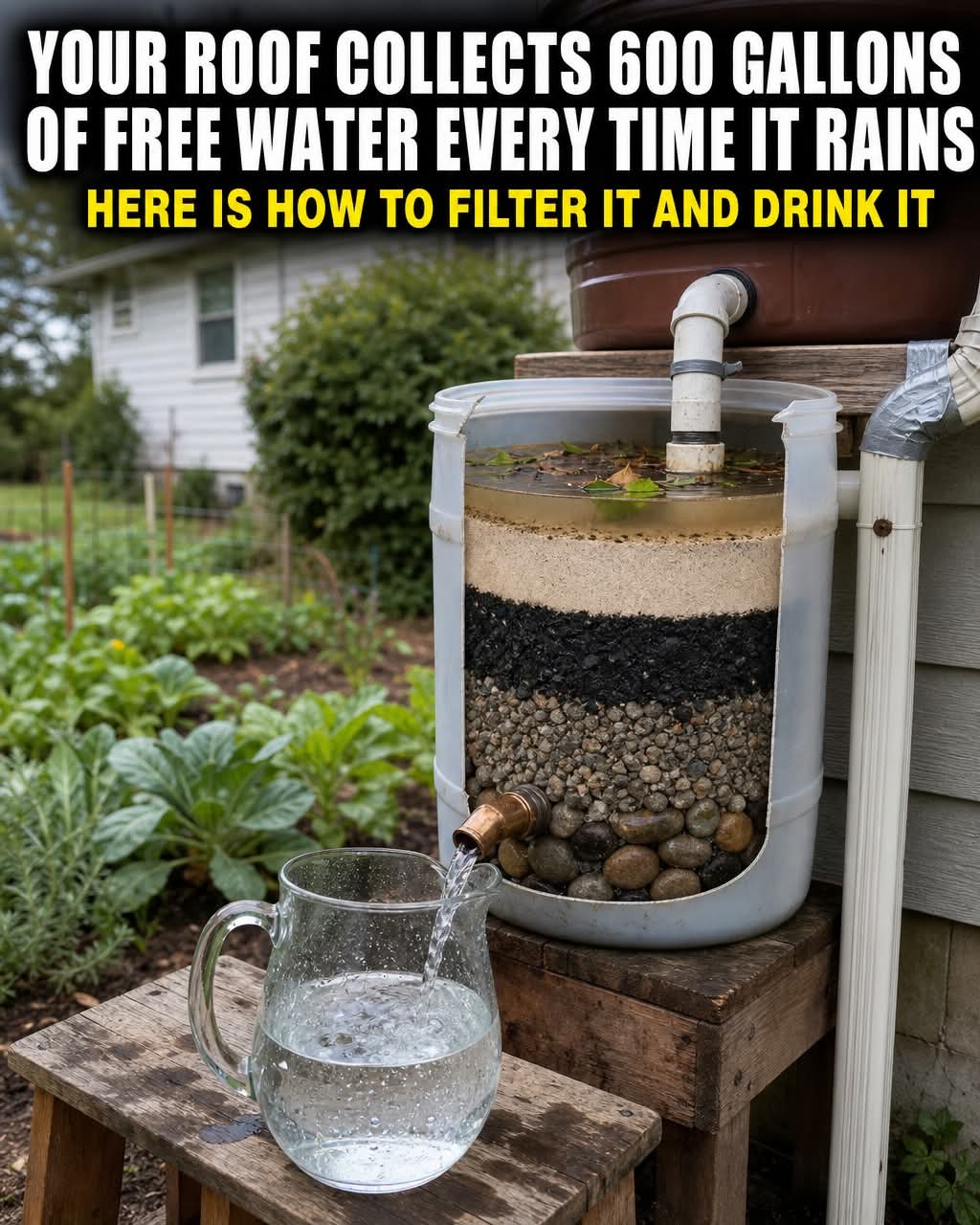
💧 Your Roof Collects Hundreds of Gallons of Free Water Every Time It Rains: Here’s How to Filter It
Every time it rains, a surprising amount of water lands on your roof.
In fact, a modest rainfall on an average-sized roof can produce hundreds of gallons of water that would otherwise flow into gutters, storm drains, or simply disappear into the ground.
For gardeners, homesteaders, and anyone interested in sustainability, rainwater harvesting can be a valuable way to collect water for outdoor use. However, before using collected rainwater, it’s important to understand how filtration works and what level of treatment may be needed depending on how the water will be used.
🌧️ How Much Water Can a Roof Collect?
The amount depends on:
- Roof size
- Rainfall amount
- Collection efficiency
Even a small rainstorm can generate a surprisingly large volume of water from a residential roof.
That’s why rainwater harvesting systems have become increasingly popular around the world.
🏠 Why Rainwater Needs Filtering
Although rain starts out relatively clean in the atmosphere, it can pick up contaminants as it falls and flows across your roof.
Collected rainwater may contain:
🍂 Leaves
🌿 Plant debris
🐦 Bird droppings
🌫️ Dust and dirt
🐜 Insects
Roofing material particles
Because of this, filtration is an important part of any rainwater collection system.
🪣 Step 1: Install Gutters and Downspouts
The first step is directing water from the roof into a collection system.
Well-maintained gutters help:
- Capture rainwater efficiently
- Reduce debris entering the system
- Direct water toward storage containers
Cleaning gutters regularly improves water quality and system performance.
🍃 Step 2: Use a Leaf Screen
A leaf screen is one of the simplest filtration methods.
Installed near gutters or collection points, it helps block:
- Leaves
- Twigs
- Large debris
This first line of defense prevents many contaminants from entering storage tanks.
🚿 Step 3: Add a First-Flush Diverter
One of the most effective upgrades for rainwater systems is a first-flush diverter.
The first water flowing off the roof often contains the highest concentration of dirt and debris.
A first-flush system diverts this initial runoff away from the storage tank.
This helps improve the quality of the water that enters the collection system.
🛢️ Step 4: Store Water Properly
Rainwater is commonly stored in:
- Rain barrels
- Cisterns
- Storage tanks
Containers should ideally:
✅ Be covered
✅ Block sunlight
✅ Prevent insect entry
✅ Be cleaned periodically
Proper storage helps reduce algae growth and contamination.
🔬 Step 5: Fine Filtration
For uses requiring cleaner water, additional filtration may be necessary.
Common filtration options include:
Sediment Filters
These remove:
- Fine dirt
- Sand
- Small particles
Carbon Filters
These can help reduce:
- Certain odors
- Some organic compounds
Specialized Water Treatment Systems
More advanced systems may include multiple filtration stages depending on the intended use.
🌱 Great Uses for Filtered Rainwater
Many people collect rainwater for:
🌻 Watering gardens
🌳 Irrigating trees
🌿 Outdoor landscaping
🧹 Washing outdoor surfaces
🚗 Cleaning vehicles
These uses can help conserve treated municipal water.
⚠️ Important Safety Considerations
The level of filtration needed depends on how the water will be used.
Water intended for drinking, cooking, or other household uses may require treatment, testing, and additional purification beyond basic filtration.
Requirements vary by location and situation.
Before using harvested rainwater for any potable purpose, consult local regulations and water-quality experts.
🌍 Benefits of Rainwater Harvesting
Collecting rainwater offers several advantages:
💧 Conserves water
🌱 Supports gardens during dry periods
💰 May reduce water costs
🌎 Reduces stormwater runoff
🏡 Encourages self-sufficiency
Even a simple rain barrel can make a noticeable difference.
🔧 Simple Rainwater Filtration Setup
A basic system might include:
- Clean roof surface
- Gutters and downspouts
- Leaf screen
- First-flush diverter
- Covered storage barrel
- Sediment filter for selected uses
This setup can significantly improve the quality of collected rainwater.
The Bottom Line
Every rainfall represents an opportunity to capture a valuable natural resource.
By combining proper collection methods with effective filtration, homeowners can make better use of the water that lands on their roofs.
Whether you’re watering a vegetable garden, maintaining landscaping, or simply exploring sustainable living, a well-designed rainwater harvesting system can help you make the most of every storm.
💧🌧️ Do you collect rainwater at home, or have you ever considered setting up a rain barrel system?
