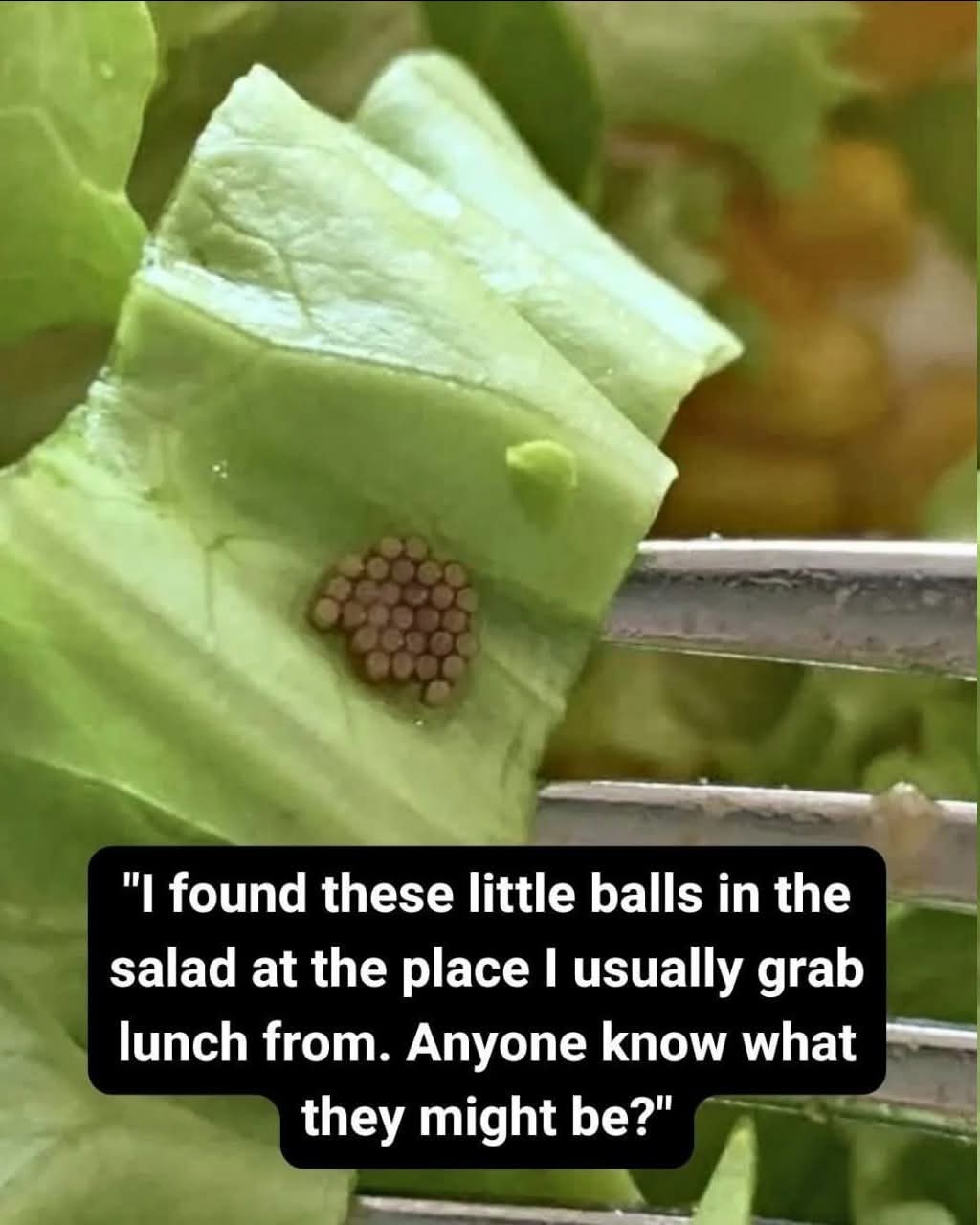
It started like any ordinary lunch break — quick, distracted, and unremarkable. A salad bowl, a handful of greens, and what looked like a simple sprinkle of quinoa added for texture and health. Nothing unusual. Nothing worth a second thought.
Until a closer look changed everything.
What appeared at first to be tiny grains of quinoa turned out to be something else entirely. Uniform in shape, tightly clustered together, and attached to the surface of a lettuce leaf, the “grains” were not food at all. The realization was immediate and unsettling. The salad was no longer something she felt comfortable finishing.
This type of discovery can feel shocking, even alarming. But food safety experts explain that situations like this, while unpleasant, are not as rare as most people assume. They highlight an important reality about fresh produce: even foods that look clean, packaged, and ready-to-eat can still carry natural biological elements from the environment in which they were grown.
Why Misidentifications Like This Happen
At first glance, it is easy to understand the confusion. Many natural objects share similar shapes, colors, and textures. Small insect eggs, plant seeds, and food grains can sometimes look nearly identical to the untrained eye.
Leafy vegetables in particular create ideal conditions for this kind of confusion. Their uneven surfaces, folds, and natural moisture make them a place where small organic materials can go unnoticed during harvesting and packaging.
In agricultural environments, crops are exposed to open fields, insects, and natural wildlife. Even in commercial farming systems with strict safety standards, it is not always possible to eliminate every trace of environmental contact. Washing and inspection reduce these risks significantly, but they cannot guarantee absolute perfection.
This is why occasional discoveries of foreign natural matter — while rare — still occur in fresh produce.
Are These Situations Dangerous?
One of the first concerns people have in situations like this is health risk. Understandably, the idea of consuming something unexpected can be distressing.
In most cases, accidental ingestion of insect eggs or similar natural materials is not considered medically dangerous for healthy individuals. The human digestive system is designed to handle a wide range of organic matter. Stomach acid and enzymes typically neutralize or break down materials that are not part of a normal diet.
However, the primary concern is not necessarily toxicity — it is hygiene and food handling standards.
Food safety professionals emphasize that the presence of foreign biological material usually indicates a gap in cleaning, inspection, or preparation practices somewhere along the supply chain. While not always harmful, it is still a signal that quality control procedures should be reviewed.
For individuals with allergies, weakened immune systems, or specific dietary sensitivities, caution is always recommended. In such cases, stopping consumption immediately is the safest approach.
What To Do If It Happens in a Restaurant
see continuation on next page
