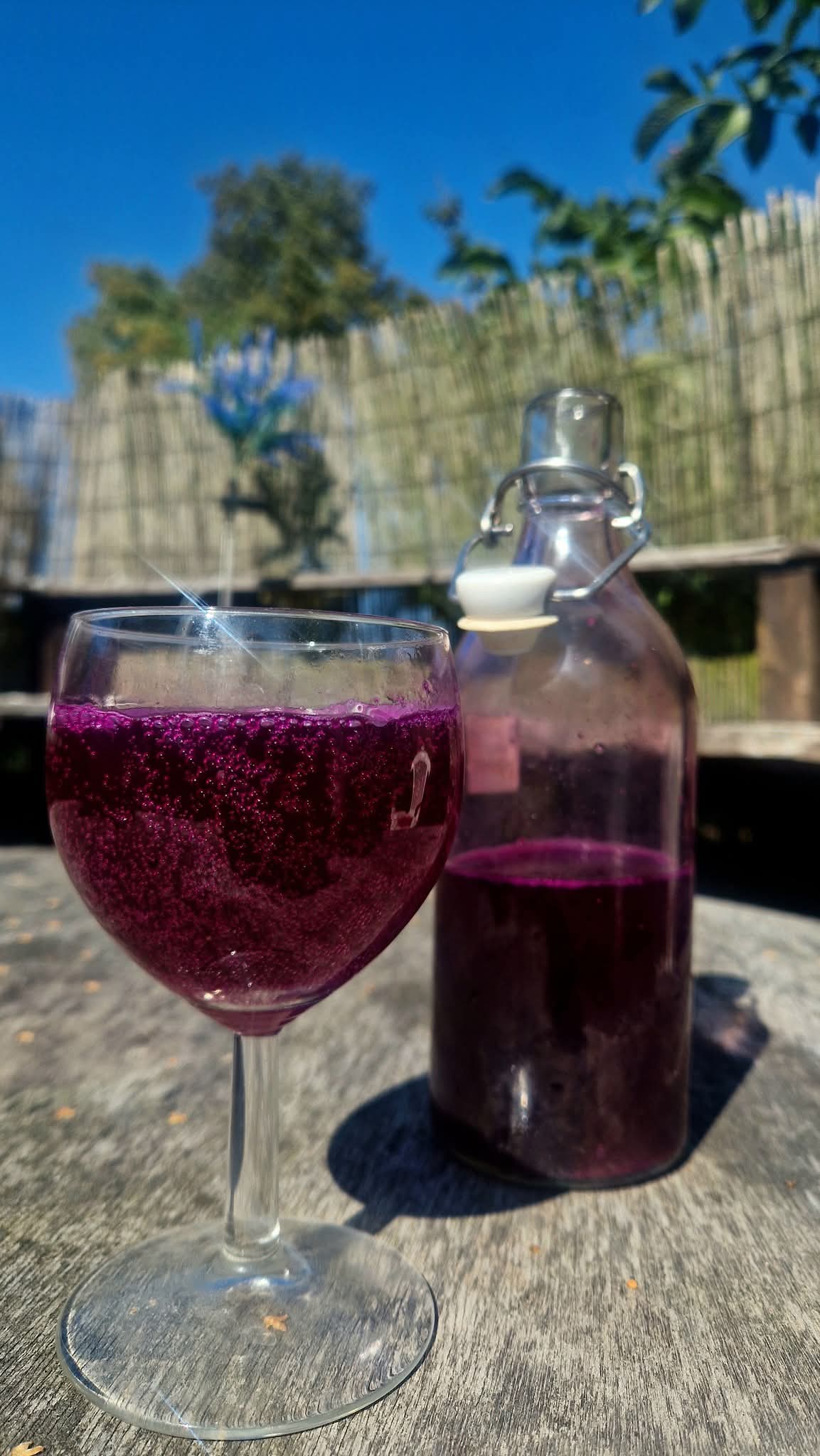
❤️ Beet Kvass With Honey for Natural Fizz
Beet kvass is a beautiful ruby-red fermented drink made with beets, water, and salt. It has a pleasantly earthy, tangy flavor, and with a little honey added during bottling, you can encourage a natural second fermentation that creates gentle carbonation.
The result is a sparkling, slightly sweet, pleasantly tart drink that’s especially beautiful served cold over ice.
Important: Adding honey at bottling gives the remaining microorganisms a new source of sugar, which can create carbon dioxide. That also means pressure can build quickly. Use only bottles designed for carbonated beverages, leave headspace, refrigerate once adequately carbonated, and don’t use ordinary glass jars or bottles that aren’t pressure-rated.
🥤 Beet Kvass Recipe
Ingredients
For the First Fermentation
- 2–3 medium fresh beets
- 4 cups non-chlorinated water
- 1½ tablespoons non-iodized salt, approximately 27 g
- 2 cloves garlic, optional
- 1 small piece fresh ginger, optional
- 1 teaspoon caraway seeds, optional
For Bottling
- 1–2 teaspoons raw or regular honey per 16-ounce (475 ml) bottle
- Fermented beet kvass, strained
- Optional: a small squeeze of lemon juice
Equipment
- 1-quart (1-liter) fermentation jar
- Fermentation weight, if available
- Clean cloth or fermentation lid
- Fine-mesh strainer
- Pressure-rated bottles suitable for carbonation
- Funnel
- Refrigerator
🥣 Step 1: Prepare the Beets
Wash the beets thoroughly.
Trim away the tops and roots and peel them if desired. Cut the beets into roughly ½-inch cubes.
There’s no need to make the pieces perfectly uniform.
Place the beet cubes into your clean fermentation jar.
If you’re using garlic, ginger, or caraway, add them now.
🧂 Step 2: Make the Salt Brine
Dissolve approximately 27 grams of non-iodized salt in 4 cups (946 ml) of water.
A kitchen scale is the most reliable way to measure salt for fermentation because different types of salt have different volumes by weight.
Pour the brine over the beets.
The vegetables should remain completely submerged.
If necessary, use a fermentation weight to keep the beet pieces underneath the liquid.
Why the salt?
Salt helps create an environment favorable to lactic-acid fermentation while discouraging many unwanted microorganisms.
🫙 Step 3: Begin Fermentation
Cover the jar with a fermentation lid or another appropriate setup that allows fermentation gases to escape.
Keep the jar at room temperature, away from direct sunlight.
The fermentation time can vary with temperature and your preferred flavor, but about 3–5 days is a reasonable starting point.
You may notice:
- Small bubbles
- A pleasant sour aroma
- A slightly tangy taste
- The liquid becoming increasingly vibrant red
Taste a little each day once fermentation is underway.
When the kvass has developed a pleasantly sour flavor that you enjoy, it’s ready for the next step.
🧊 Step 4: Strain the Kvass
Pour the fermented liquid through a clean fine-mesh strainer.
Remove the beet pieces and other solids.
The finished liquid should be a gorgeous deep ruby color.
At this point, you have beet kvass.
But we’re going one step further.
We’re going to add a little honey during bottling to encourage natural carbonation.
🍯 Step 5: Add Honey for Carbonation
Pour the strained kvass into a clean measuring jug.
For carbonation, add approximately:
1–2 teaspoons honey per 16-ounce (475 ml) bottle.
Start toward the lower end if you’re new to bottle conditioning.
The honey provides fermentable sugar. Microorganisms remaining in the kvass can consume some of that sugar and produce carbon dioxide, creating the fizz.
Don’t add a large amount of honey thinking it will simply make the drink sweeter.
More honey can mean more fermentation and more pressure.
🍾 Step 6: Bottle Carefully
Using a clean funnel, transfer the kvass into pressure-rated bottles specifically designed for carbonated beverages.
Leave the amount of headspace recommended by the bottle manufacturer.
Seal the bottles.
Don’t use ordinary decorative bottles, thin glass bottles, mason jars, or other containers that aren’t designed to withstand carbonation pressure.
⏰ Step 7: Let It Carbonate
Leave the sealed bottles at room temperature for a short period while carbonation develops.
The exact timing depends on the temperature, amount of honey, microbial activity, and bottle size, so don’t rely on a fixed number of hours as a guarantee.
Check the bottles regularly.
Once the kvass has reached the carbonation level you want, move the bottles to the refrigerator.
Cold temperatures slow fermentation considerably and help preserve the carbonation.
❄️ Step 8: Refrigerate Before Drinking
Chilling the bottles is important.
The colder liquid also holds carbon dioxide more effectively, so your kvass will generally pour more pleasantly once thoroughly chilled.
When opening a bottle for the first time, do so slowly and over a sink, especially if you’re unsure how much pressure has developed.
If it appears excessively pressurized, don’t shake it or point the opening toward anyone.
🍋 Optional Flavor Ideas
The earthy flavor of beet kvass pairs beautifully with other ingredients.
Try adding one of these during the initial fermentation:
Ginger Beet Kvass
Add several slices of fresh ginger.
The ginger gives the earthy beets a bright, spicy note.
Garlic Beet Kvass
Add one or two cloves of garlic for a more savory version.
Lemon-Ginger Beet Kvass
Add ginger during fermentation and a small amount of fresh lemon juice after straining and before bottling.
Beet & Caraway
A small amount of caraway gives the kvass a distinctive savory flavor.
❤️ What Does Beet Kvass Taste Like?
If you’ve never tried it, don’t expect it to taste like beet juice.
Traditional beet kvass is usually:
- Tangy
- Earthy
- Slightly salty
- Savory
- Lightly fermented
Adding honey during bottling can give it a gentle sweetness and a naturally fizzy finish.
The combination of earthy beet + tangy fermentation + a little honey + carbonation makes a surprisingly interesting drink.
🫙 What About the Fermented Beets?
Don’t automatically throw them away!
The fermented beet pieces can sometimes be incorporated into meals, provided they remain wholesome and have been handled and stored safely.
Try chopping them into:
- Salads
- Grain bowls
- Sandwiches
- Vegetable dishes
Or simply enjoy a small amount alongside a meal.
⚠️ Important Fermentation Safety
Because this recipe involves fermentation and sealed bottles, safety deserves special attention.
Use clean equipment
Wash jars, utensils, weights, and bottles thoroughly before beginning.
Keep the vegetables submerged
Vegetables exposed above the brine are more likely to develop mold or other undesirable growth.
Don’t use visibly spoiled fermentation
If you see fuzzy mold, unusual colors, or anything that looks genuinely rotten or contaminated, discard the batch rather than trying to save it.
Don’t over-sugar the bottles
Honey is being used here as a fermentation fuel, not simply as a sweetener.
Too much fermentable sugar can result in excessive carbonation and dangerous pressure.
Use proper bottles
This is perhaps the most important point.
Use bottles specifically manufactured for carbonated drinks.
Don’t improvise with ordinary glass containers.
Refrigerate when carbonated
Once you’ve reached the carbonation you want, move the bottles into the refrigerator to slow fermentation.
🍯 Why Add Honey at Bottling?
This is essentially a small second fermentation.
During the first fermentation, naturally occurring microorganisms consume some of the available carbohydrates and produce acids and other fermentation products.
After straining, adding a measured amount of honey gives those microorganisms another source of fermentable sugar.
Inside a sealed carbonation bottle, the carbon dioxide produced during this process becomes dissolved in the liquid.
That’s where the bubbles come from.
So the honey isn’t simply making the kvass taste sweeter.
It’s helping create the fizz.
🌿 A Beautiful Homemade Fermented Drink
There’s something special about making beet kvass at home.
You start with humble ingredients:
Beets.
Water.
Salt.
A little time.
Then fermentation transforms them into something completely different.
And with a carefully measured amount of honey during bottling, you can turn that tangy fermented drink into a naturally sparkling beverage.
Pour it into a glass over ice and look at that incredible ruby-red color.
It’s simple, old-fashioned, and beautiful.
❤️ Final Recipe at a Glance
First fermentation:
🥕 2–3 medium beets, cubed
💧 4 cups non-chlorinated water
🧂 About 27 g non-iodized salt
🌿 Optional garlic, ginger, or caraway
Ferment submerged for approximately 3–5 days, tasting until pleasantly tangy.
Then:
- Strain the kvass.
- Add 1–2 teaspoons honey per 16-ounce bottle.
- Transfer to pressure-rated carbonation bottles.
- Leave at room temperature and monitor closely for carbonation.
- Refrigerate once adequately carbonated.
- Open slowly and enjoy chilled.
A little honey, a little patience, and those beautiful beets can become a naturally fizzy homemade drink. ❤️🍷
