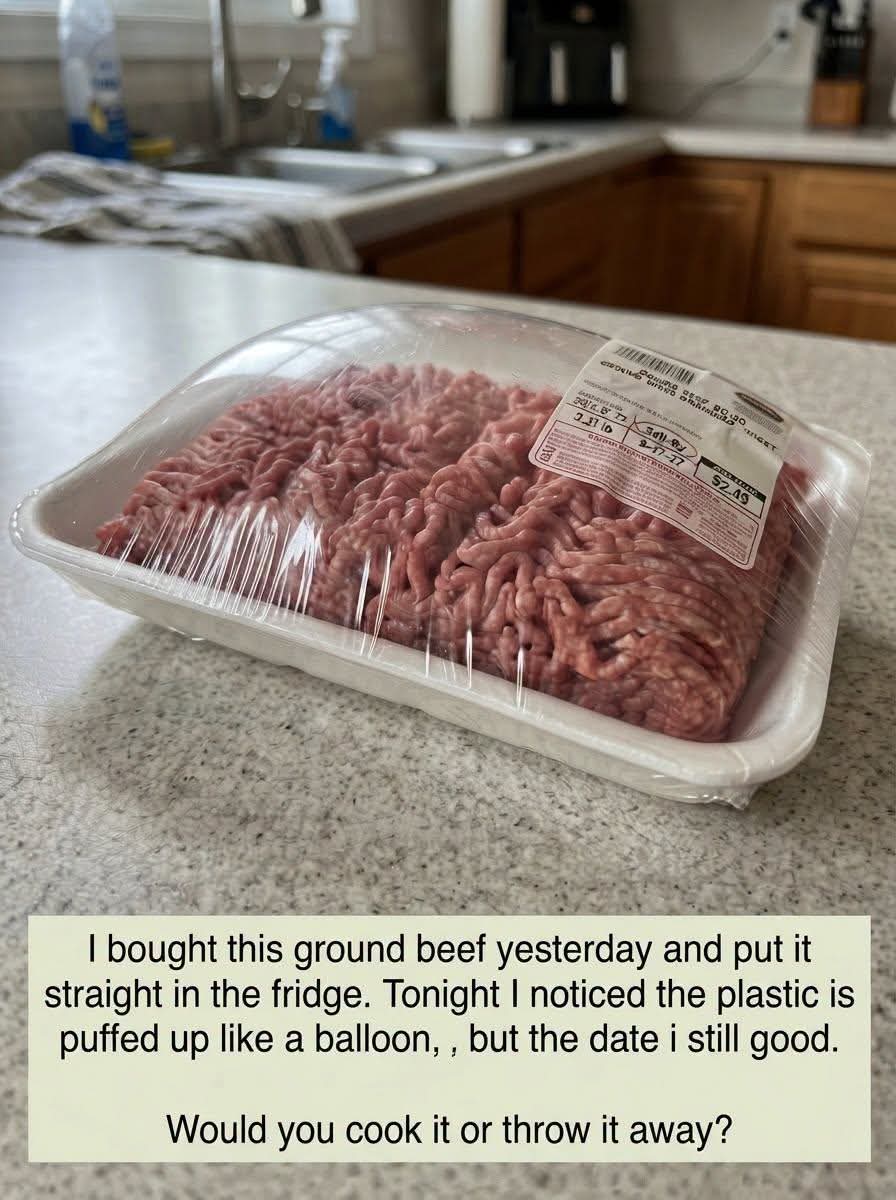
Have you ever reached into the pantry, grabbed a bag of chips, and thought, “Why is this thing so puffed up?”
At first glance, swollen or bloated food packaging can look suspicious. Maybe the package seems filled with far more air than food, or perhaps a sealed package that normally lies flat is suddenly ballooning outward.
But here’s the surprising part: not all air-filled packaging means something is wrong.
In fact, for some foods, that extra space is completely intentional. Potato chips and other fragile snacks are often packed with a protective gas cushion that helps keep them from turning into crumbs before they reach your kitchen.
But when a package containing a perishable food suddenly becomes swollen when it wasn’t designed that way, that’s a different story.
So, what does bloated packaging really mean? And more importantly, when should you keep the food and when should you throw it away?
Let’s take a closer look.
Why Are Some Food Packages Filled With Air?
That big, puffy bag of chips isn’t necessarily wasting space.
The air—or more accurately, the gas mixture used during packaging—can serve a practical purpose. It creates a cushion around delicate foods, helping protect them from being crushed during shipping, stacking, and handling.
Think of it as a tiny edible airbag!
Potato chips are especially vulnerable to breakage. Without some protective space inside the package, a bag that looks pleasantly full on the store shelf could contain a pile of tiny potato-chip fragments by the time you opened it.
Many snack packages use nitrogen rather than ordinary atmospheric air. Nitrogen helps provide the protective atmosphere while also limiting oxygen exposure, which can help preserve quality and reduce oxidation of fats.
So if your chip bag is puffy right from the store, that can be perfectly normal.
Not All Food Packaging Is Supposed to Be Puffed Up
Here’s where things get more interesting.
Different foods require very different packaging environments.
Fresh meat, sausages, cheese, ready-to-eat meals, dairy products, and other perishable foods may be packaged using vacuum sealing, modified-atmosphere packaging, or other techniques designed to control the gases surrounding the food.
A package that is intentionally vacuum-sealed may look tight against the food.
Modified-atmosphere packaging, meanwhile, may contain a carefully controlled mixture of gases. The goal is to slow certain quality changes and, depending on the product and process, help extend shelf life.
That means you can’t judge food safety simply by asking whether a package contains air.
The type of food, packaging method, storage temperature, expiration or use-by information, and condition of the package all matter.
When Bloated Packaging Can Be a Warning Sign:
TO CONTINUE READING THE ARTICLE PLEASE SEE PAGE 2
