🌾 🚜
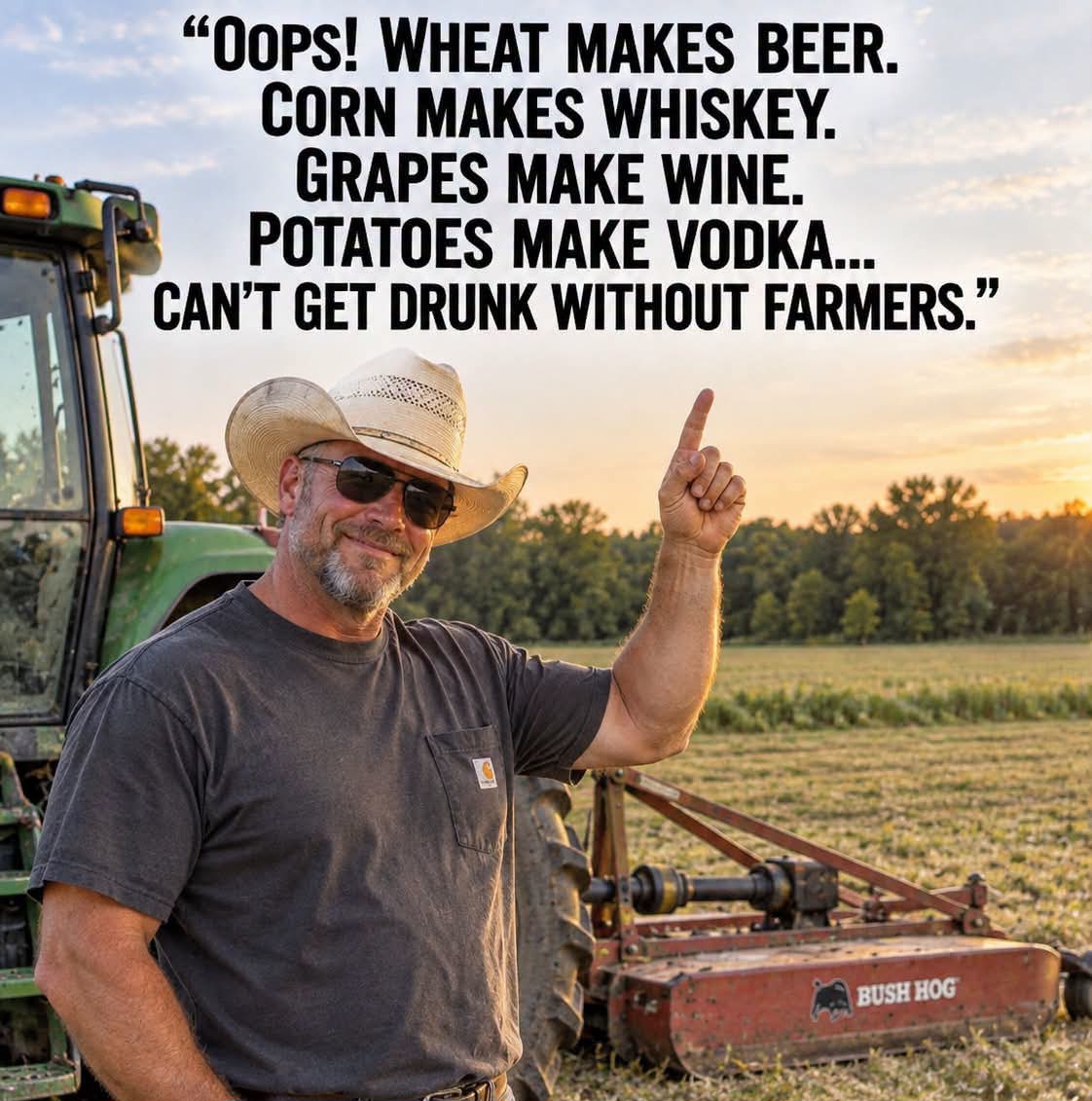
From golden wheat waving across the fields to rows of corn stretching toward the horizon, fresh potatoes pulled from the soil, and grapes hanging heavy on the vine, so much of what we eat and drink begins with someone willing to work the land.
Before bread reaches the bakery, before potatoes reach the grocery store, before corn becomes part of a favorite meal, and before grapes become juice or wine, there is a farmer preparing the soil, planting, tending, harvesting, and doing the work that often happens far away from the dinner table.
🌱 It Starts With the Soil
Farming begins long before harvest season.
Farmers prepare fields, plant seeds, monitor crops, manage weeds and pests, and make decisions based on weather, soil conditions, water availability, and the needs of each crop.
Some crops may be planted and harvested within a single season, while orchards and vineyards can require years of care before producing significant crops.
Every field has its own challenges, and farming rarely follows a perfectly predictable schedule.
🌾 Wheat: The Beginning of So Many Favorites
Think about how many foods begin with wheat.
Bread, pasta, tortillas, crackers, pastries, cereals, and countless other foods depend on wheat grown by farmers.
A field of wheat may look simple from a distance, but producing that harvest requires planning from planting through harvest. Once mature, the grain is harvested, transported, stored, processed, and eventually turned into the foods that end up in our kitchens.
That loaf of bread on the table has quite a journey behind it.
🌽 Corn Is Everywhere
Corn is another major crop with an enormous range of uses.
Fresh sweet corn might end up on a summer dinner table, while other types of corn can be processed into ingredients used in foods and other products.
Walk past a field of mature corn and it’s easy to appreciate just how much work went into getting those plants there.
From seed to harvest, farmers spend months watching and caring for their crops.
🥔 Potatoes Begin Underground
Potatoes offer a perfect reminder that some of our favorite foods are literally hidden beneath the soil.
Farmers plant seed potatoes, manage the crop throughout the growing season, and eventually harvest the mature tubers from underground.
Those potatoes may later become fries, mashed potatoes, chips, baked potatoes, or one of the countless comfort foods people enjoy around the world.
Something as ordinary as a potato has an extraordinary amount of work behind it.
🍇 From Vineyard to Glass
And then there are grapes.
Rows of grapevines can look almost magical when they’re heavy with fruit, but vineyards require careful attention throughout the year.
Farmers and vineyard workers manage vines, monitor fruit development, maintain the plants, and eventually harvest the grapes.
Depending on the variety and intended use, those grapes may become fresh fruit, juice, raisins, or wine.
The glass may be sitting on the table for only a few minutes, but the agricultural process behind it can span an entire growing season—or longer.
🚜 Farming Doesn’t Stop When the Sun Goes Down
One of the things people sometimes forget is how much farming depends on timing.
Weather doesn’t always cooperate.
Rain can arrive when fields need to be harvested. Drought can create difficult growing conditions. Equipment can break down at exactly the wrong moment. Harvest windows can be narrow.
When the crop is ready, the work often has to happen now.
That can mean long days in tractors and combines, early mornings, late nights, muddy boots, dusty clothes, and plenty of physical work.
Farming isn’t simply planting a seed and waiting for food to appear.
It’s a year-round responsibility.
🌦️ Working With Nature
Farmers work with something they can never completely control: the weather.
Too much rain can create problems. Too little can create different ones. Heat, frost, storms, wind, insects, disease, and changing growing conditions can all affect a harvest.
That uncertainty makes farming a profession where experience, preparation, technology, and adaptability matter.
And despite all the challenges, farmers continue putting seeds in the ground every year.
🐝 The Bigger Picture
Farms aren’t only places where food is produced. Agricultural landscapes can also provide habitat for birds, insects, and other wildlife, particularly where farms include hedgerows, trees, grasslands, wetlands, or other natural areas.
Many farmers also use practices designed to protect soil and water resources, improve soil health, reduce erosion, or make more efficient use of inputs.
The details vary enormously from farm to farm, but the goal is shared by many producers: keep the land productive for the future.
❤️ Remember the People Behind the Food
It’s easy to walk through a grocery store and see shelves full of food without thinking about where everything started.
But behind those shelves are farmers, farm workers, truck drivers, processors, mechanics, equipment operators, agricultural scientists, and countless others who help move food from fields to tables.
So the next time you slice a loaf of bread, boil potatoes, enjoy fresh corn, or see a beautiful vineyard, take a moment to remember the work behind it.
Someone planted it.
Someone cared for it.
Someone harvested it.
And someone helped get it to you.
🌾 Farmers really do keep the good stuff growing. 🚜❤️
🌱 What farm-fresh food are you most thankful for?
🌾 Wheat & bread
🌽 Corn
🥔 Potatoes
🍇 Grapes
🥕 Fresh vegetables
🍎 Fruit
Tell us your favorite in the comments! 👇🚜🌾
