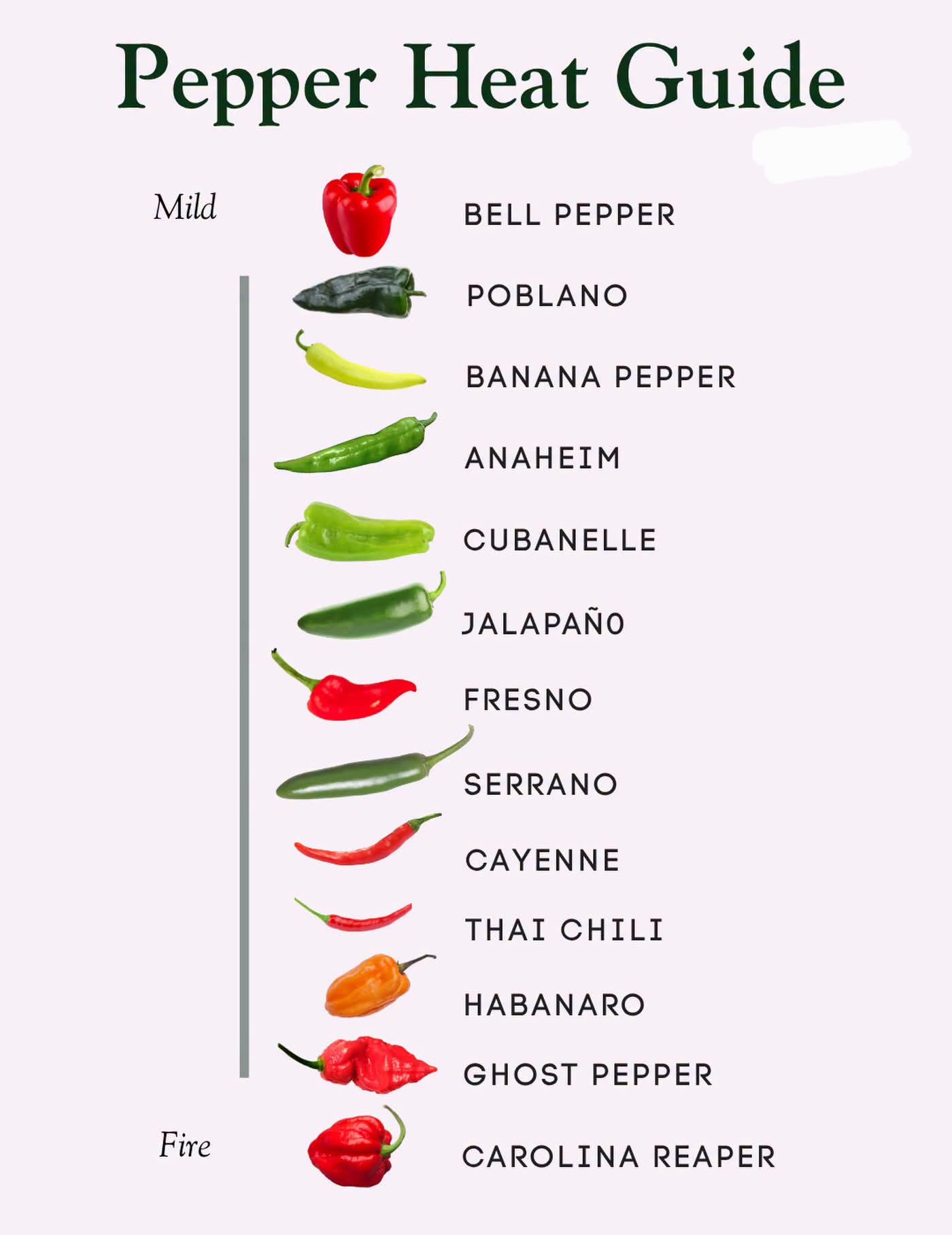
🌶️ Pepper Heat Guide: From Mild Bell Peppers to Fiery Carolina Reapers
Not all peppers are created equal! 🌶️🔥 Some are sweet and mild enough to eat by the handful, while others bring serious heat that can turn a single bite into a memorable experience.
Whether you’re choosing peppers for salsa, grilling, pickling, hot sauce, soups, or your garden, knowing approximately how much heat each pepper carries can help you choose the right one.
The chart above gives a helpful progression from mild peppers to extreme-heat varieties, including some of the most popular peppers found in kitchens and gardens.
But there’s an important thing to remember: pepper heat can vary considerably even within the same variety. Growing conditions, maturity, genetics, and other factors can affect how hot an individual pepper tastes.
🌶️ What Determines Pepper Heat?
Pepper heat comes primarily from capsaicinoids, especially capsaicin.
The heat level of peppers is commonly described using the Scoville Heat Unit (SHU) scale. Bell peppers are essentially at zero SHU, while some superhot peppers can reach well over one million SHU.
The Scoville scale is useful as a general guide, but the exact heat of a particular pepper can vary.
🫑 Mild Peppers
If you enjoy pepper flavor without a lot of heat, start near the top of the chart.
1. Bell Pepper
Approximate heat: 0 SHU
Bell peppers are the mildest option on this list because they contain essentially no capsaicin.
They’re sweet, crisp, and incredibly versatile.
Use them in:
- Salads
- Omelets
- Stir-fries
- Fajitas
- Stuffed peppers
- Soups
- Pasta
- Pizza
- Roasted vegetable dishes
Red, yellow, orange, and green bell peppers can have noticeably different flavors, with ripe red peppers generally tasting sweeter.
2. Poblano
Approximate heat: 1,000–1,500 SHU
Poblanos have a mild, earthy flavor with just enough heat to make things interesting.
They’re especially delicious when roasted because roasting brings out their smoky, slightly sweet character.
Try them in:
- Chile rellenos
- Enchiladas
- Stuffed peppers
- Salsas
- Soups
- Tacos
When dried, poblano peppers are known as ancho peppers.
3. Banana Pepper
Approximate heat: 0–500 SHU
Banana peppers are usually mild, slightly tangy, and sometimes almost sweet.
They’re wonderful for pickling and are often added to sandwiches, salads, pizzas, burgers, and antipasto plates.
They’re also an excellent choice if you want pepper flavor without overwhelming heat.
4. Anaheim
Approximate heat: 500–2,500 SHU
Anaheim peppers are mild enough for everyday cooking but can have a little kick.
They’re excellent roasted, grilled, stuffed, or chopped into sauces and casseroles.
Because their heat is relatively moderate, they’re a great pepper for recipes where you want flavor and a gentle warmth.
5. Cubanelle
Approximate heat: 0–1,000 SHU
Cubanelle peppers are generally mild and sweet with thin walls that make them especially good for sautéing and frying.
They’re delicious when cooked with onions and garlic or added to sandwiches, rice dishes, sauces, and stews.
🌶️ Medium Heat Peppers
Now we’re getting into peppers that can provide a noticeable kick.
6. Jalapeño
Approximate heat: 2,500–8,000 SHU
The jalapeño is one of the most familiar hot peppers.
It’s spicy enough to be noticeable but mild enough that many people can enjoy it regularly.
Fresh jalapeños are fantastic in:
- Guacamole
- Salsa
- Nachos
- Tacos
- Chili
- Pickles
- Jalapeño poppers
Removing the seeds and inner membranes can reduce the amount of heat you experience, although the majority of capsaicin is concentrated in the internal white tissue rather than the seeds themselves.
7. Fresno
Approximate heat: 2,500–10,000 SHU
Fresno peppers look somewhat similar to red jalapeños but can have a brighter, fruitier flavor.
They’re excellent fresh, pickled, grilled, or blended into sauces.
Their beautiful red color also makes them a favorite for homemade hot sauces.
8. Serrano
Approximate heat: 10,000–25,000 SHU
Serrano peppers are noticeably hotter than jalapeños.
They have a fresh, grassy flavor that works especially well in Mexican-inspired dishes.
Try them in:
- Fresh salsa
- Pico de gallo
- Guacamole
- Hot sauce
- Marinades
- Soups
- Tacos
If you want more heat than a jalapeño without immediately jumping into superhot peppers, serranos are a popular choice.
🔥 Hot Peppers
9. Cayenne
Approximate heat: 30,000–50,000 SHU
Cayenne peppers bring considerably more heat than jalapeños and serranos.
They’re commonly dried and ground into cayenne pepper powder, making them easy to add to recipes a little at a time.
A small amount can add heat to:
- Chili
- Eggs
- Soups
- Sauces
- Seasoning blends
- Roasted vegetables
- Marinades
10. Thai Chili
Approximate heat: roughly 50,000–100,000 SHU
Thai chilies are small but powerful.
They’re widely used in Southeast Asian cooking and can add intense heat to curries, stir-fries, dipping sauces, noodle dishes, and chili pastes.
Don’t let their small size fool you!
🔥🔥 Superhot Peppers
This is where things get serious.
11. Habanero
Approximate heat: 100,000–350,000 SHU
Habaneros have substantial heat along with a distinctive fruity, almost tropical flavor.
They’re fantastic for people who want a hot sauce with both serious heat and plenty of flavor.
Use them in:
- Mango-habanero sauces
- Hot sauces
- Salsas
- Marinades
- Pepper jellies
- Spicy fruit sauces
A little goes a long way.
12. Ghost Pepper
Approximate heat: around 800,000–1,000,000+ SHU
Also known as bhut jolokia, the ghost pepper is dramatically hotter than a habanero.
It has a complex flavor, but its extreme heat means it should be handled carefully and used sparingly.
Ghost peppers can be incorporated into hot sauces, spicy pickles, marinades, and other recipes where intense heat is specifically desired.
13. Carolina Reaper
Approximate heat: around 1.4–2.2 million SHU
The Carolina Reaper is an extreme superhot pepper and has been recognized by Guinness World Records as a record-setting hot pepper.
This is not an everyday cooking pepper for most people.
Even a small amount can produce intense burning sensations, so it should be handled with appropriate precautions.
🌡️ Pepper Heat Chart
| Pepper | Approximate Scoville Heat |
|---|---|
| Bell Pepper | 0 SHU |
| Cubanelle | 0–1,000 SHU |
| Banana Pepper | 0–500 SHU |
| Poblano | 1,000–1,500 SHU |
| Anaheim | 500–2,500 SHU |
| Jalapeño | 2,500–8,000 SHU |
| Fresno | 2,500–10,000 SHU |
| Serrano | 10,000–25,000 SHU |
| Cayenne | 30,000–50,000 SHU |
| Thai Chili | 50,000–100,000 SHU |
| Habanero | 100,000–350,000 SHU |
| Ghost Pepper | ~800,000–1,000,000+ SHU |
| Carolina Reaper | ~1.4–2.2 million SHU |
These are approximate ranges, not guaranteed heat levels. Individual peppers can be hotter or milder.
🧤 How to Handle Hot Peppers Safely
When working with jalapeños and especially superhot varieties, a little caution goes a long way.
Wear Gloves
Use disposable food-safe gloves when cutting very hot peppers.
Capsaicin can remain on your hands even after washing and can cause intense irritation if you touch your eyes, nose, or other sensitive areas.
Don’t Touch Your Face
Keep your hands away from your eyes and face while handling peppers.
Wash Equipment Thoroughly
Wash knives, cutting boards, bowls, and other utensils thoroughly after preparing hot peppers.
Be Careful With Blenders
When making hot sauce, avoid leaning directly over the blender or pot while processing extremely hot peppers. Pepper vapors can irritate your eyes and respiratory system.
🥛 What Helps When a Pepper Is Too Hot?
If you accidentally eat more heat than you intended, drinking water isn’t particularly effective at removing capsaicin because capsaicin isn’t water-soluble.
Dairy products containing casein, such as milk or yogurt, can be more helpful for reducing the burning sensation.
Avoid spreading the capsaicin around your mouth by repeatedly touching your lips or face.
🌶️ Which Pepper Should You Choose?
It really depends on what you’re making.
Want sweetness without heat?
Choose a bell pepper.
Want gentle warmth?
Try a poblano, Anaheim, or banana pepper.
Want everyday spicy flavor?
Jalapeños and serranos are versatile choices.
Want serious heat?
Reach for cayenne, Thai chilies, or habaneros.
Want extreme heat?
Ghost peppers and Carolina Reapers belong in the superhot category and should be handled with considerably more care.
🌱 A Final Word About Pepper Heat
One of the fun things about growing and cooking peppers is discovering how dramatically their flavors can differ.
Heat isn’t the only thing that matters. Some peppers are sweet and fruity, others are smoky and earthy, while others have a fresh, grassy flavor.
So next time you’re standing in front of a basket of peppers wondering which one to choose, use the heat scale as a starting point—but don’t forget about flavor, too!
🌶️ What’s your personal heat level? Mild, medium, hot, or bring-on-the-fire? 🔥
