Public restrooms are usually places we visit with one goal in mind: get in, take care of business, and get out.
Most of us aren’t exactly stopping to admire the plumbing fixtures.
ADVERTISEMENT
But once you notice something, it’s hard to unsee it.
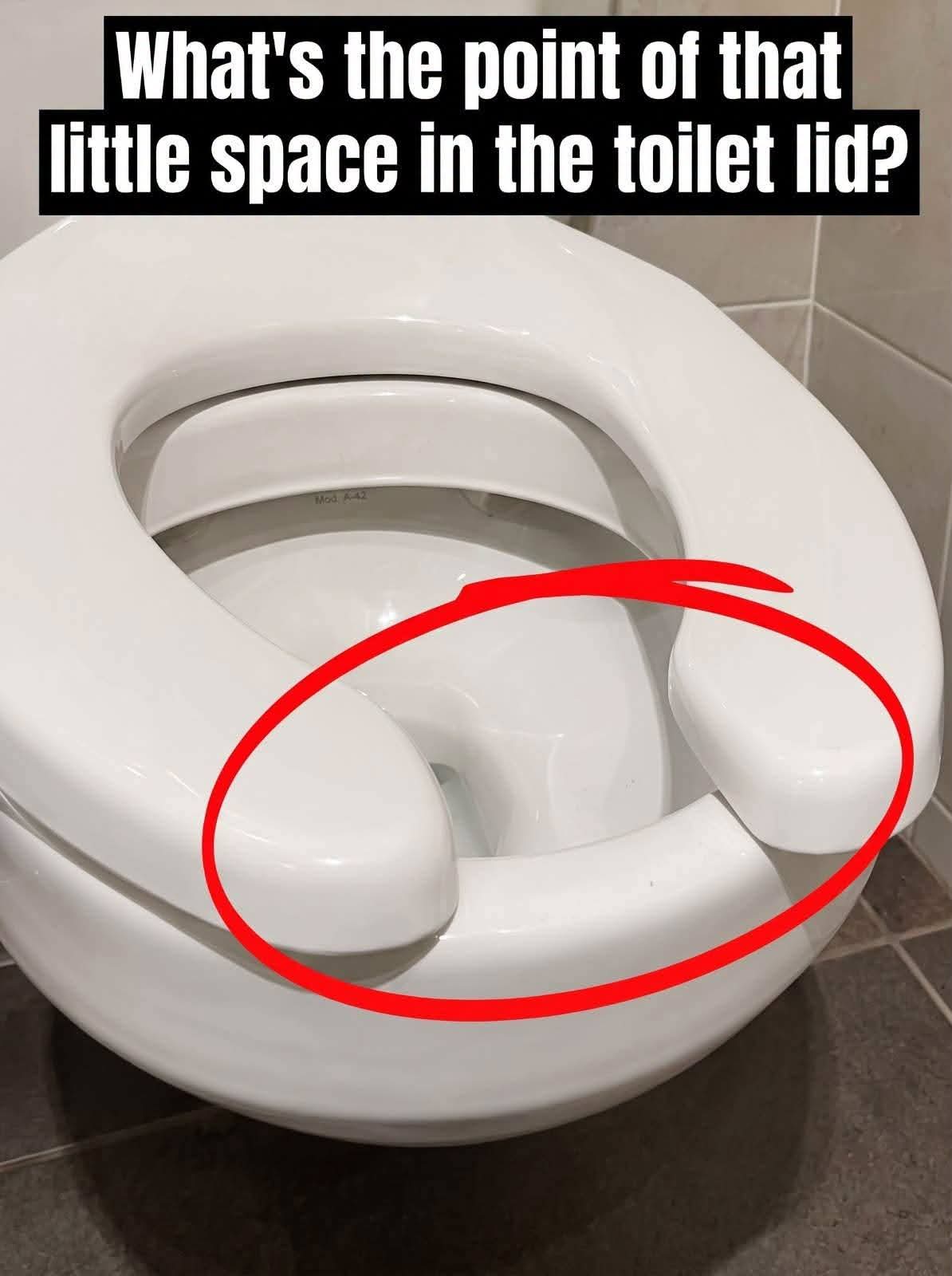
Walk into many public restrooms and you’ll often find toilet seats with an opening at the front—a shape that looks noticeably different from the fully closed, oval-shaped seats commonly found in homes.
So why are public toilet seats often U-shaped?
It turns out that the design isn’t random.
The open-front toilet seat has practical reasons behind it, including hygiene, ease of cleaning, user comfort, maintenance, and accessibility considerations.
And there’s a surprisingly interesting story behind how this style became so familiar in public bathrooms.
What Is a U-Shaped Toilet Seat?
Technically, what you’re looking at is usually called an open-front toilet seat.
ADVERTISEMENT
Instead of forming a complete oval, the seat has a gap at the front.
You’ll see this design particularly often in public and commercial restrooms, although it’s certainly not exclusive to them.
Open-front seats can also be found in:
- Healthcare facilities
- Schools
- Workplaces
- Restaurants
- Airports
- Public buildings
- Assisted-care facilities
- Other commercial settings
The shape is simple.
But that little opening serves several practical purposes.
Why Do Public Restrooms Use Open-Front Toilet Seats?
There isn’t just one reason.
The design became associated with public and institutional restrooms because it addresses several practical concerns at once.
Hygiene Is One Reason
One commonly cited reason for the open-front design is hygiene.
The opening eliminates the section of seat that would otherwise extend across the front of the toilet.
That can reduce the amount of material around an area where contact with the user’s body may occur.
It also makes certain parts of the seat easier to reach when cleaning.
And in a busy public restroom where fixtures may be cleaned repeatedly throughout the day, easy cleaning matters.
The U-shape isn’t a magical germ shield, though.
It doesn’t make a toilet seat automatically sanitary.
Good restroom hygiene still depends on regular cleaning, handwashing, and proper maintenance.
It Can Make Cleaning Easier
Here’s another practical advantage.
A closed toilet seat creates a continuous surface around the entire bowl.
An open-front seat has fewer surfaces around the front portion, which can make wiping and cleaning simpler.
For housekeeping and maintenance staff, small design choices like this can matter when a restroom has dozens or hundreds of users throughout the day.
A fixture that’s easier to inspect and clean can save time during routine maintenance.
It Allows Easier Access From the Front
The opening also provides more space at the front of the seat.
That can be useful for certain users and in situations where someone needs additional clearance or easier access.
This is particularly relevant in healthcare and institutional environments, where bathroom fixtures may need to accommodate a wider range of users and mobility needs.
However, the toilet seat itself isn’t what makes a restroom accessible.
The overall bathroom design matters much more.
Grab bars, turning space, toilet height, clear floor space, door placement, and other features all play important roles.
There’s Also a Personal-Hygiene Consideration
The open-front design has another practical feature.
Because the front portion of the seat is missing, it can provide additional clearance between the user’s body and the seat.
This is particularly useful for some people because it reduces the amount of seat surface surrounding the front of the body.
That doesn’t mean every person finds a U-shaped seat more comfortable.
In fact, preferences vary.
Some people love open-front seats.
Others strongly prefer the familiar closed oval seat found at home.
What About Men Using the Toilet?
This is one of the explanations you’ll often hear when people ask about U-shaped toilet seats.
The open front can provide additional clearance for male anatomy when sitting.
But it’s important not to reduce the entire history of the design to this one explanation.
There are multiple practical reasons for open-front seats, including sanitation, cleaning, accessibility, and institutional use.
The design isn’t simply there because of one particular group of users.
Are U-Shaped Toilet Seats Required by Law?
This is where things get a little more complicated.
You may have heard that public bathrooms are required by law to use open-front toilet seats.
That’s not a universal rule everywhere.
Building, plumbing, accessibility, and sanitation requirements vary by country, state, province, municipality, and type of facility.
Some plumbing codes and standards have historically included requirements or recommendations concerning open-front seats in certain public or institutional settings.
But you shouldn’t assume that every public restroom in every location is legally required to have one.
That’s why you’ll occasionally find closed-front seats in public bathrooms too.
The important distinction is between a design commonly used or required in particular settings and a universal law applying everywhere.
Why Don’t Most Homes Have U-Shaped Seats?
Now we get to the really interesting part.
If open-front seats have practical advantages, why don’t we see them in most homes?
Because residential bathrooms have different priorities.
At home, there’s generally a smaller number of users.
The toilet isn’t being used continuously by strangers throughout the day.
Homeowners also tend to choose bathroom fixtures based on:
- Comfort
- Appearance
- Personal preference
- Cost
- Ease of installation
- Matching bathroom décor
And many people simply prefer the traditional closed oval design.
So a household toilet seat doesn’t need to prioritize the same institutional concerns as a heavily used public restroom.
Why Are They So Common in Public Bathrooms?
TO CONTINUE READING THE ARTICLE PLEASE SEE PAGE 2
