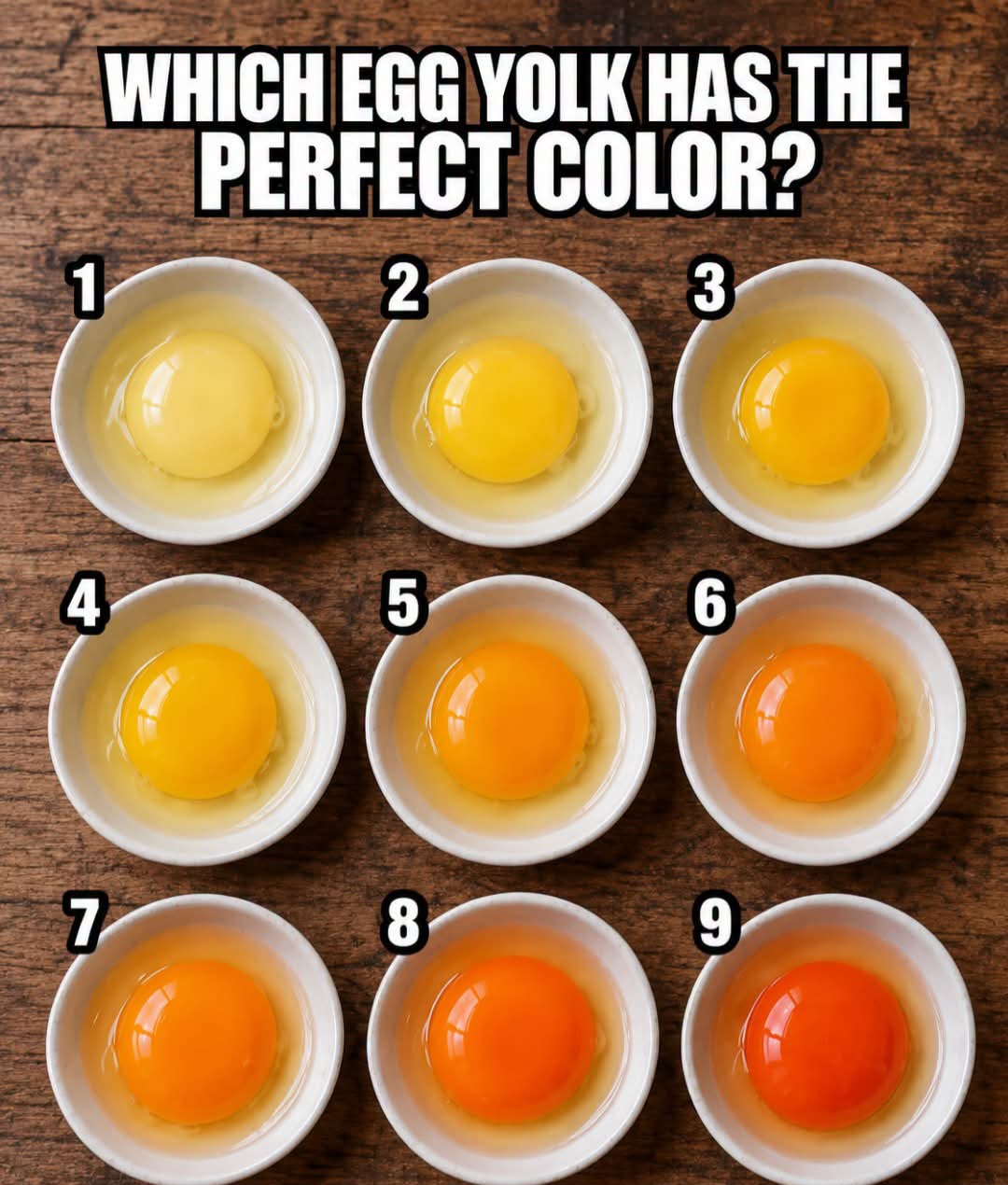
🥚👀 Which Egg Yolk Has the “Perfect” Color?
Look at these nine yolks and tell me honestly:
Which one looks the most perfect? 🤤🥚
Some people want a pale, buttery yellow. Others believe the deeper the orange, the better the egg. And then there are those beautiful golden-orange yolks that practically beg to be put on toast.
But here’s the interesting part:
Yolk color isn’t a simple scorecard for egg quality.
The color is influenced largely by what the hen eats, particularly the pigments in her feed. USDA explains that diets containing yellow-orange plant pigments can produce darker yellow or orange yolks, while diets with less pigment can produce paler yolks. (Ask USDA)
So let’s break down the great yolk-color debate! 🍳
💛 #1 — Pale Yellow
This is the lightest yolk in the picture.
A pale yellow yolk can look very different from the deep orange ones, but that doesn’t automatically mean the egg is inferior.
The hen’s diet has a major influence on yolk pigmentation, so a lighter yolk can simply reflect the feed she received. (Ask USDA)
Perfect for: people who grew up with classic pale-yellow breakfast eggs.
🌼 #2 — Golden Yellow
Now we’re getting into that classic sunny-yellow color.
It’s bright without being extremely orange, and honestly, this is probably what many people picture when they hear “egg yolk.”
There’s nothing inherently wrong with choosing this color—or any other.
🌕 #3 — Deep Golden Yellow
This yolk is noticeably richer in color.
It has that beautiful golden appearance that looks especially good when served over toast, potatoes, or a breakfast sandwich.
But don’t confuse appearance with a guarantee of quality.
USDA specifically notes that yolk color varies according to the hen’s diet. (Ask USDA)
🟡 #4 — Bright Yellow
This one sits right in the middle of the spectrum.
It’s vibrant, sunny, and looks incredibly appetizing.
And here’s something important: there isn’t one official “perfect” yolk color.
Egg quality is evaluated using several characteristics rather than simply asking whether the yolk is yellow or orange. USDA egg-grading standards consider factors including the yolk’s condition and the quality of the egg white. (AMS)
🧡 #5 — Golden Orange
Now we’re entering serious breakfast territory. 😂
This is the kind of yolk people often associate with farm-fresh eggs.
But a darker color doesn’t automatically prove that an egg came from a backyard chicken, was laid that morning, or is nutritionally superior.
Feed matters.
Pigments in ingredients such as yellow corn and marigold petals can contribute to darker yolks. (Ask USDA)
🧡 #6 — Deep Orange
This is where the debate gets heated.
Some people see a yolk like this and immediately say:
“THAT’S the good stuff!” 😂
And visually, it’s certainly gorgeous.
But yolk color by itself doesn’t tell you whether the egg is fresh or safe to eat.
For freshness and quality, other characteristics matter more, including the condition of the egg white and yolk. USDA notes that a freshly laid egg has a round, firm yolk, while the yolk’s membrane weakens as an egg ages. (AMS)
🍊 #7 — Bright Orange
This one is hard to ignore.
It’s vibrant, rich-looking, and probably the yolk that would win a beauty contest. 😂
But here’s the myth worth clearing up:
Orange doesn’t automatically mean healthier.
The hen’s diet can dramatically influence the color, so two perfectly good eggs can have noticeably different yolks.
That means you shouldn’t reject a pale yolk simply because it isn’t orange.
🧡 #8 — Very Deep Orange
We’re getting close to the darkest yolk in the picture.
These deep colors can be produced when hens consume more yellow-orange pigments through their feed. (Ask USDA)
And yes, they look spectacular.
Especially when you crack one over:
🍞 Toast
🥔 Crispy potatoes
🥑 Avocado
🍚 Rice
🥓 Bacon
🍝 Pasta
That golden-orange yolk running across the plate is hard to beat.
❤️ #9 — The Deepest Orange
And then there’s #9.
If we’re judging purely on appearance, this one certainly grabs attention.
It’s almost reddish-orange and looks incredibly rich.
But once again, color isn’t a reliable freshness or safety test.
The USDA specifically says yolk color varies with the hen’s diet. (Ask USDA)
So if you love #9, enjoy it—but don’t assume #1 is somehow a bad egg simply because it’s pale.
🥚 Does a Darker Yolk Mean a Better Egg?
Not necessarily.
This is probably the biggest takeaway from the entire picture.
A darker yolk tells you something about pigmentation and the hen’s diet, but it doesn’t give you a simple “quality score.”
USDA egg-grading guidance evaluates several interior characteristics, including the yolk’s condition and the albumen (egg white), rather than using yolk color alone. (AMS)
So:
Pale yellow ≠ bad egg
Orange ≠ automatically better egg
Dark orange ≠ automatically fresher egg
It’s much more complicated—and much more interesting! 😄
🌾 Why Do Hens Produce Different-Colored Yolks?
Think about the hen’s diet.
Pigments called carotenoids and related compounds found in certain plants and feed ingredients can accumulate in the yolk.
Yellow corn, marigold petals, and other pigment-rich ingredients can contribute to stronger yellow-orange coloration. (Ask USDA)
That’s why yolks from different eggs can look dramatically different even though they’re all perfectly normal.
It’s a little like how the ingredients in a recipe affect the final color of the food.
👀 What Actually Matters When Choosing Eggs?
Instead of obsessing over yolk color, pay attention to the bigger picture.
🥚 Freshness
A fresh egg generally has a firm, rounded yolk and thicker egg white. As eggs age, the yolk membrane weakens and the white becomes thinner. (AMS)
🥚 Storage
Keep eggs properly refrigerated according to the storage instructions where you live.
🥚 Appearance
Color variation is normal. However, unusual spoilage signs—especially abnormal pink or iridescent egg whites—are a reason not to eat the egg. (Ask USDA)
🥚 Cooking
For food safety, don’t rely on color alone to decide whether an egg dish is adequately cooked. Use appropriate cooking temperatures and safe handling practices.
🍳 And What About That Beautiful Runny Yolk?
Now we’re talking about personal preference!
Some people want:
🤤 Thick and runny
Others prefer:
😋 Jammy and slightly set
And some want:
🍳 Completely firm
Whatever texture you prefer, remember that a beautiful orange yolk doesn’t make an undercooked egg automatically safe.
The color of the yolk and the safety of the egg are two different questions.
🥇 So Which Is the “Perfect” Color?
If we’re talking purely about personal preference, there’s no wrong answer.
Some people will immediately choose:
💛 #1 — Pale yellow
Others will say:
🌕 #3 — Golden
And plenty of people will point straight at:
🧡 #8 or #9 — Deep orange
Personally, the most important thing is less about the exact shade and more about getting an egg that’s fresh, properly handled, and cooked the way you enjoy it.
The yolk’s color is mostly telling us a story about the hen’s diet—not handing us a report card on the egg. 🐔🌾🥚
🥚🔥 THE ULTIMATE YOLK DEBATE
Okay, now it’s your turn!
Forget what you’ve been told about “farm fresh” eggs for a second.
Look at all nine.
Which yolk has the PERFECT color? 👀
1️⃣ Pale yellow
2️⃣ Golden yellow
3️⃣ Deep golden
4️⃣ Bright yellow
5️⃣ Golden orange
6️⃣ Deep orange
7️⃣ Bright orange
8️⃣ Very deep orange
9️⃣ Deepest orange
🥚👇 Pick ONE!
And here’s the real question:
Would you rather have a pale-yellow yolk that tastes amazing, or a deep-orange yolk that looks incredible? 🤤🍳
