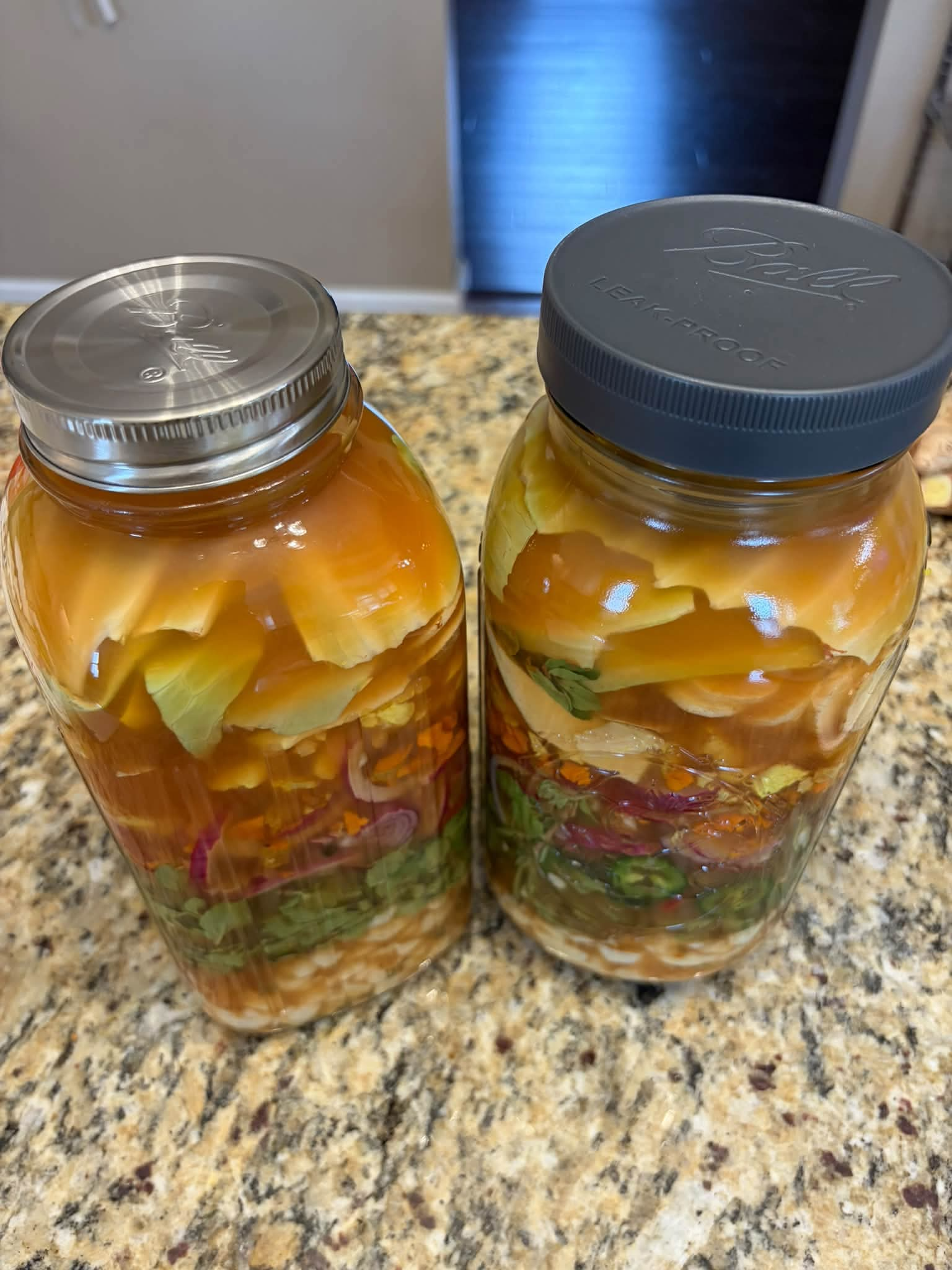
🔥
A Traditional Apple Cider Vinegar Infusion with Garlic, Ginger, Horseradish, and Herbs
Fire cider is a bold, tangy herbal infusion traditionally made with apple cider vinegar, pungent roots, garlic, onions, hot peppers, and aromatic herbs. This homemade version combines organic ingredients to create a spicy, flavorful vinegar that can be used in salad dressings, marinades, sauces, and other kitchen preparations.
Making fire cider takes a little patience, but the process is straightforward. Simply prepare your ingredients, combine them in a clean glass jar, cover everything with apple cider vinegar, and allow the flavors to infuse over several weeks.
Last year’s half-gallon batch may have disappeared quickly, but making a full gallon this year means having more of this flavorful infusion available for your kitchen!
Important: Fire cider is a traditional food preparation, not a proven treatment for colds, flu, infections, or other illnesses. The recipe below is intended for culinary use, and homemade infusions should be prepared and stored carefully.
Recipe Information
- Preparation Time: 30 minutes
- Infusion Time: 10–30 days
- Yield: Approximately 1 gallon before straining, depending on the amount of ingredients used
- Difficulty: Easy, with careful preparation
Ingredients
This recipe is inspired by the ingredients in your 2026 batch. The quantities below are suggested starting amounts for a one-gallon batch, rather than measurements from the original preparation.
- 1 gallon of pasteurized apple cider vinegar, with 5% acidity
- 1 large red onion
- 1 whole garlic bulb
- 1 medium horseradish root
- 1 medium fresh turmeric root
- 1 medium fresh ginger root
- 1–2 fresh jalapeño peppers, or more to taste
- 1 teaspoon whole black peppercorns
- 2–3 fresh rosemary sprigs
- 2–3 fresh oregano sprigs
Optional:
- 1–2 clean cabbage leaves, as described in the original preparation
- A food-safe glass fermentation weight, if needed to keep the ingredients submerged
Important: Do not automatically add a full gallon of vinegar to a jar already packed with vegetables. Leave enough room for the ingredients, and avoid overpacking. University of Minnesota Extension recommends an approximate ratio of 1 cup of added produce to 2 cups of apple cider vinegar for its fire cider preparation. (University of Minnesota Extension)
Instructions
Step 1: Prepare Your Equipment
Wash your hands and clean your work surface, cutting board, knife, saucepan, thermometer, and glass jar.
Sanitize the jar and equipment using an appropriate food-safe method.
Choose a heat-safe glass container large enough to accommodate the ingredients and vinegar without overflowing.
Step 2: Prepare the Ingredients
Wash the vegetables and herbs thoroughly under clean running water.
Peel the garlic, horseradish, ginger, and turmeric as needed.
Slice the red onion, horseradish, ginger, and turmeric into thin pieces. Peel and lightly crush the garlic cloves.
Slice the jalapeños into rings. For a milder infusion, remove the seeds and membranes. Wear gloves when handling hot peppers, and avoid touching your eyes.
Lightly crush the black peppercorns to release their flavor.
Keep the rosemary and oregano whole or roughly chop them.
Step 3: Fill the Jar
Place the prepared onion, garlic, horseradish, turmeric, ginger, jalapeños, peppercorns, rosemary, and oregano into the clean jar.
Arrange the ingredients loosely rather than packing them tightly.
For this food-safety-conscious method, measure the ingredients and vinegar rather than filling the jar with as much produce as possible.
Step 4: Heat the Apple Cider Vinegar
Pour the apple cider vinegar into a saucepan.
Using a food thermometer, heat the vinegar to approximately 190–195°F (88–91°C), just below boiling.
Carefully pour the hot vinegar over the prepared ingredients.
For safety, the entire mixture, including the centers of the vegetable pieces, must reach at least 165°F (74°C) for 1 minute and 12 seconds. Thinly sliced ingredients and a thermometer help verify that this temperature is reached. (University of Minnesota Extension)
Use appropriate heat protection when handling the hot vinegar and glass jar.
Step 5: Keep the Ingredients Submerged
If you are using cabbage leaves, place a clean leaf over the ingredients and position a clean, food-safe glass weight on top.
The purpose of the weight is to help keep the ingredients below the liquid.
However, a cabbage leaf and glass weight do not make an infusion safe by themselves. The mixture must still be prepared and stored correctly.
Secure the jar with a suitable lid.
Step 6: Allow the Flavors to Infuse
Place the jar in a cool, dark location for 10–30 days, following the food-safety preparation method described above.
Keep the jar away from direct sunlight and excessive heat.
The infusion will develop a strong, pungent aroma as the vinegar draws flavor from the garlic, onion, roots, peppers, and herbs.
Do not treat this process as uncontrolled fermentation. This recipe is a flavored vinegar infusion, and adding fresh vegetables can change the acidity of the finished product. (University of Minnesota Extension)
Step 7: Strain the Fire Cider
When the infusion has reached your preferred flavor, strain it through a clean, fine-mesh strainer.
For a clearer liquid, pass it through a clean coffee filter to remove smaller particles.
Discard the solids rather than leaving them in the finished vinegar.
Important: Straining does not establish that the finished product is safe for unrefrigerated storage. The acidity of a homemade infusion can vary, and a sealed jar is not proof of safety.
Step 8: Bottle and Store
Transfer the strained vinegar into clean bottles or jars.
For a conservative home-storage approach, refrigerate the finished fire cider and use clean utensils when handling it.
University of Minnesota Extension provides specific pH-based requirements for shelf-stable bottling. Without verifying that the finished product meets the applicable requirements, do not assume that it is safe to store at room temperature. (University of Minnesota Extension)
Discard the infusion if mold, unexpected bubbling, or unusual cloudiness develops. Do not taste a questionable batch to determine whether it is safe.
How to Use Homemade Fire Cider
Fire cider has a strong, spicy, acidic flavor. You can use small amounts in a variety of culinary preparations.
1. Salad dressing: Whisk a small amount with olive oil, mustard, and a little honey.
2. Marinades: Add a splash to a marinade for vegetables, tofu, or meat.
3. Sauces: Stir a small quantity into a sauce or dressing that needs extra acidity.
4. Roasted vegetables: Use a little in a dressing served alongside roasted carrots, potatoes, or squash.
5. Soups and stews: Add a small splash at the end of cooking to brighten the flavor.
Because the infusion is concentrated and acidic, start with a small amount and adjust to taste.
Helpful Tips for Your 2026 Batch
- Use organic ingredients if preferred. Organic produce works well in this recipe, although organic certification does not eliminate the need for proper food handling.
- Slice roots thinly. Thin slices allow the vinegar to contact more of the ingredient’s surface.
- Adjust the heat carefully. More jalapeños create a hotter infusion, while fewer peppers produce a milder flavor.
- Use a food thermometer. Heating the vinegar alone does not guarantee that the centers of thick vegetable pieces reach the recommended temperature.
- Keep good records. Write down the ingredient quantities, vinegar brand and acidity, preparation date, and straining date so you can reproduce a batch you enjoy.
- Do not rely on smell alone. A normal aroma cannot prove that a homemade infusion is safe.
Frequently Asked Questions
Can I use apple cider vinegar with the mother?
For this method, use commercially prepared, pasteurized apple cider vinegar with 5% acidity. The mother is associated with fermentation, but adding it does not make the fire cider more effective or guarantee safe fermentation.
Why add a cabbage leaf and glass weight?
The cabbage leaf provides a barrier between floating ingredients and the weight, while the glass weight helps hold the ingredients beneath the liquid.
This arrangement is commonly associated with fermentation preparations, but it does not replace the temperature and storage precautions required for this vinegar infusion.
Can I leave the vegetables in the jar for several months?
I would not recommend doing so without a validated process. The recipe above uses a 10–30-day infusion period, followed by straining. Longer contact with the solids is not necessary to follow this method.
Can I drink fire cider every day?
Fire cider is not a proven medical treatment, and there is no established daily dose that has been shown to prevent illness.
Its acidity and spicy ingredients may irritate the mouth, throat, or stomach, particularly in concentrated amounts. Avoid drinking it undiluted, and seek medical advice if you have reflux, ulcers, or take medications that may interact with its ingredients.
Does fire cider boost immunity?
Although garlic, ginger, turmeric, and other ingredients contain compounds studied for various biological effects, this particular infusion has not been proven to boost immunity or prevent or cure infections.
Enjoy it primarily as a flavorful culinary preparation rather than a substitute for medical care.
Final Thoughts 🔥
Homemade Fire Cider is a bold combination of apple cider vinegar, garlic, horseradish, turmeric, ginger, red onion, jalapeños, black peppercorns, rosemary, and oregano.
Preparing a gallon takes time, but the result is a versatile flavored vinegar that can add a spicy kick to dressings, marinades, and sauces.
If you are making your 2026 batch, keep a record of your ingredients, handle the hot vinegar carefully, strain the mixture after the infusion period, and refrigerate it unless you have verified a suitable process for shelf-stable storage.
Have you made fire cider this year? 🔥
Do you prefer yours extra spicy with plenty of jalapeños, or do you like a milder version with more ginger and herbs? Share your favorite ingredient combination in the comments!
