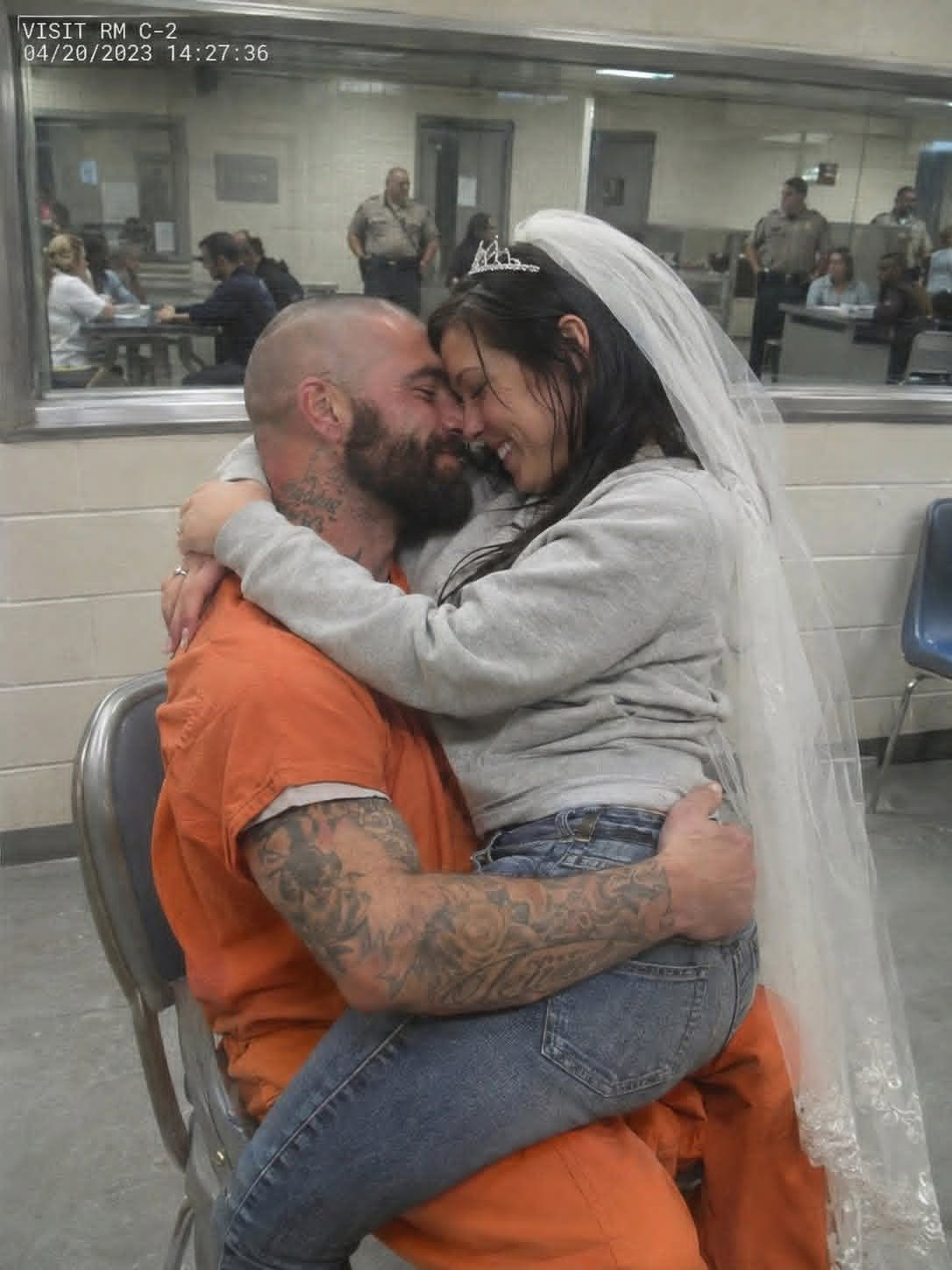
I married Jonah for two thousand dollars a month while he was serving twelve years in prison.
I told myself it was survival, not love.
I was twenty-seven years old. I was raising my little brother, Owen, by myself. And that morning, there had been a bright orange notice taped to our apartment door.
FINAL NOTICE. PAY OR QUITZ.
Three years later, Jonah walked out of prison a free man. On his eighth night in my apartment, he set a black box down on my kitchen table and said, “Now it’s my turn to be honest.”
Inside that box was the real reason his mother had chosen me.
And that was the night I learned that being poor had never made me invisible.
It had made me useful.
Owen saw the rent notice before I could hide it.
I’d come home from the breakfast shift at the diner and found him standing in the hallway outside our door, holding it. He was seventeen. Too tall for his secondhand sneakers, which I’d bought at the Goodwill on Fifth Street and which pinched his toes. Too proud to ask why I’d started putting extra water in the soup.
“Is it bad, Sadie?” he asked.
I took the notice out of his hand. I folded it in half, then in half again, and put it in my apron pocket.
“It’s paper,” I said. “Paper likes to act important.”
Owen didn’t smile.
He just looked at me. He had our mother’s eyes, gray-green, and when he looked at you like that, it was hard to lie.
“How much do we owe?”
“Go do your homework.”
“Sadie.”
“Eleven hundred,” I said. “Plus late fees. I’ll figure it out.”
He nodded slowly. Then he went inside and sat down at the kitchen table with his chemistry book, and he didn’t open it. He just sat there staring at the cover.
Let me tell you how we got there.
Our dad died when I was nineteen and Owen was nine. A heart attack, at the plumbing supply warehouse where he’d worked for twenty years. He was forty-six. He left us a used Ford Taurus and four hundred dollars in a checking account.
Our mom fell apart after that. She’d always been fragile. Sad in a way that came and went like weather. After Dad died, the sadness came and didn’t go. Then she found pills that helped, and then she found pills that helped more. When Owen was eleven, she left for a weekend in Tampa with a man named Rick and never came back.
She calls sometimes. On Christmas, usually. Not every Christmas.
So it was just me and Owen.
I dropped out of community college. I’d been studying to be a paralegal. I’d liked it. I was good at it. I liked reading contracts and finding the little sentence on page eleven that changed everything. But you can’t take night classes when you’re working two jobs and raising an eleven-year-old.
I got temporary guardianship of Owen when he was twelve. Every year, I had to go back to family court and file papers to renew it. Every year, I was terrified they’d look at our apartment and our bank account and decide I couldn’t do it.
They never did.
But I was always waiting for it.
By the time Owen was seventeen, I was working the breakfast shift at a diner called Lou’s and the night shift cleaning offices downtown. Twelve hours a day, six days a week. And it still wasn’t enough.
The rent had gone up twice that year. Owen needed shoes. Owen needed a calculator for his math class that cost a hundred and twenty dollars. Owen needed to take the SAT, and the SAT costs money, and so does sending your scores to colleges.
See Continuation On Next Page 👇
