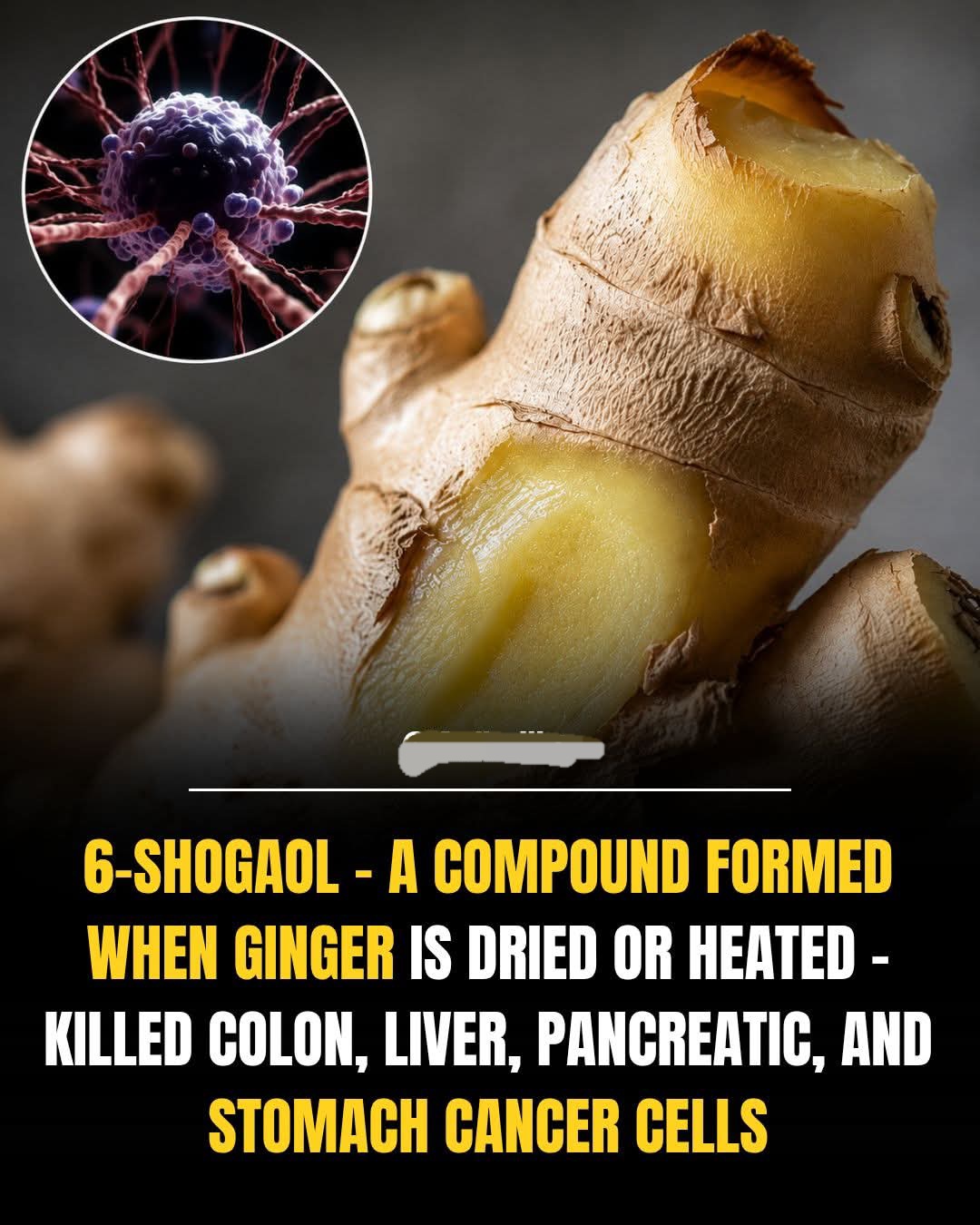
🌿 Ginger and Cancer Research: What Scientists Are Studying
For centuries, ginger has been used in traditional medicine and cooking around the world. Today, modern researchers are exploring whether some of ginger’s natural compounds may also have potential roles in cancer research and supportive care.
Laboratory and animal studies have produced intriguing findings, especially involving compounds naturally found in ginger such as:
- 6-Gingerol
- 6-Shogaol
- Zingerone
- Paradol
Scientists are investigating how these compounds interact with inflammation, oxidative stress, and cellular pathways associated with tumor growth.
However, it is extremely important to understand that most evidence so far comes from laboratory experiments and animal models—not large human clinical trials.
🧪 Why Researchers Are Interested in Ginger
Ginger contains a variety of biologically active compounds that appear to influence several processes involved in disease development.
Researchers are studying whether ginger compounds may help:
- Reduce oxidative stress
- Influence inflammatory pathways
- Affect cancer cell growth signals
- Support normal cellular defense mechanisms
These effects are part of why ginger continues to attract scientific attention in oncology research.
🦠 What Laboratory Studies Have Found
In laboratory settings, ginger-derived compounds have shown activity against certain cancer cells associated with:
- Colorectal cancers
- Gastric cancers
- Liver cancers
- Pancreatic cancers
- Other gastrointestinal cancers
Some studies suggest compounds like 6-Gingerol and 6-Shogaol may:
- Slow cancer cell growth
- Promote programmed cell death (apoptosis)
- Influence signaling pathways linked to tumor development
However, laboratory results do not automatically translate into proven treatments in humans.
🔥 Ginger and Inflammation
Chronic inflammation is believed to contribute to the development and progression of many diseases, including some cancers.
Ginger compounds may help influence inflammatory molecules involved in:
- Oxidative stress
- Cellular signaling
- Immune responses
This anti-inflammatory potential is one reason ginger is widely researched beyond cancer studies as well.
🤢 Ginger and Chemotherapy Side Effects
One of the most established medical uses of ginger involves nausea support.
Research suggests ginger may help reduce:
- Chemotherapy-related nausea
- Vomiting
- Digestive discomfort
Some studies are also exploring whether ginger could help support patients experiencing:
- Neuropathic discomfort
- Fatigue
- Oxidative stress associated with treatment
In some clinical settings, ginger is already used as a complementary supportive therapy for nausea management.
⚗️ Could Ginger Work Alongside Cancer Treatments?
Another area of interest involves whether ginger compounds may interact synergistically with conventional therapies.
Researchers are studying whether certain compounds may:
- Increase cancer cell sensitivity to treatment
- Support apoptosis in tumor cells
- Influence pathways related to drug resistance
But these findings remain experimental and require much more human research before conclusions can be made.
🧬 Nanotechnology and Ginger Research
One challenge with natural plant compounds is bioavailability—the body’s ability to absorb and use them effectively.
Scientists are now exploring:
- Nanoparticle delivery systems
- Encapsulation technologies
- Improved stability methods
These approaches may help deliver ginger compounds more efficiently in future medical research.
This field remains highly experimental but represents an active area of scientific investigation.
⚠️ Important Limitations
Despite promising findings, there are major limitations to current evidence.
Most studies involve:
- Cell cultures
- Laboratory conditions
- Animal experiments
Human bodies are much more complex than laboratory models.
At this stage:
- Ginger is not a cure for cancer
- Ginger should not replace medical treatment
- More clinical trials are still needed
Researchers continue investigating appropriate doses, long-term safety, and real-world effectiveness in patients.
🌿 Ginger as Part of a Healthy Lifestyle
While ginger is not a miracle treatment, it can still be a healthy addition to many diets.
Ginger may support:
- Digestion
- Anti-inflammatory balance
- General wellness
- Nausea relief
People commonly use it in:
- Tea
- Soups
- Smoothies
- Cooking
- Herbal preparations
⚠️ Who Should Use Caution?
Large amounts of ginger may not be suitable for everyone.
People taking:
- Blood thinners
- Certain diabetes medications
- Blood pressure medications
should speak with a healthcare professional before using concentrated ginger supplements regularly.
🌟 Final Thoughts
Research into ginger’s bioactive compounds—including 6-Gingerol, 6-Shogaol, Zingerone, and Paradol—continues to produce fascinating results in laboratory and animal studies.
Scientists are exploring how these compounds may influence inflammation, oxidative stress, tumor signaling pathways, and chemotherapy side effects. However, human clinical evidence remains limited, and ginger should be viewed as a supportive food—not a replacement for evidence-based cancer treatment.
Sometimes nature provides promising clues for future medicine.
But science still requires careful testing before hope becomes proven therapy. 🌿🧬
