If you want to grow big, healthy blueberries in your backyard, you have to understand exactly what is happening underground. Blueberries are unique plants that refuse to thrive in regular garden dirt. To unlock their full potential and harvest heavy yields, you need a highly acidic soil environment, specifically a pH resting between 4.5 and 5.5.
Many gardeners hear rumors that gathering pine needles is the hidden gold in your yard for growing blueberries. While pine needles are incredibly useful, relying on them to fix your soil is a common mistake that will leave your bushes struggling. Here is the real science behind growing a potent, heavy-bearing blueberry bush.
The Truth About Pine Needles
It is a popular belief that laying pine needles around your bushes will make the soil highly acidic as they decompose. This is a gardening myth. Fresh pine needles are naturally acidic when they first fall from the tree, but as soil microbes break them down, that acidity is neutralized. By the time they become part of the earth, they simply do not have the power to change the underlying chemistry of your soil.
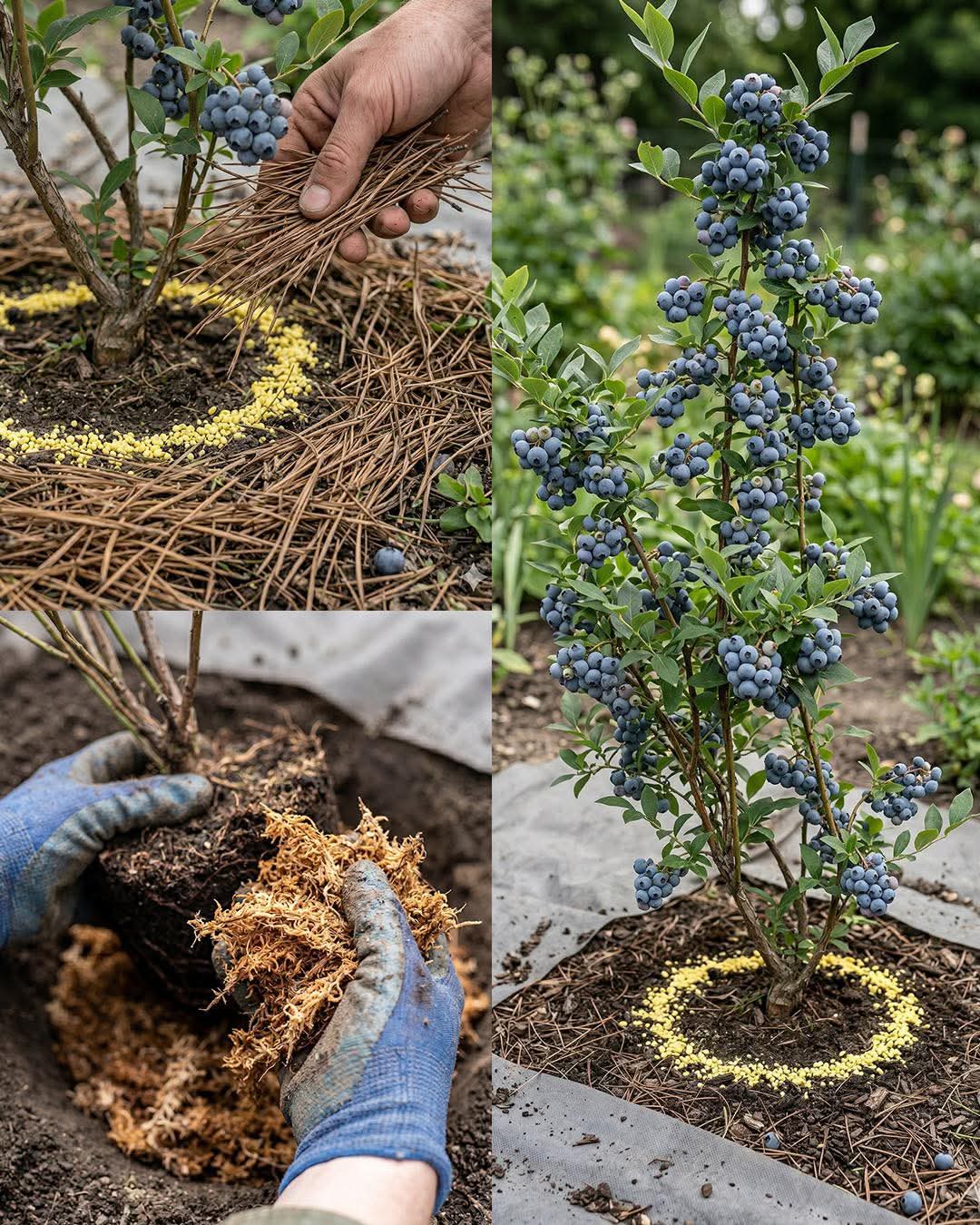
However, you absolutely must still use pine needles as a thick layer of top mulch. They are excellent for the plant’s health, just not for changing the pH. Here is why you need them:
- Moisture control: Blueberries have very shallow root systems that dry out fast. A thick blanket of pine needles locks crucial moisture into the ground.
- Root breathing: Pine needles do not pack down into a heavy, suffocating mat like grass clippings or heavy leaves do. They allow oxygen to flow freely down to the roots.
- Weed blocking: They do a fantastic job of stopping weeds from sprouting and stealing water from your berry bushes.
The Real Foundation: Sphagnum Peat Moss
To actually build an acidic home for your blueberry roots to expand into, your best tool is sphagnum peat moss. This is a dark, crumbly, dirt-like material mined from deep within ancient bogs. It naturally sits at a highly acidic pH level of 3.0 to 4.5.
When shopping, do not confuse this with the stringy, light-colored sphagnum moss used for houseplant pots. You want the heavy, tightly compressed bales of peat moss found outdoors in the soil section.
Peat moss is powerful because it holds a massive amount of water while keeping the dirt light and airy. But it must be prepared correctly before it touches your plants. Here is the exact method for using it:
- Break it up: Cut open the compressed plastic bale and crumble the hard chunks into a wheelbarrow until the material is loose and fluffy.
- Soak it completely: Dry peat moss naturally repels water. You must pour warm water over it and mix it thoroughly with your hands or a shovel until it feels exactly like a damp sponge.
- Mix it right: Never plant a bush in pure peat moss. Dig a hole twice as wide as the root ball and mix your wet peat moss evenly with the regular dirt you dug out. This 50/50 blend creates the perfect, moist, acidic transition zone for new roots.
The Potent Fix: Elemental Sulfur Granules
While peat moss gives your bush a perfect starting pocket, the most reliable way to lower your overall garden soil pH and keep it there permanently is by using elemental sulfur.
Elemental sulfur is a natural mineral you can easily buy in bags at any local garden center. Always buy the pellet or granular form, as the powder version blows into the air and is messy to breathe in or apply. Always avoid products labeled “aluminum sulfate,” as aluminum is highly toxic to blueberry roots.
Here is how to apply elemental sulfur for the best results:
- Test your soil first: Buy a basic soil pH tester. You need to know your starting number to figure out exactly how much sulfur to spread.
- Plan ahead: Sulfur is not an instant chemical fix. Soil bacteria need several months to slowly consume the sulfur and convert it into acid in the dirt. For the absolute best results, mix the granules into your soil up to a full year before you plant the bushes.
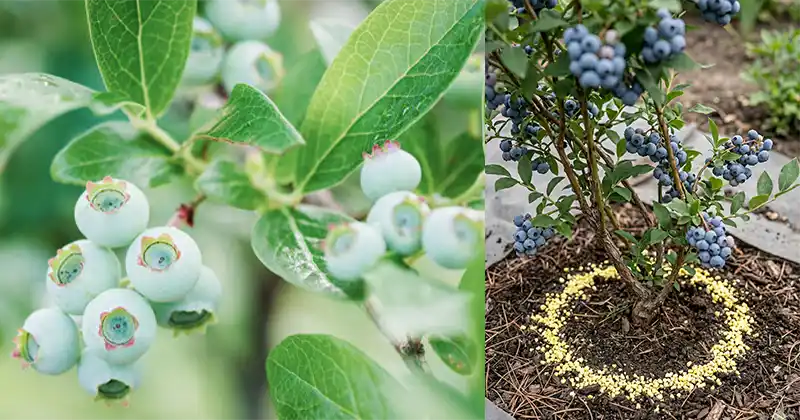
- Top dressing: If your bushes are already planted, you can still use it. Simply scratch the sulfur pellets into the surface of the soil in a wide circle around the base of the bush, making sure to leave a small gap away from the main woody stem.
Growing a massive blueberry harvest comes down to a simple, proven system. Use elemental sulfur granules to naturally drop the pH of your earth over time. Mix deeply hydrated sphagnum peat moss into the planting hole to create a highly acidic, sponge-like home for the roots. Finally, cover the soil with a thick blanket of pine needles to protect the roots, hold in moisture, and let the plant breathe.
Inspired by this? Share the article with your friends!
