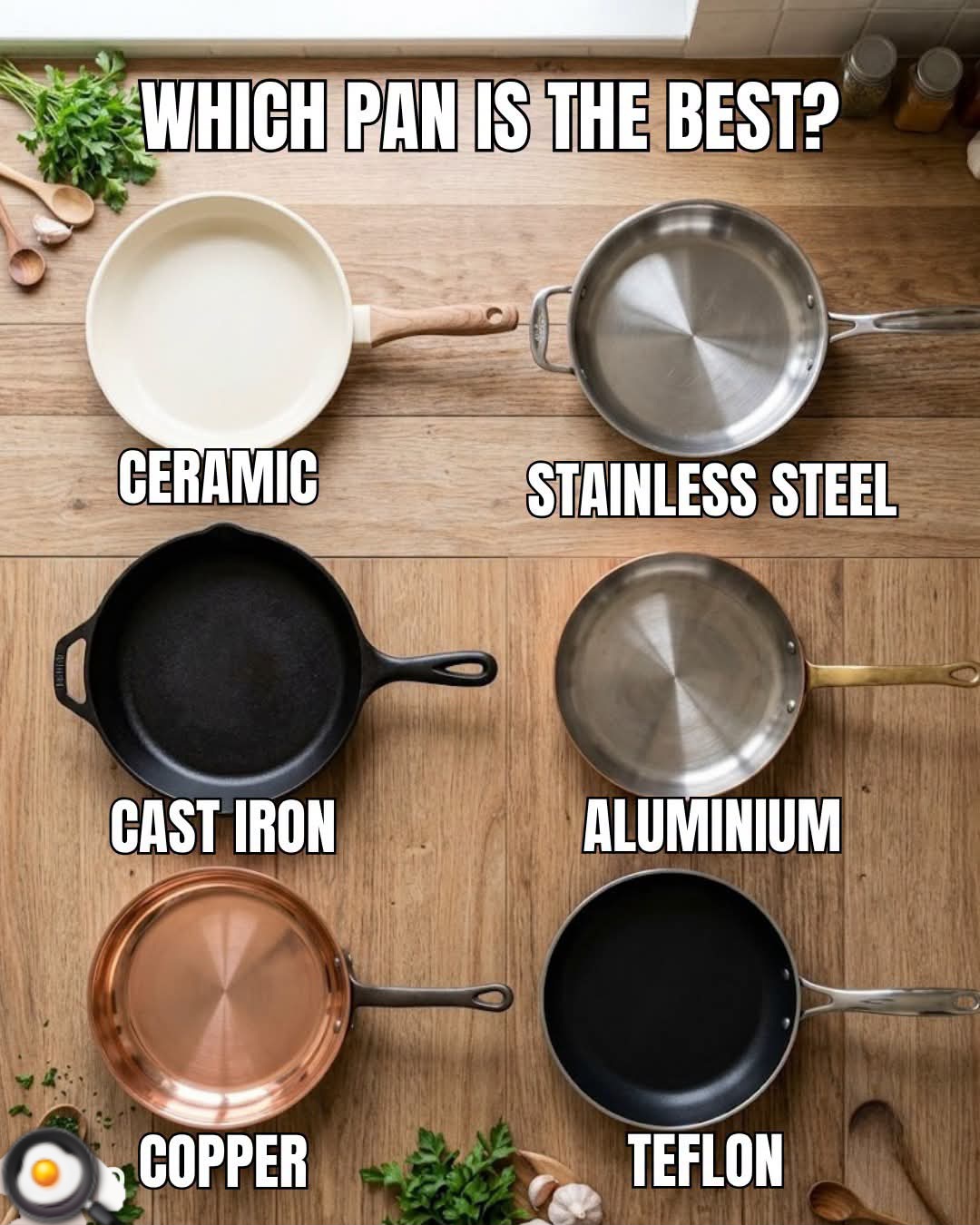
🍳 Which Pan Is the Best? Ceramic, Stainless Steel, Cast Iron, Aluminum, Copper, or Nonstick?
Walk into any cookware store, and you’ll find dozens of different pans claiming to be the best. Ceramic, stainless steel, cast iron, aluminum, copper, and nonstick all have loyal fans—and each material has its own strengths and weaknesses.
So, which one deserves a place in your kitchen?
The truth is, there isn’t a single “best” pan for every recipe. The ideal choice depends on what you’re cooking, how much maintenance you’re willing to do, and your cooking style.
Let’s compare the most popular options.
🍳 Ceramic
Ceramic-coated cookware has become increasingly popular thanks to its naturally slick cooking surface.
Pros
- Food releases easily.
- Requires less oil or butter.
- Easy to clean.
- Attractive appearance.
- Great for eggs, pancakes, and delicate foods.
Cons
- The nonstick coating gradually wears down.
- High heat may shorten its lifespan.
- Usually not as durable as cast iron or stainless steel.
Best for: Eggs, fish, vegetables, and light everyday cooking.
🥩 Stainless Steel
Professional chefs often reach for stainless steel because of its versatility and durability.
Pros
- Extremely durable.
- Doesn’t rust easily.
- No coating to wear off.
- Excellent for browning meat.
- Dishwasher safe on many models.
Cons
- Food may stick if not preheated properly.
- Requires a little cooking technique.
- Cleaning burnt-on food may take extra effort.
Best for: Searing, sautéing, sauces, and everyday cooking.
🔥 Cast Iron
Cast iron has been used for generations and can last a lifetime—or even longer—with proper care.
Pros
- Outstanding heat retention.
- Naturally develops a nonstick seasoning over time.
- Excellent for high-heat cooking.
- Can go from stovetop to oven.
- Extremely durable.
Cons
- Very heavy.
- Requires seasoning.
- Can rust if stored wet.
- Takes longer to heat up.
Best for: Steaks, cornbread, roasting, frying, and baking.
🍲 Aluminum
Aluminum cookware is lightweight and heats very quickly.
Pros
- Excellent heat conductivity.
- Lightweight.
- Usually affordable.
- Heats evenly.
Cons
- Plain aluminum can scratch easily.
- May react with acidic foods unless anodized or coated.
- Doesn’t retain heat as well as cast iron.
Best for: Everyday cooking, soups, pasta, and quick meals.
🥘 Copper
Copper cookware is admired by many professional chefs because of its precise temperature control.
Pros
- Exceptional heat conductivity.
- Heats and cools quickly.
- Precise cooking control.
- Beautiful appearance.
Cons
- Expensive.
- Requires polishing to maintain its shine.
- Often needs careful maintenance.
- Usually lined with stainless steel or tin.
Best for: Delicate sauces, candy making, and recipes requiring precise temperature control.
🍳 Nonstick (Teflon-Coated)
Modern nonstick pans are incredibly convenient for everyday cooking.
Pros
- Food releases easily.
- Requires very little oil.
- Easy cleanup.
- Ideal for beginners.
Cons
- The coating eventually wears out.
- Metal utensils can damage the surface.
- Very high heat may shorten the pan’s lifespan.
Today’s nonstick cookware is generally considered safe when used according to the manufacturer’s instructions. Avoid overheating empty pans and replace cookware if the coating becomes badly scratched or begins to peel.
Best for: Eggs, pancakes, grilled cheese sandwiches, and delicate foods.
Quick Comparison
| Pan Type | Durability | Heat Control | Easy Cleanup | Best For |
|---|---|---|---|---|
| Ceramic | ★★★☆☆ | ★★★☆☆ | ★★★★★ | Eggs, vegetables |
| Stainless Steel | ★★★★★ | ★★★★☆ | ★★★☆☆ | Browning, sautéing |
| Cast Iron | ★★★★★ | ★★★★★ | ★★☆☆☆ | Steaks, baking |
| Aluminum | ★★★☆☆ | ★★★★☆ | ★★★★☆ | Everyday cooking |
| Copper | ★★★★☆ | ★★★★★ | ★★★☆☆ | Precision cooking |
| Nonstick | ★★★☆☆ | ★★★☆☆ | ★★★★★ | Delicate foods |
Which One Is Best?
Here’s a simple guide:
Choose ceramic if you want:
- Easy cleanup
- Low-fat cooking
- Everyday convenience
Choose stainless steel if you want:
- Long-lasting cookware
- Excellent browning
- Versatility
Choose cast iron if you want:
- Incredible searing
- Outstanding heat retention
- Cookware that can last for generations
Choose aluminum if you want:
- Lightweight cookware
- Fast heating
- Budget-friendly options
Choose copper if you want:
- Professional-level temperature control
- Premium performance
- Beautiful cookware
Choose nonstick if you want:
- Effortless food release
- Quick breakfasts
- Simple cleanup
The Bottom Line
Rather than searching for one “perfect” pan, many experienced home cooks keep a variety of cookware on hand. A nonstick pan for eggs, a stainless steel skillet for everyday meals, and a cast iron pan for steaks and cornbread can handle almost any recipe.
The best pan isn’t necessarily the most expensive—it’s the one that fits your cooking style and helps you enjoy time in the kitchen.
💬 Now it’s your turn! Which pan do you reach for most often?
🍳 Ceramic
🥩 Stainless Steel
🔥 Cast Iron
🍲 Aluminum
🥘 Copper
🍳 Nonstick (Teflon)
Tell us your favorite in the comments—and let us know why it’s your go-to pan!
