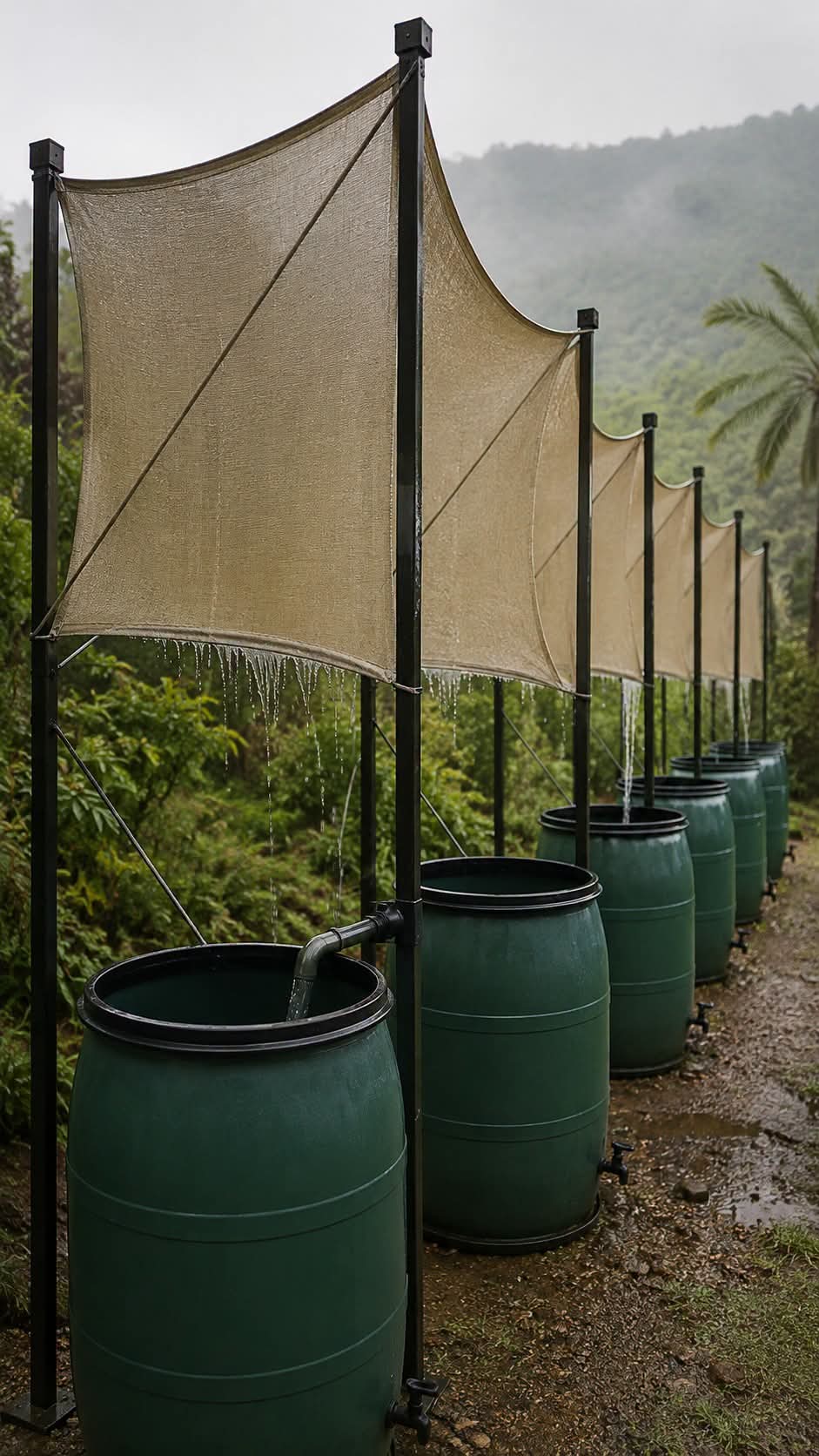
In regions where rainfall is scarce but fog is frequent, fog harvesting offers an innovative and sustainable way to collect fresh water.
By using specially designed mesh panels, tiny water droplets suspended in the air condense on the netting, merge into larger drops, and flow into storage barrels.
This low-energy system has been used in arid and mountainous regions around the world to supplement water supplies for agriculture, livestock, and even household use.
What Is Fog Harvesting?
Fog harvesting is a passive water collection method that captures moisture from fog using vertical mesh screens.
As moist air passes through the mesh, water droplets collect on the fibers and drip into gutters connected to storage tanks.
Unlike rainwater harvesting, this system works even when there is little or no rainfall, provided dense fog is common.
Benefits of Fog Collection
Installing a fog harvesting system offers several advantages:
Produces water without electricity.
Provides a renewable source of fresh water.
Helps irrigate gardens and crops.
Supports communities in water-scarce regions.
Requires relatively low maintenance.
Reduces dependence on groundwater and transported water.
How the System Works
The process is simple and efficient:
Moist fog passes through a specially designed mesh.
Tiny droplets condense on the mesh fibers.
Droplets combine into larger drops.
Gravity carries the water into a collection gutter.
The gutter directs the water into storage barrels or tanks.
The amount of water collected depends on fog density, wind speed, mesh design, and local climate.
Materials You’ll Need
To build a basic fog collector, you’ll need:
Fog collection mesh (Raschel mesh or other fog-harvesting mesh)
Metal or pressure-treated wooden support frame
Concrete footings or anchors
PVC or aluminum collection gutter
PVC piping
Food-grade storage barrels or water tanks
Fine mesh screen to keep debris out
Hose or outlet valve for water access
Choosing the Best Location
Fog collectors perform best in areas with:
Frequent fog events.
Moderate, consistent winds.
Elevated hills or mountain ridges.
Open spaces without nearby obstacles blocking airflow.
The mesh should be installed perpendicular to the prevailing wind for maximum efficiency.
Best Uses for Collected Water
Depending on local air quality and water testing results, fog water can be used for:
Irrigating vegetable gardens.
Watering fruit trees.
Livestock watering.
Landscape irrigation.
Replenishing ponds.
If intended for drinking, the water should be filtered, tested, and disinfected according to local public health recommendations.
Maintenance Tips
To keep the system working efficiently:
Inspect the mesh regularly for tears.
Clean dust, leaves, and debris from the mesh.
Flush gutters and pipes periodically.
Clean storage tanks at least once a year.
Check support posts and anchors after strong winds.
Factors That Affect Water Production
Several conditions influence how much water a fog collector can produce:
Fog frequency and thickness.
Wind direction and speed.
Size of the mesh panels.
Quality of the collection mesh.
Elevation and surrounding terrain.
Larger mesh systems in consistently foggy climates can collect significant amounts of water, while smaller systems may produce much less.
Safety Considerations
For reliable and safe operation:
Use food-grade storage containers if storing water for household use.
Anchor support structures securely to withstand high winds.
Install overflow outlets to prevent tanks from overflowing.
Test water quality before using it for drinking or food preparation.
Inspect the system regularly for damage caused by weather.
Final Thoughts
Fog harvesting is a remarkable example of sustainable water collection, transforming moisture in the air into a valuable resource.
With a simple mesh structure, proper placement, and regular maintenance, this environmentally friendly system can provide supplemental water for gardens, agriculture, and rural communities. In regions where fog is common and water is limited, fog collection offers an innovative solution that harnesses nature without relying on electricity or complex technology.
