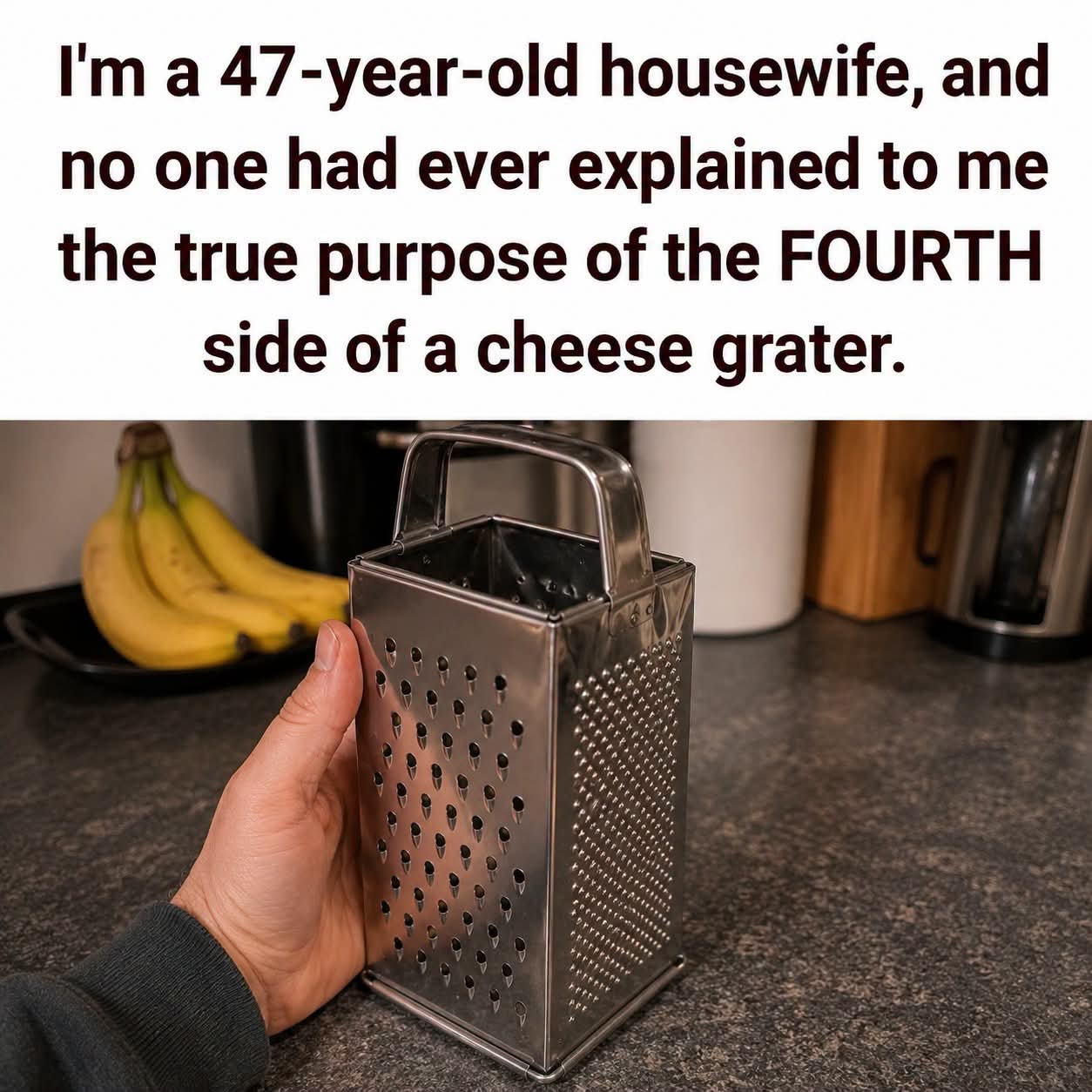
“I’m a 47-Year-Old Housewife, and No One Had Ever Explained to Me the True Purpose of the Fourth Side of a Cheese Grater”
Most of us use only one or two sides of a box grater. We grate cheese, maybe shred a carrot, and then put it back in the drawer without giving the other sides a second thought.
But if you’ve ever looked at the side with the small, rough, star-shaped holes and wondered what it’s actually for, you’re not alone.
Many people reach adulthood without ever learning its true purpose.
The Four Sides of a Box Grater
Although designs vary slightly, a traditional box grater usually has four different grating surfaces, each made for a specific task.
Large Holes
These are the ones most people use.
They’re perfect for shredding cheddar, mozzarella, potatoes for hash browns, zucchini, cabbage, and many other vegetables.
Medium Holes
This side creates smaller shreds that melt quickly and blend well into recipes.
It’s great for cheese, carrots, apples, and vegetables used in salads or baking.
Slicing Blade
The side with long horizontal slots isn’t actually for grating—it’s for slicing.
It produces thin slices of cucumbers, potatoes, zucchini, chocolate, or firm cheeses.
Using care is important, as this side can be especially sharp.
The Fourth Side: Tiny Star-Shaped Holes
This is the side that confuses the most people.
Rather than creating long shreds, these tiny raised holes are designed to produce a very fine texture or even a soft paste.
It’s ideal for:
- Hard cheeses like Parmesan or Pecorino.
- Fresh nutmeg.
- Garlic.
- Ginger.
- Citrus zest.
- Chocolate for delicate dessert toppings.
Because the pieces are so fine, ingredients blend smoothly into sauces, soups, marinades, and baked goods.
Why It Works So Well
The tiny teeth cut food into extremely small particles instead of long strands.
This releases more aroma from ingredients like garlic, ginger, and citrus peel while allowing hard cheeses to melt quickly into hot dishes.
It’s also why many chefs reach for this side when they want flavor without noticeable chunks.
A Few Helpful Tips
To make the most of the fourth side:
- Wash the grater soon after using garlic or cheese so residue doesn’t dry onto the tiny holes.
- Hold the grater securely on a stable surface.
- Stop before your fingers get too close to the blades.
- For citrus, grate only the colored outer peel, avoiding the bitter white pith underneath.
A Small Kitchen Secret
Kitchen tools often have features that go unnoticed for years, and the fourth side of a box grater is a perfect example.
What many people assume is the “mystery side” is actually one of the most versatile surfaces on the entire tool. Once you start using it for zesting citrus, grating Parmesan, or turning fresh garlic and ginger into a fine paste, you may find yourself reaching for it more often than any other side.
Sometimes the most useful kitchen tricks are hiding in plain sight—and all it takes is discovering what a familiar tool was designed to do all along.
