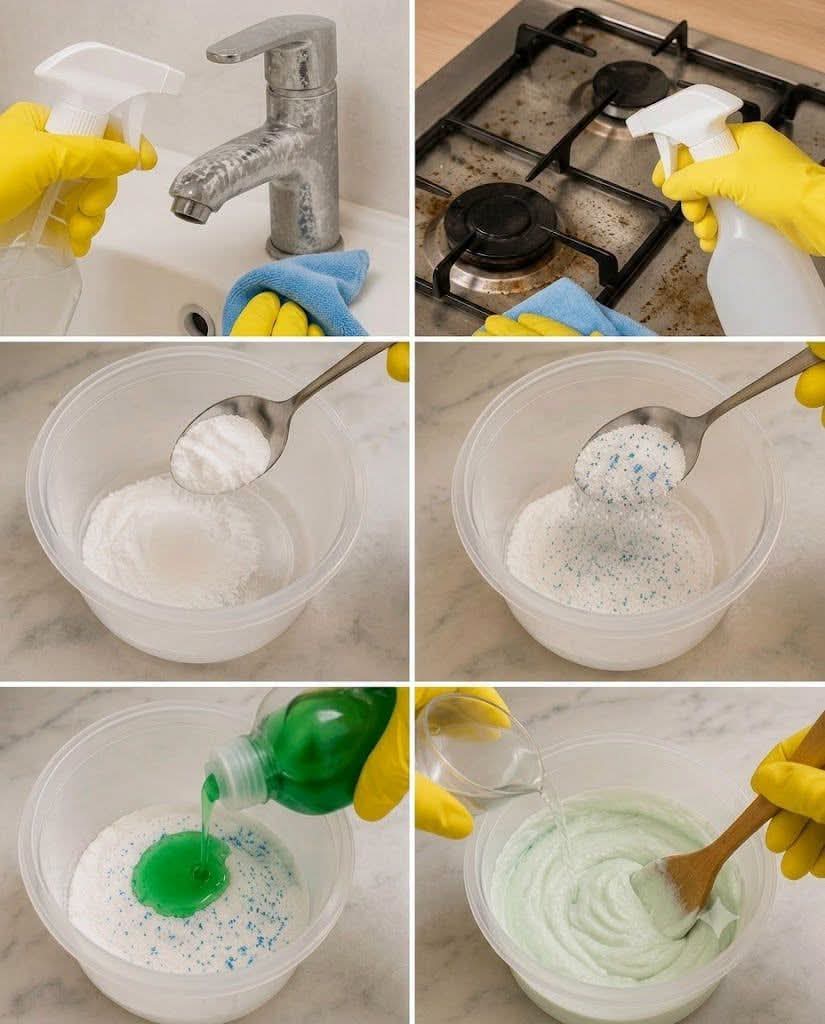
Step 1: Combine the Dry Ingredients
Place the baking soda into a bowl.
Add the powdered laundry detergent.
Mix thoroughly until evenly blended.
This creates the cleaning base.
Step 2: Add the Dish Soap
Pour the dishwashing liquid over the dry ingredients.
Mix slowly.
The mixture will become thick and slightly sticky.
Step 3: Add Warm Wate
Slowly pour in warm water while stirring continuously.
Keep mixing until you achieve a creamy consistency similar to yogurt.
If it’s too thick, add a little more water.
If it’s too thin, add more baking soda.
Step 4: Prepare the Surface
Before applying the cleaner:
- Remove loose dirt.
- Wipe away crumbs.
- Spray the surface lightly with water.
This helps loosen grime before cleaning.
Step 5: Apply the Cleaning Paste
Spread a generous layer onto:
- Bathroom faucets
- Shower doors
- Sink basins
- Kitchen stovetops
- Oven doors
- Stainless steel sinks
- Countertops (non-porous)
Allow it to sit for 10–15 minutes.
For heavy grease or mineral buildup, let it sit up to 20 minutes.
Step 6: Scrub Gently
Using a soft sponge or microfiber cloth:
- Rub in circular motions.
- Focus on stained areas.
- Reapply cleaner if necessary.
The baking soda provides gentle scrubbing action while the detergent and soap loosen grime.
Step 7: Rinse Thoroughly
Rinse with warm water.
Wipe dry using a clean microfiber cloth.
Most surfaces will look noticeably brighter after drying.
Where This Cleaner Works Best
This homemade mixture performs well on:
✔ Bathroom sinks
✔ Chrome faucets
✔ Shower glass
✔ Ceramic tile
✔ Stainless steel sinks
✔ Kitchen backsplashes
✔ Gas stove grates
✔ Range hoods
✔ Oven exterior
✔ Refrigerator handles
✔ Plastic outdoor furniture
Stains It Can Help Remove
Depending on the surface, this cleaner can help remove:
- Soap scum
- Hard water deposits
- Greasy fingerprints
- Cooking oil
- Food splatters
- Light rust stains
- Dust buildup
- Sticky residues
Surfaces to Avoid
Do not use this cleaner on:
- Natural marble
- Granite without proper sealing
- Limestone
- Aluminum
- Waxed wood
- Unsealed wood
- Silk or delicate fabrics
- Painted walls with matte finishes
Always test on a small hidden area first.
Tips for Stubborn Limescale
If your faucet has thick mineral deposits:
- Apply the paste.
- Cover with a damp paper towel.
- Leave for 20 minutes.
- Scrub gently.
- Rinse thoroughly.
You may need to repeat the process for heavy buildup.
Tips for Heavy Kitchen Grease
For greasy stovetops:
- Remove loose grease first with paper towels.
- Apply the paste generously.
- Wait 15 minutes.
- Scrub using a non-scratch sponge.
- Wipe clean with warm water.
This method works especially well around burner rings and control knobs.
Can You Store the Mixture?
Yes.
Transfer it into an airtight container.
Store it in a cool, dry place.
For best results, use within 1–2 weeks, stirring before each use if separation occurs.
Extra Cleaning Boost
For particularly dirty areas:
- Use warm (not hot) water.
- Let the paste sit longer.
- Repeat once if necessary.
Patience often works better than aggressive scrubbing.
Safety Tips
- Wear gloves if you have sensitive skin.
- Never mix homemade cleaners with bleach or ammonia.
- Keep out of reach of children and pets.
- Avoid getting the mixture in your eyes.
- Rinse food preparation surfaces thoroughly after cleaning.
Frequently Asked Questions
Is it safe for stainless steel?
Yes, when used with a soft cloth or non-abrasive sponge.
Does it remove mold?
It can help remove surface dirt and soap residue around mold, but it is not a disinfectant or a dedicated mold remover.
Will it whiten grout?
It may brighten dirty grout by removing surface grime, though deep stains may require a specialized grout cleaner.
Can it replace commercial cleaners?
For everyday grease and limescale, many people find it works very well. However, disinfecting, severe mold, or heavy rust may require products designed for those specific tasks.
Final Thoughts
You don’t always need expensive specialty cleaners to keep your home sparkling. This simple homemade paste combines common household ingredients to tackle two of the biggest cleaning challenges—bathroom limescale and stubborn kitchen grease.
Used correctly, it can leave faucets shining, stovetops cleaner, sinks brighter, and everyday messes much easier to handle. Just remember that no homemade cleaner is suitable for every surface, so always test in an inconspicuous area first and avoid delicate natural stone or unfinished materials.
