Did You Know You Can Plant Some Seeds From Your Spice Cabinet? 🌱
FYI for those who didn’t know… many seeds in your spice cabinet can actually be planted!
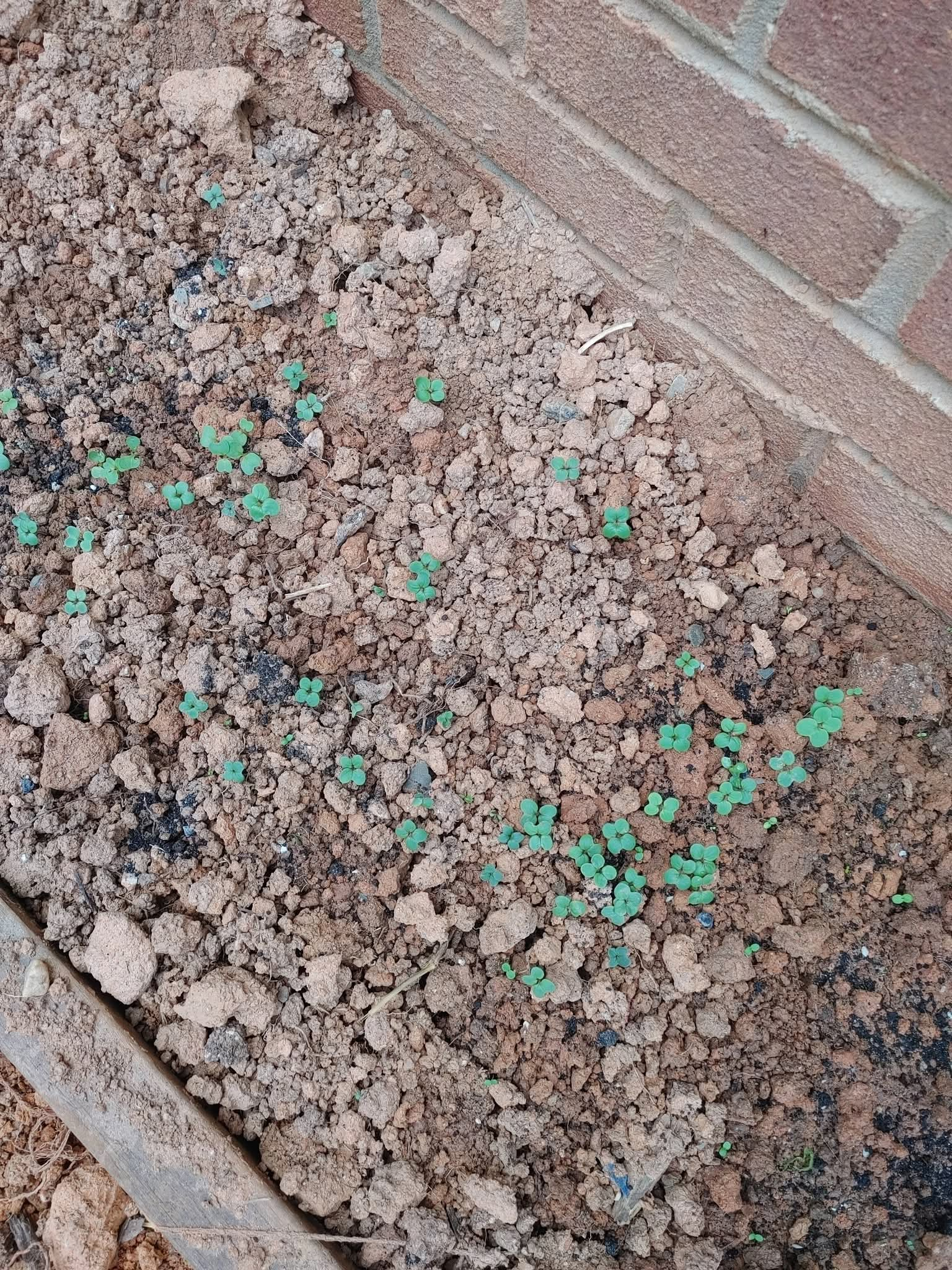
I couldn’t find mustard seeds locally for planting, so I decided to try something simple: I grabbed a container of mustard seeds from the grocery store, planted them, and waited.
About a week later, they’re doing great! 🌱💚
It sounds almost too easy, but mustard really can be grown from seed—and mustard is a relatively quick, cool-season crop. Extension gardening resources note that mustard seeds can germinate in roughly 7–10 days under favorable conditions, with germination best around 55–65°F (13–18°C). (Utah State University Extension)
So that little jar or bottle of mustard seed sitting in the spice cabinet may be more interesting than you thought!
🌱 Can Grocery-Store Mustard Seeds Really Grow?
Sometimes, yes.
The important thing is that the seeds need to still be viable.
Spice seeds aren’t necessarily packaged or sold with gardening in mind, so germination isn’t guaranteed. They may have been stored for a long time, exposed to heat or moisture, or processed in a way that reduces viability.
But mustard seeds are actual seeds from mustard plants. If they’re viable and haven’t been treated in a way that prevents germination, they may sprout.
That’s why a small experiment is worth trying.
And mustard is particularly rewarding because it can be quite fast-growing under the right conditions.
🌿 How to Try It at Home
You don’t need a huge garden.
You can start with:
- Mustard seeds from the spice aisle
- A small seed tray or container
- Quality potting mix
- Water
- A sunny location
Step 1: Check Your Seeds
Look for plain mustard seed rather than a prepared seasoning blend.
Yellow, brown, or black mustard seeds may be sold for culinary use. Different mustard types can produce somewhat different plants and flavors, so don’t necessarily expect every packet or jar to produce exactly the same variety.
Step 2: Prepare the Soil
Use loose, well-draining potting soil.
Moisten the soil before sowing so the tiny seeds don’t get washed away when you water them.
Step 3: Plant the Seeds
Mustard seeds are tiny, so they don’t need to be buried deeply.
A planting depth of around ½ inch is commonly recommended for mustard. (Utah State University Extension)
Sprinkle the seeds over the soil and cover them lightly.
Step 4: Keep the Soil Moist
Keep the soil consistently moist but not waterlogged.
Mustard needs moisture for good growth, and inconsistent moisture can affect the quality of the leaves. (Utah State University Extension)
Step 5: Give Them Light
Once the seedlings emerge, give them plenty of light.
If you’re growing them indoors, a sunny window can work, although a grow light can be useful when natural light is limited.
🌱 Don’t Be Surprised If They Sprout Quickly!
One of the fun things about mustard is how quickly you can see results.
Depending on conditions, mustard can emerge within roughly a week. Some extension sources list even faster germination under ideal conditions. (Utah State University Extension)
That makes mustard a great little experiment for children, beginning gardeners, or anyone who simply enjoys seeing whether something from the pantry can become something you grow yourself.
There’s something pretty satisfying about watching a handful of tiny spice seeds turn into actual green plants.
🌿 What Happens After Germination?
At first, you’ll see tiny seedlings with their first leaves.
As they develop, thin them so the strongest plants have room to grow.
For mustard grown as greens, recommendations vary by variety and intended harvest, but roughly 3–5 inches between plants is a common home-garden spacing. (Illinois Extension)
And don’t automatically throw away the little seedlings you remove!
Young mustard greens can be edible, although the flavor becomes stronger as the plants mature.
🥗 You Can Grow Mustard for the Greens
If you’re mainly interested in eating the leaves, you don’t necessarily have to wait for seeds.
Mustard greens are a cool-season vegetable and can be harvested while young and tender. Some gardening guidance recommends harvesting young leaves when they’re around 4–5 inches long for a milder texture and flavor. (Illinois Extension)
They can be:
- Added to salads
- Cooked like other greens
- Added to sandwiches
- Stir-fried
- Mixed into soups and stews
- Sautéed with garlic
- Added to wraps
The flavor can range from mild and peppery to distinctly spicy depending on the variety and age of the leaves.
🌼 What If You Want to Harvest Your Own Mustard Seeds?
That’s where this little experiment gets even more interesting.
Instead of harvesting the plant young, you can allow it to mature and flower.
Mustard produces small yellow flowers, followed by seed pods containing the seeds. Some mustard varieties mature in roughly 80–95 days, although the exact timing depends on the type and growing conditions. (Corn Agronomy)
Once the seed pods mature and dry, you can harvest the seeds.
Imagine starting with a tiny container of grocery-store mustard seeds and eventually harvesting your own mustard seeds from the plants you grew.
That’s a pretty satisfying gardening experiment!
☀️ Choose the Right Season
One thing to remember: mustard is generally a cool-season crop.
It tends to perform best when temperatures aren’t excessively hot. Extension recommendations commonly suggest spring or fall growing, depending on your climate. Hot weather can cause mustard to bolt—meaning it rapidly produces a flower stalk and goes to seed—and the leaves can become stronger and tougher. (Illinois Extension)
If you’re trying this experiment and your first batch doesn’t perform well, don’t immediately assume the seeds were bad.
Temperature may be the problem.
Mustard generally prefers cooler growing conditions.
🧪 Want to Test Your Spice Seeds Before Planting?
Here’s a fun little germination experiment.
Take a damp paper towel and place several mustard seeds on it.
Fold the towel over the seeds and place it inside a loosely closed plastic bag or container.
Keep it somewhere comfortably warm but not hot.
Check it every day.
If the seeds are viable, you may see little roots beginning to emerge.
This is a simple way to test a small batch before filling an entire garden bed with them.
🌱 Other Spice-Cabinet Seeds Worth Experimenting With
Mustard isn’t the only possibility.
Depending on how the spice was processed and stored, some whole spices are actually seeds or dried fruits that may sometimes be capable of germination.
Examples that gardeners may experiment with include:
- Mustard seed
- Coriander seed
- Fennel seed
- Dill seed
- Cumin seed
- Fenugreek
- Anise seed
But there’s an important caveat:
Not every culinary spice will grow.
Some have been heated, irradiated, heavily processed, stored for too long, or otherwise handled in ways that can reduce or eliminate germination.
So think of this as a fun experiment rather than a guaranteed source of garden seed.
💚 The Best Part? You Have Almost Nothing to Lose
You don’t need an expensive seed collection to start experimenting.
If you already have some whole mustard seed in your kitchen, try planting a few.
If they sprout—fantastic!
If they don’t, you’ve only used a tiny amount of an inexpensive spice.
And if they do grow, you’ve turned something from the pantry into something living.
That’s one of the things I love about gardening.
Sometimes the best experiments start with a question:
“I wonder if this will actually grow?” 🌱
Then you plant a few seeds…
Water them…
Wait…
And suddenly there are tiny green leaves pushing through the soil.
🌱 Have You Ever Planted a Spice From Your Kitchen?
Be honest! 👀
Have you ever planted mustard seeds—or another spice from your pantry—and actually gotten it to grow?
🌱 Yes, and it worked!
🌿 I’ve tried mustard specifically.
🪴 I’ve grown other pantry seeds.
😂 I’ve never tried it, but now I want to!
🤔 I didn’t know this was possible!
Tell us what you planted and how it turned out! 👇
