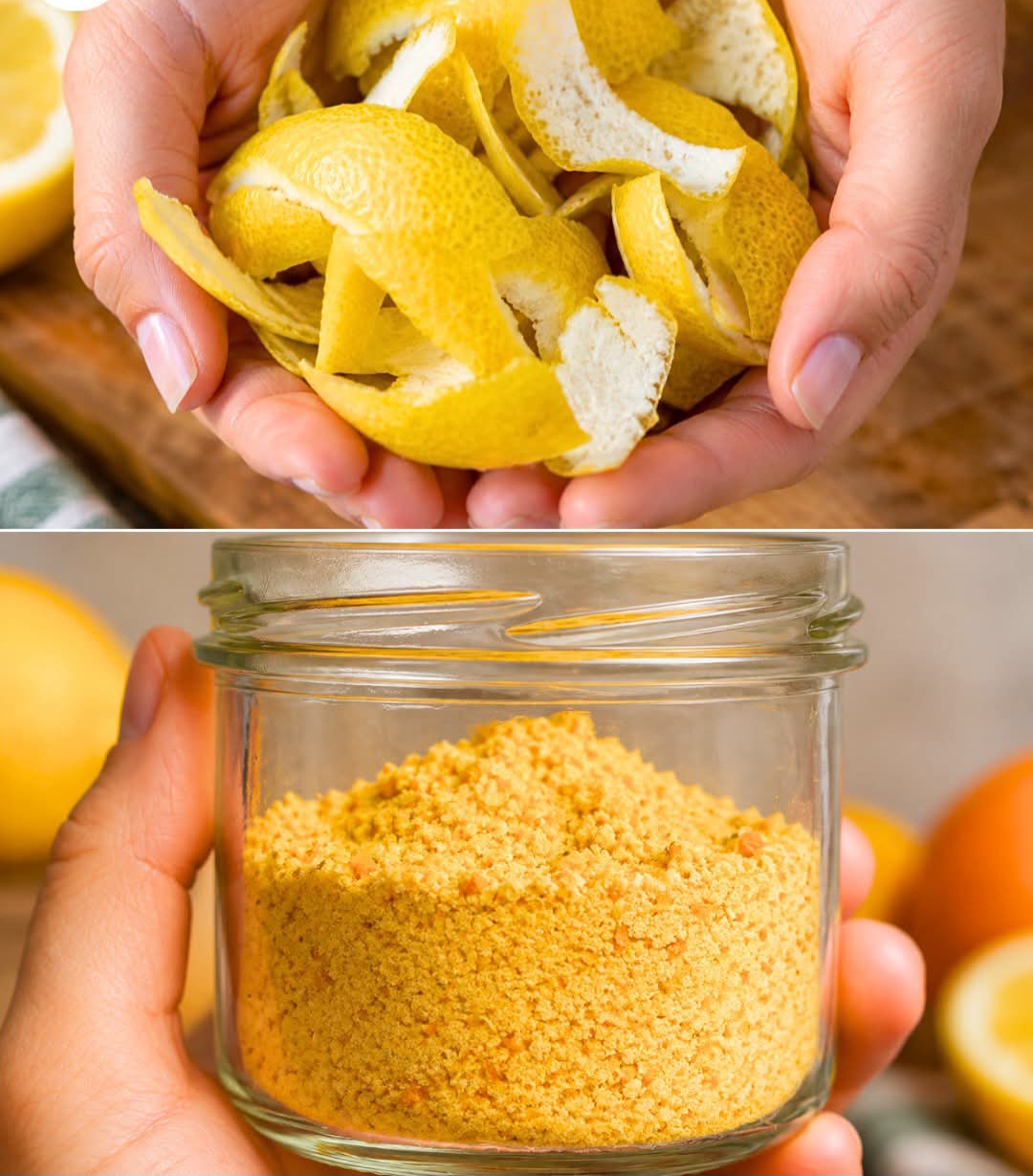
🍋 Make Homemade Lemon Peel Powder
Before you toss those lemon peels into the trash, give them a second life!
Lemon zest contains plenty of bright citrus flavor, and drying the peels turns them into a convenient powder that can be stored and used whenever a recipe needs a little lemony goodness.
It’s simple, inexpensive, and a fantastic way to reduce food waste.
🍋 Ingredients
- Peels from 4–6 fresh lemons
That’s it!
🧂 Optional Additions
Once you’ve made your lemon peel powder, you can leave it plain or combine it with other ingredients to create a homemade citrus seasoning.
Try mixing it with:
- Sea salt
- Black pepper
- Garlic powder
- Dried herbs
- Sugar
- Cinnamon
- Dried orange peel
🥄 You’ll Also Need
- Vegetable peeler or zester
- Baking sheet or dehydrator
- Spice grinder, coffee grinder, or food processor
- Clean, completely dry airtight jar
👩🍳 How to Make Lemon Peel Powder
1. Wash the Lemons
Before peeling, wash the lemons thoroughly under running water and scrub the surface gently.
Pat them completely dry.
If possible, use lemons with edible-quality peel and wash them well before removing the zest.
2. Remove the Peels
Peel the lemons using a vegetable peeler.
Try to remove mostly the yellow outer layer and as little of the white pith as possible.
The white pith is edible but can add a noticeable bitter flavor to the finished powder.
Don’t worry if some pith remains—just avoid making the pieces especially thick.
3. Dry the Peels
Spread the lemon peels in a single layer on a dehydrator tray or baking sheet.
Dehydrator Method
Dry at approximately 125–135°F (52–57°C) until the peels are completely dry and crisp.
Depending on the thickness and moisture content, this can take several hours.
Oven Method
Place the peels in a single layer on a baking sheet.
Dry them at the lowest temperature your oven allows, preferably around 150°F (65°C) or lower.
Keep an eye on them and turn them occasionally.
The peels are ready when they feel completely dry and brittle rather than flexible.
4. Let Them Cool
Allow the dried peels to cool completely before grinding.
This is important because grinding warm peels can allow condensation to form inside the storage container.
5. Grind Into Powder
Place the dried lemon peels into a clean, dry spice grinder, coffee grinder, or food processor.
Pulse until you have a fine powder.
If you’re using a coffee grinder, you may want to dedicate a small grinder to spices and dried ingredients so your lemon powder doesn’t pick up a coffee flavor.
6. Store Your Lemon Powder
Transfer the powder to a clean, completely dry airtight glass jar.
Label it with the date and keep it in a cool, dark, dry cupboard.
For the best flavor, make small batches and use them while the citrus aroma is still strong.
If you notice moisture, mold, an unusual smell, or any other signs of spoilage, discard the powder.
🍋 How to Use Lemon Peel Powder
This little jar can become surprisingly useful in the kitchen.
Add It to Baking
Sprinkle a little into:
- Cookies
- Cakes
- Muffins
- Quick breads
- Pancakes
- Scones
- Cheesecake
Flavor Drinks
Add a small amount to tea, lemonade, or homemade drink mixes.
Season Savory Foods
Lemon powder works beautifully in:
- Roasted vegetables
- Chicken seasoning
- Fish
- Rice
- Pasta
- Salad dressings
- Homemade spice blends
Make Lemon Sugar
Combine lemon peel powder with granulated sugar.
Use the mixture to flavor:
- Tea
- Cookies
- Cakes
- Fruit
- Pancakes
- Homemade desserts
Make Lemon Salt
Mix dried lemon peel powder with salt for a bright homemade finishing seasoning.
Try it on roasted vegetables, grilled fish, chicken, potatoes, or salads.
🍋 Homemade Lemon Sugar
For a simple pantry staple, combine:
- 1 cup granulated sugar
- 1–2 teaspoons lemon peel powder
Mix thoroughly and store in an airtight jar.
Use it anywhere you’d normally use sugar when you want a little citrus flavor.
💡 Tips for the Best Lemon Powder
Use clean, dry peels. Any leftover moisture can shorten storage life.
Remove excess white pith. This gives the powder a more pleasant citrus flavor.
Dry completely. The peels should snap or crumble easily when ready.
Grind in small batches. This helps produce a finer powder.
Keep moisture away. Always use a completely dry spoon when measuring the powder.
🫙 Can You Freeze Lemon Peel Powder?
Yes. For longer storage, place the completely dry powder in an airtight freezer-safe container.
Divide it into small portions if you don’t use lemon powder frequently.
Always protect it from moisture and condensation.
♻️ A Simple Zero-Waste Kitchen Idea
Next time you’re making lemonade, lemon water, lemon chicken, or a dessert that requires fresh lemons, don’t automatically throw those peels away.
Dry them instead and turn them into a flavorful pantry ingredient.
One little jar of homemade lemon peel powder can add a surprising amount of citrus flavor to everyday recipes—and it’s a great reminder that the part we usually throw away can still have plenty of uses. 🍋❤️
📌 Recipe Card
Prep Time: 10 minutes
Drying Time: Several hours
Grinding Time: 5 minutes
Yield: Approximately 2–4 tablespoons, depending on the size and number of lemons
Ingredients
- Peels from 4–6 lemons
Instructions
- Wash and dry the lemons thoroughly.
- Remove the yellow outer peel, avoiding excess white pith.
- Spread peels in a single layer.
- Dehydrate at 125–135°F (52–57°C) until completely crisp, or use the lowest setting of your oven.
- Cool completely.
- Grind into a fine powder.
- Store airtight in a cool, dry, dark place.
- Use in baking, drinks, seasonings, dressings, and homemade lemon sugar or lemon salt.
Don’t throw those lemon peels away—turn them into something you can use again and again! 🍋✨
