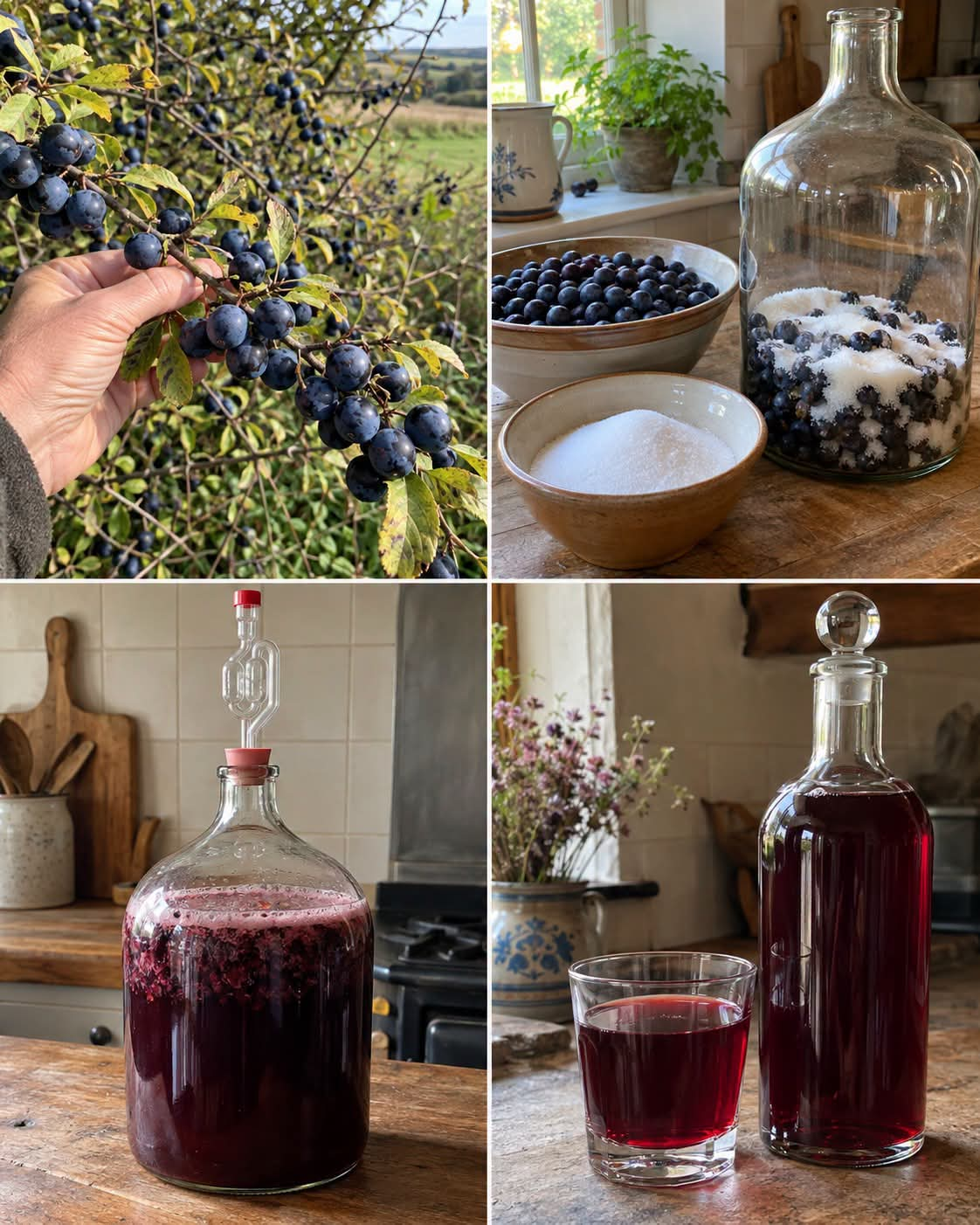
Step 15: Transfer to a Demijohn
Siphon the young wine into a sanitized glass demijohn.
At this point, minimize unnecessary headspace.
Primary fermentation needs room for foam.
Secondary fermentation is different.
Once vigorous fermentation has subsided, excess oxygen becomes increasingly undesirable.
Attach a sanitized airlock.
Step 16: Secondary Fermentation
Now leave the wine to continue fermenting under airlock.
Activity will gradually slow.
Sediment will begin accumulating on the bottom.
The color may also start changing from opaque purple to a clearer ruby, burgundy, or dark garnet.
Secondary fermentation may require several weeks.
Again, don’t use time alone to determine whether fermentation is finished.
Step 17: Rack Off the Sediment
Once a substantial layer of sediment has collected, siphon the wine into another sanitized demijohn.
Leave the sediment behind.
This is called racking.
The sediment—or lees—contains:
- Dead yeast
- Fruit particles
- Pectin
- Other solids
Avoid splashing during transfer.
Once active fermentation is over, limiting oxygen exposure becomes increasingly important.
Step 18: Let It Clear
Sloe wine often needs time to become beautifully clear.
You may need to rack it more than once over several months.
Don’t panic if your wine remains hazy for a while.
Patience often fixes what inexperienced winemakers try to fix with unnecessary intervention.
Pectic enzyme at the beginning also helps.
How Do You Know Fermentation Is Finished?
Not because the airlock stopped bubbling.
That’s worth repeating.
An airlock can stop because:
- Fermentation has finished
- Temperature dropped
- The vessel isn’t perfectly sealed
- Fermentation simply slowed
Use your hydrometer.
Take a reading.
Wait several days.
Take another.
If the gravity remains unchanged and is at an appropriate finishing level, fermentation is much more likely to be complete.
Never Bottle Actively Fermenting Wine
This is one of the most important safety rules in homemade wine.
If fermentation continues inside a sealed bottle, carbon dioxide has nowhere to escape.
Pressure can:
- Push corks out
- Break bottles
- Create dangerous glass failures
Always verify fermentation has finished before bottling still wine.
What Should Young Sloe Wine Taste Like?
Don’t expect perfection immediately.
Young sloe wine can taste:
- Very tart
- Dry
- Tannic
- Astringent
- Slightly bitter
- Rough around the edges
That doesn’t automatically mean you’ve made bad wine.
Sloes are naturally aggressive fruit.
Time can transform them.
Step 19: Age the Wine
After fermentation is complete and the wine has been racked and clarified, allow it to mature.
A reasonable minimum is:
6 months
But sloe wine can benefit from:
9–12 months
And some batches become even more interesting after 12–18 months.
Tannins soften.
Fruit character becomes more integrated.
Harsh acidity can seem less dominant.
This is not the ideal wine for someone who wants to ferment fruit on Monday and drink it the following weekend.
Dry vs. Sweet Sloe Wine
Sloe wine can be made in several styles.
Dry
Allow fermentation to consume nearly all fermentable sugar.
The result can be dark, structured, and somewhat reminiscent of a rustic red fruit wine.
Off-Dry
A little residual or added sweetness can balance sloe’s acidity and tannins.
For many people, this is an excellent style.
Sweet
A dessert-style sloe wine can work beautifully because sweetness softens the fruit’s natural sharpness.
However, there’s a critical safety issue.
Don’t Simply Add Sugar Before Bottling
If you add sugar to a finished wine containing viable yeast, fermentation can restart.
If that wine is sealed in bottles, pressure can build.
If you want to backsweeten sloe wine, first make sure fermentation has completed and use a recognized stabilization method appropriate for home winemaking.
Common winemaking approaches may involve potassium metabisulfite and potassium sorbate used correctly before backsweetening.
Follow product directions carefully.
Another option is to keep the wine completely dry.
How Strong Is Homemade Sloe Wine?
That depends on starting and finishing gravity.
A typical homemade sloe wine might fall around 10–14% ABV, but there’s no universal number.
For example:
Starting gravity: 1.095
Final gravity: 0.998
Approximate ABV can be estimated with:
(1.095 − 0.998) × 131.25 ≈ 12.7% ABV
That’s much more useful than guessing based on how much sugar went into the bucket.
Does Sloe Wine Contain Vitamins?
Fresh sloes contain vitamin C along with various polyphenolic compounds.
Their dark skins also contain plant pigments and other phytochemicals.
But there’s an important distinction between fresh sloes and finished wine.
Vitamin C is sensitive to:
- Heat
- Oxygen
- Processing
- Fermentation
- Storage time
Therefore, you shouldn’t assume that a glass of aged sloe wine provides the same vitamin content as fresh fruit.
Sloe wine is better described as a traditional fermented fruit drink made from naturally nutrient-containing fruit, rather than a vitamin supplement.
And because it contains alcohol, it shouldn’t be promoted as a health treatment.
Sloe Wine vs. Sloe Gin
These are completely different drinks.
Sloe Wine
Fruit sugars and added sugar are fermented by yeast to produce alcohol.
Sloe Gin
Sloes are steeped in already-distilled gin with sugar.
No primary alcoholic fermentation is necessary.
Sloe gin is therefore a fruit-infused spirit.
Sloe wine is genuinely fermented fruit wine.
The flavor can also be very different.
Can You Make Sloe Wine With Other Fruits?
Absolutely.
In fact, blending can make sloe wine easier to balance.
Sloe & Blackberry
One of the best combinations.
Blackberries add softer berry flavors and reduce the dominance of sloe’s astringency.
Try approximately:
3 lb sloes + 1 lb blackberries
for a one-gallon batch.
Sloe & Apple Wine
Apple can lighten an intense sloe wine.
Apple contributes:
- Fermentable sugars
- Fresh fruit character
- Body
- Familiar acidity
Use fresh apple juice without preservatives that inhibit fermentation, or appropriately prepared apples.
Sloe & Plum Wine
This pairing makes perfect sense because sloes themselves are relatives of plums.
Plums contribute softer flesh and sweeter stone-fruit character.
The finished wine can develop a richer, rounder profile than pure sloe wine.
Sloe & Elderberry Wine
For something dark and powerful, combine sloes with elderberries.
Elderberries add:
- Deep color
- Berry flavor
- Additional tannin
But be careful.
Both fruits can produce structured wines, so combining too much of each may create something extremely tannic when young.
This is a wine that would particularly benefit from aging.
Should You Add Raisins?
Traditional country wine recipes often include raisins.
They can contribute:
- Sugar
- Body
- Dried-fruit flavor
But they’re not required.
If you’re already controlling sugar with a hydrometer and using appropriate yeast nutrients, raisins aren’t a magical ingredient.
Use them because you want their character, not because every fruit wine supposedly needs them.
Should You Add Black Tea?
Black tea is often used in country wine recipes as a source of tannin.
But remember:
Sloes are already tannic.
Adding strong black tea automatically may produce a wine that’s excessively drying and astringent.
Taste and assess the fruit first.
For sloe wine, additional tannin is frequently unnecessary.
Should You Add Lemon Juice?
Again, don’t do it automatically.
Sloes are naturally acidic.
Some old recipes call for lemons simply because that was the traditional formula.
Modern home winemaking gives us better options.
Measure pH/acidity if possible.
Then adjust only when necessary.
What About Spices?
Sloes pair beautifully with:
- Cinnamon
- Clove
- Star anise
- Vanilla
- Orange peel
But wine is different from mulled juice.
A spice that seems mild during fermentation can become overpowering after months of aging.
For your first batch, make a clean, unspiced sloe wine.
Once you understand its natural flavor, experiment with spices in future batches—or simply mull a portion of the finished wine when serving.
10 Tips for Better Homemade Sloe Wine
1. Harvest Fully Ripe Sloes
Immature fruit can make an already astringent wine even harsher.
2. Freeze the Fruit
It’s an easy way to improve juice and color extraction.
3. Don’t Smash the Stones
Crush the flesh gently.
4. Sanitize Everything
Anything touching cooled must or finished wine should be properly sanitized.
5. Use Wine Yeast
You’ll get more predictable fermentation and flavor.
6. Measure With a Hydrometer
It helps control alcohol and confirms fermentation progress.
7. Don’t Automatically Add Acid or Tannin
Sloes already contain plenty of both.
8. Minimize Oxygen After Primary Fermentation
Transfer gently and avoid unnecessary headspace.
9. Don’t Bottle Too Early
Verify stable gravity first.
10. Give It Time
Sloe wine can improve dramatically with aging.
7 Common Mistakes That Can Ruin Sloe Wine
1. Using Too Many Unripe Berries
They can make the wine unpleasantly harsh.
2. Crushing the Stones
Avoid grinding or breaking the kernels.
3. Adding Huge Amounts of Sugar
More alcohol doesn’t automatically create better wine.
Balance matters.
4. Adding Acid Without Checking the Fruit
You may make an already tart wine excessively acidic.
5. Poor Sanitation
Contamination can spoil months of work.
6. Bottling Based Only on Airlock Activity
Use stable hydrometer readings.
7. Drinking Every Bottle Too Young
This may be the biggest mistake of all.
Keep several bottles aside and compare them at six, nine, and twelve months.
Troubleshooting: Wine Is Too Tart
Young sloe wine often tastes extremely sharp.
Don’t immediately try to correct it.
First:
Let it age.
If it remains unbalanced after maturation, sweetness can sometimes help soften perceived acidity.
Blending with a softer finished fruit wine is another possibility.
Chemical deacidification is also possible in winemaking, but it requires proper measurements and isn’t something to do blindly.
Troubleshooting: Wine Is Too Tannic
Again, time is your first tool.
Tannins can soften significantly during aging.
This is one reason sloe wine benefits from patience.
Avoid adding extra tannin, tea, or large quantities of similarly tannic fruit unless you have a reason.
Troubleshooting: Fermentation Stopped Early
A stalled fermentation can have several causes:
- Temperature too low
- Excessive sugar
- Nutrient deficiency
- Unfavorable pH
- Stressed yeast
- Yeast reaching its alcohol tolerance
Take a hydrometer reading before assuming anything.
If significant sugar remains, investigate temperature, yeast health, and other conditions rather than blindly adding more sugar or yeast.
Troubleshooting: My Wine Is Cloudy
Cloudiness isn’t unusual in young fruit wine.
Possible causes include:
- Suspended yeast
- Fruit solids
- Pectin
- Ongoing fermentation
Give the wine time to settle.
Rack it appropriately.
Pectic enzyme can help prevent or reduce pectin haze.
Don’t bottle simply because you’re tired of waiting.
A Simple Sloe Wine Timeline
HARVEST DAY
Pick, sort, wash, and freeze the sloes.
WINE DAY
Thaw and lightly crush the fruit. Prepare the must, measure gravity, add appropriate ingredients, and pitch the yeast.
DAYS 1–7
Primary fermentation.
Keep floating fruit appropriately submerged and monitor activity.
AROUND DAYS 5–7
Remove fruit and transfer to a demijohn when fermentation has progressed sufficiently.
WEEKS 2–6+
Secondary fermentation continues.
FOLLOWING MONTHS
Rack away from sediment and allow the wine to clarify.
AROUND 3–6 MONTHS
Evaluate clarity, stability, and flavor.
6–12 MONTHS
Begin tasting matured bottles.
12+ MONTHS
Compare them with younger bottles—you may be surprised by how much the wine has changed.
These times are approximate.
The wine and hydrometer readings matter more than the calendar.
How to Store Finished Sloe Wine
Store properly bottled wine somewhere:
- Cool
- Dark
- Free from large temperature swings
- Away from direct sunlight
If using natural corks, traditional long-term storage generally keeps bottles horizontally so the cork remains in contact with the wine.
Other closure types may have different storage recommendations.
Label every bottle with the batch and date.
It’s surprisingly easy to forget which bottle came from which experiment a year later.
Is Homemade Sloe Wine Worth the Wait?
Sloe wine isn’t the fastest homemade drink.
It asks you to harvest thorny fruit, freeze it, ferment it, rack it, wait for it to clear, bottle it, and then wait again.
But that’s exactly what makes it interesting.
Fresh sloes are almost aggressively tart.
They’re a fruit most people wouldn’t happily eat by the handful.
Fermentation and maturation transform them into something completely different.
The harshness softens.
The aroma develops.
The deep ruby-purple color clears.
And those small wild fruits become a genuine homemade country wine.
Final Thoughts
If blackthorn hedges are covered with blue-black sloes this fall, don’t overlook them simply because the raw fruit makes your mouth pucker.
Harvest the fully ripe berries, freeze them to soften the fruit, gently break the skins without crushing the stones, and give the must plenty of time to ferment and mature.
Don’t overwhelm the fruit with unnecessary acid, tannin, or spices.
Sloes already bring plenty of personality to the bottle.
Use proper wine yeast, keep your equipment sanitized, follow fermentation with a hydrometer, minimize oxygen after primary fermentation, and never bottle until fermentation is genuinely complete.
Then comes the hardest ingredient:
patience.
A young sloe wine may be sharp and rustic.
Six months later it can be noticeably smoother.
A year later, you may discover why generations of home winemakers considered these little wild fruits worth gathering from thorny hedgerows every autumn.
