How to Clean Tea-Stained Cups Without Bleach ☕✨
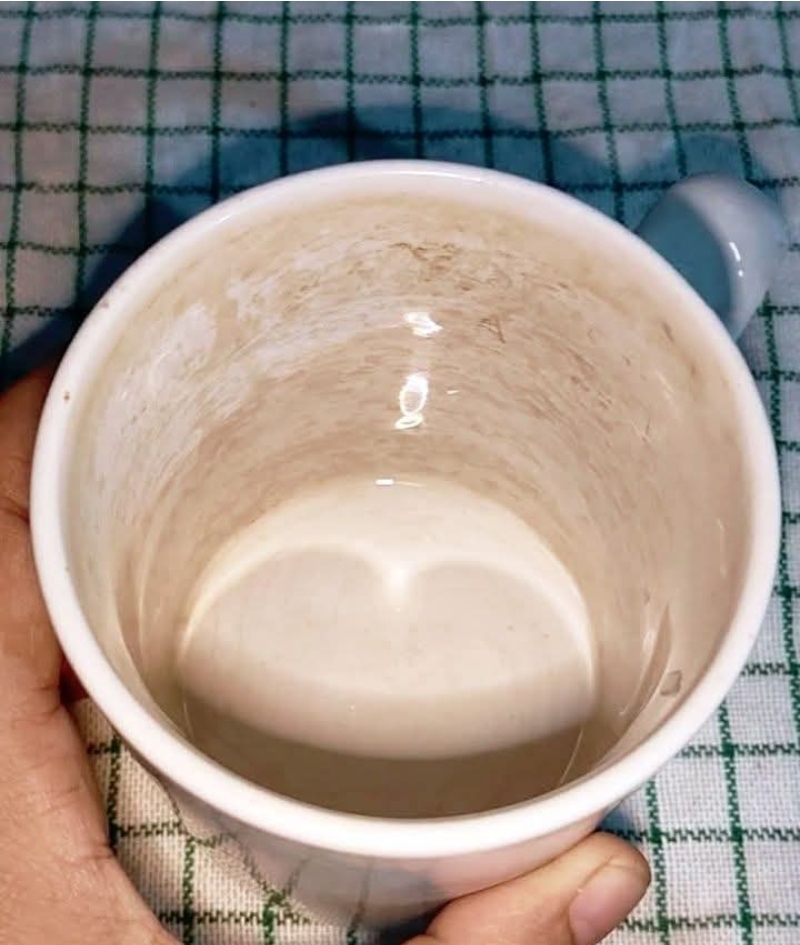
If your favorite cup looks like this after a few cups of tea, you’re definitely not alone!
Those stubborn brown rings and patches can make a perfectly clean mug look dirty, even when you’ve washed it thoroughly. And if you don’t drink your tea with milk, you might wonder whether that’s the reason.
The good news? You don’t need bleach to get rid of tea stains.
In fact, the culprit is usually tannins and other tea polyphenols, natural compounds that contribute to tea’s color and can adhere to the surface of cups and teapots. (McGill University)
☕ Why Does Tea Stain Your Cup So Badly?
Tea contains tannins, which are responsible for some of its color and astringency. Over time, these compounds can leave a brownish film on the inside of your cup.
Black tea tends to be particularly noticeable because of its darker color.
And no—milk isn’t required for tea to stain a cup.
In fact, your cup can become heavily stained even if you drink your tea completely black. If anything, adding milk can change the chemistry of what’s left behind rather than preventing all staining. (Laveries Speed Queen)
Hard water can also contribute to the problem because mineral deposits can make it easier for tea residue to cling to the surface. (TeaTrade)
⭐ The Easiest Bleach-Free Method: Baking Soda
If you have baking soda in your kitchen, you already have one of the simplest solutions.
You’ll Need:
- 1 tablespoon baking soda
- A few drops of water
- A soft sponge or microfiber cloth
- Dish soap
- Clean water
Step 1: Wet the Cup
Rinse the inside of the cup with water.
You want the surface damp enough for the baking soda to stick to the stained areas.
Step 2: Make a Paste
Sprinkle about 1 tablespoon of baking soda into the cup.
Add just enough water to make a thick paste.
Step 3: Gently Scrub
Spread the paste around the brown stains using a soft sponge or cloth.
Use gentle circular motions rather than aggressively scrubbing.
Baking soda is mildly abrasive, so it can help lift the discoloration without the need for harsh chemicals. (McGill University)
Step 4: Let It Sit
For stubborn stains, leave the paste on the affected areas for around 10–20 minutes.
Then gently scrub again.
Step 5: Rinse and Wash
Rinse the cup thoroughly, then wash it normally with dish soap and warm water.
Dry it and take a look.
That ugly brown ring may be gone—or dramatically lighter! ✨
🍋 What If the Stain Is Really Stubborn?
If baking soda doesn’t completely remove an old stain, you can try a white-vinegar soak, particularly if there is also mineral buildup from hard water.
Fill the cup with approximately half white vinegar and half warm water.
Let it sit for about 10–20 minutes, then empty and rinse thoroughly.
Wash the cup with dish soap afterward.
The acidity of vinegar can help with mineral deposits that may be contributing to the buildup. (TeaTrade)
Important:
Don’t mix vinegar and baking soda together and expect a stronger cleaner.
They react with each other and largely neutralize one another. It’s more useful to use them as separate cleaning steps when appropriate.
🧂 Another Simple Option: Salt
For a light stain, ordinary table salt can also provide gentle abrasive action.
Wet the inside of the mug, sprinkle a small amount of salt onto the stained area, and gently rub with a soft damp cloth or sponge.
Rinse thoroughly afterward.
If your cup has a delicate finish, decoration, metallic trim, or a surface you’re unsure about, stick with the gentlest method and follow the manufacturer’s care instructions.
🚫 What NOT to Use
When you’re trying to restore your favorite cup, don’t reach immediately for the strongest scrubber you can find.
Avoid:
- Steel wool
- Very abrasive scouring pads
- Aggressive scraping
- Harsh abrasive powders
- Anything that could damage the glaze
Scratching the surface can make future staining worse because residue can settle into tiny scratches and imperfections. (TeaTrade)
☕ The Best Trick Is Prevention
Once you’ve finally gotten your cup clean, keeping it that way is much easier.
Rinse It Immediately
This is probably the simplest trick of all.
When you’ve finished your tea, give the cup a quick rinse instead of allowing the remaining tea to dry inside.
The longer tea residue sits on the surface, the more difficult it can become to remove. (TeaTrade)
Don’t Let the Last Sip Sit Overnight
We’ve all done it.
There’s one little mouthful of tea left in the bottom of the mug, so we leave it beside the sink.
Then morning comes.
And that tiny amount has transformed into a dark brown ring.
A quick rinse before bed can save you from a much bigger cleaning job later.
🍵 Does the Type of Tea Matter?
Yes, to some extent.
Black tea is especially likely to leave obvious brown staining because of its darker pigments and polyphenolic compounds.
Green tea can also stain, although the discoloration may look different and can sometimes be less dramatic.
If your cup seems to become stained almost immediately, your water chemistry may also be contributing. Hard water and mineral deposits can interact with tea residue and make buildup more noticeable. (TeaTrade)
🤔 Should You Switch Teas?
You certainly can experiment!
If you’re tired of constantly cleaning your favorite white mug, try different teas and see whether some leave less visible residue.
But switching tea isn’t necessarily the only answer.
A quick rinse after drinking and an occasional baking-soda cleaning can make a much bigger difference.
And honestly, if you love your favorite tea, don’t give it up just because it stains your mug! 😂
✨ A Quick Weekly Mug Refresh
If you drink tea every day, here’s an easy routine:
Every cup:
☕ Finish your tea → rinse the mug.
Once or twice a week:
🧂 Sprinkle in baking soda → add a few drops of water → gently scrub → rinse.
For stubborn buildup:
🍋 Consider a short diluted white-vinegar soak → rinse thoroughly → wash with dish soap.
It takes only a few minutes and can keep your cups looking dramatically cleaner.
❤️ The Bottom Line
That horrible brown coating isn’t necessarily a sign that your cup isn’t being washed properly.
Tea naturally contains compounds that can leave stubborn stains behind.
And no, you don’t need milk in your tea for this to happen.
So before reaching for bleach, try the simple solution:
Baking soda + a little water + gentle scrubbing.
Your favorite cup may look brand new again. ☕✨
What About You?
Does your tea leave your cups looking like this? 😂
☕ YES — every single time!
✨ Baking soda works for me!
🍋 I use vinegar.
🍵 My tea barely stains my cups.
😂 I just keep drinking and ignore it!
And tell us: what kind of tea do you drink? 👇❤️
