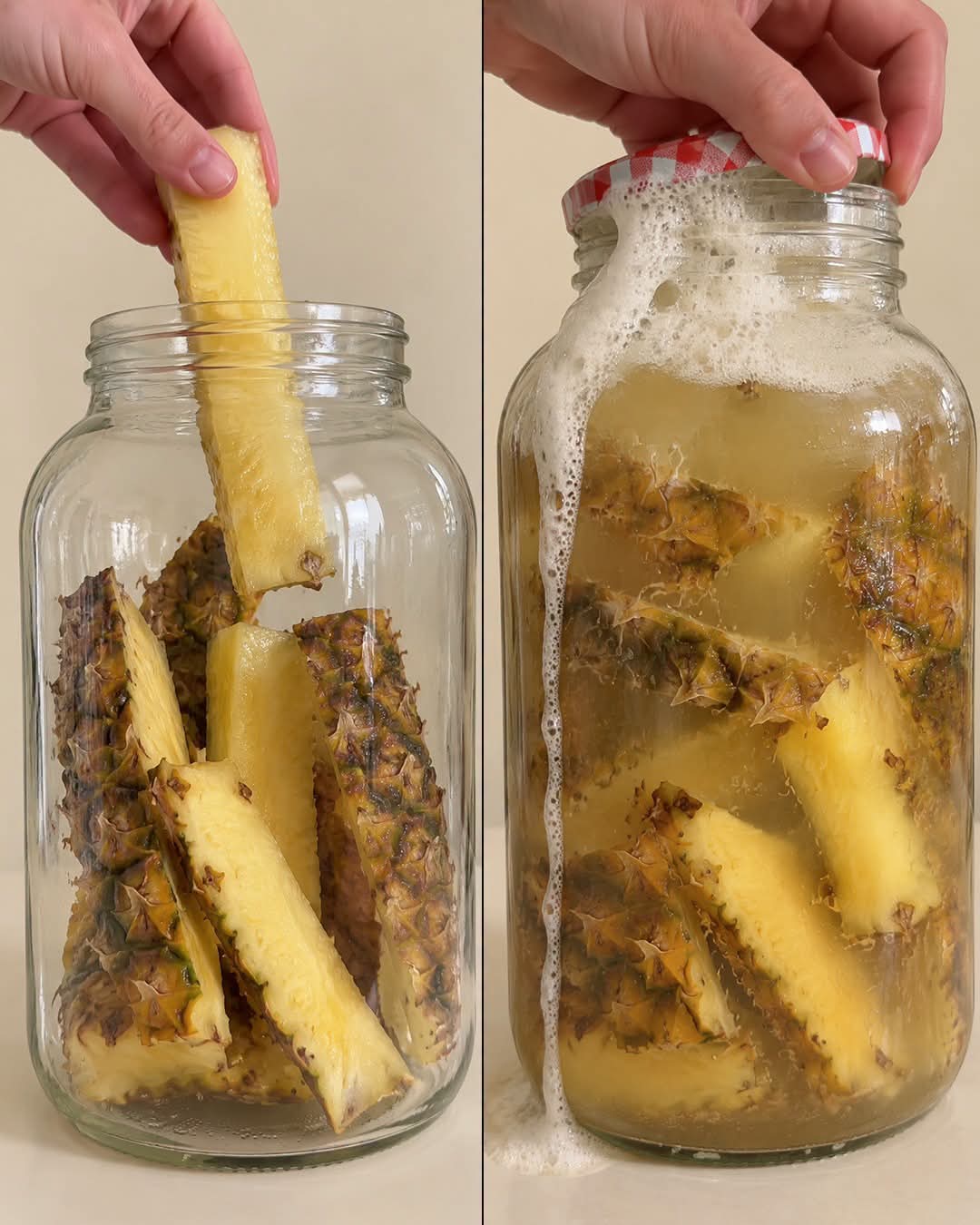
Next time you cut a fresh pineapple, stop before you throw away the rough skin and the hard middle core. Those leftover scraps are actually the main ingredients for a healthy, homemade fermented drink. Known traditionally in Mexico as “Tepache,” this simple beverage turns discarded pineapple parts into a delicious, bubbly liquid packed with good bacteria for your stomach. It is easy to make, costs almost nothing, and is an excellent way to reduce food waste in your kitchen.

The Parts You Need: Rinds and the Core
A common question when making this drink is whether you should use the hard middle part of the fruit. The answer is yes. Both the outer peel and the tough inner core are perfect for this process. While the soft, sweet yellow flesh is best eaten fresh, the core is heavily packed with beneficial enzymes and flavor. Using both the skins and the core gives your drink the best health benefits and the strongest taste.
Health Benefits of Fermented Pineapple
Drinking this natural homemade beverage provides several powerful benefits for your body:
- Improves Gut Health: The natural fermentation process creates probiotics. These are live, good bacteria that help balance your digestive system, making it easier for your stomach to process food.
- Boosts Digestion and Fights Inflammation: Pineapple skins and cores are rich in an enzyme called bromelain. Bromelain helps break down proteins in your food and naturally reduces swelling and inflammation in the body.
- Provides Immune Support: Pineapples are a great source of Vitamin C. Even when using just the peels, some of this immune-boosting vitamin transfers into the water.
- Healthy Hydration: It serves as a great, low-sugar alternative to store-bought sodas, offering a fizzy, satisfying drink without artificial chemicals.
What You Will Need
- The peel and core from 1 whole large pineapple
- 1 cup of brown sugar or raw cane sugar (the good bacteria need sugar to consume and grow)
- 8 cups of clean, filtered water
- Optional: 1 cinnamon stick and 3 whole cloves for extra flavor
- A large glass pitcher or a wide-mouth glass jar
How to Make It at Home
- Clean Thoroughly: Rinse the whole pineapple under running water. Scrub the outside skin very well with a vegetable brush to remove dirt.
- Cut the Fruit: Cut away the outer peel and slice out the hard center core. Save the sweet fruit for eating, and place the peels and core into your large glass jar.
- Mix the Liquid: Add the brown sugar and filtered water to the jar. Stir the mixture well with a wooden spoon until most of the sugar dissolves into the water. Add the cinnamon and cloves if you are using them.
- Cover Safely: This is a crucial step. Do not seal the jar with an airtight lid. Fermentation naturally produces gas. If the gas cannot escape, pressure will build up inside the glass. As shown in the file image_5e2b07.png, opening a tightly sealed jar of fermenting liquid can cause a sudden, messy overflow of foam, and extreme pressure can even shatter the glass. Instead, cover the top of the jar with a breathable cloth, a paper towel, or a coffee filter, and secure it with a rubber band.
- Let it Ferment: Place the covered jar on your kitchen counter, away from direct sunlight. Let it sit at room temperature for 2 to 3 days. Check it daily. You will start to see white bubbles forming on the surface, which means it is working.
- Strain and Chill: After 2 to 3 days, when the liquid smells sweet and slightly tangy, pour it through a mesh strainer into a clean pitcher. Throw away the used pineapple solids. Put the liquid in the refrigerator to cool. Serve it over ice.
Important Safety Rules
- Remove Pesticides: Because you are using the outside skin, try to use an organic pineapple if possible. If you use a regular pineapple, scrub the outside heavily with water and a splash of white vinegar before cutting to remove as many pesticides as possible.
- Watch for Bad Mold: A white, foamy layer of bubbles on top of the water is a normal part of fermentation. However, if you see dry, fuzzy spots that are green, blue, pink, or black, the batch has grown harmful mold. Throw the entire contents away and do not drink it.
- Do Not Ferment Too Long: Keep track of the time. If you leave the mixture sitting on the counter for more than three or four days, the good bacteria will continue to eat the sugars and eventually turn the drink into pineapple vinegar. While safe to use as a cooking vinegar, it will be far too sour to enjoy as a refreshing beverage.
- Clean Tools: Always wash your hands, your cutting board, your knife, and your glass jar with hot, soapy water before you begin. Starting with clean equipment ensures that only the good bacteria grow in your drink.
