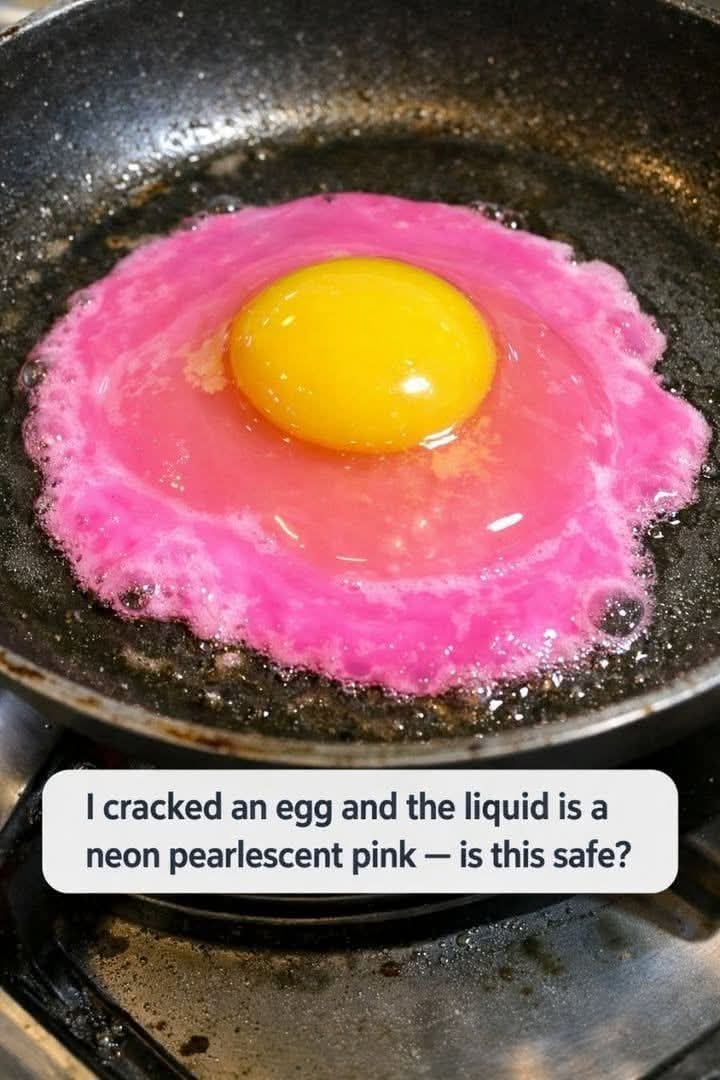
At first glance, an egg with a bright pink, neon-colored white looks almost unreal. Many people who crack open an egg and see a shocking pink or iridescent liquid immediately wonder whether it’s a strange but harmless natural occurrence—or a serious warning sign.
The short answer is: No, an egg with neon pink egg white is not considered safe to eat.
While the image is eye-catching, it actually points to a potentially important food safety issue that everyone should know about.
Why Would an Egg Turn Pink?
Fresh egg whites are normally clear and slightly cloudy. When cooked, they turn white because the proteins coagulate.
A pink, iridescent, or fluorescent appearance is unusual and may indicate bacterial contamination.
One of the most commonly cited causes is the growth of certain bacteria that produce pigments, including species of:
- Pseudomonas
- Serratia
- Other spoilage bacteria
These microorganisms can sometimes create:
- Pink discoloration
- Green discoloration
- Blue discoloration
- Rainbow-like sheen
- Unusual odors
The pigments produced by these bacteria can dramatically change the appearance of the egg white.
Is It Safe to Eat?
Food safety experts generally recommend:
Throw It Away Immediately
If an egg white appears:
- Bright pink
- Neon pink
- Iridescent pink
- Green
- Blue
- Unnaturally colored
do not taste it.
Even if the yolk appears normal, contamination may already be present throughout the egg.
Cooking does not necessarily make a visibly spoiled egg acceptable to eat.
Could the Color Be Caused by Something Else?
Sometimes unusual colors can have less alarming explanations.
Feed and Diet
A hen’s diet can influence:
- Yolk color
- Nutrient content
- Flavor
However, feed generally does not cause a vivid neon-pink egg white.
Reflection or Lighting
Camera filters, unusual lighting, or colored cookware can occasionally make food appear strange in photographs.
But if the egg genuinely appears pink in person, caution is warranted.
Rare Natural Variations
Eggs occasionally display unusual characteristics, including:
- Blood spots
- Meat spots
- Double yolks
- Pale yolks
However, a bright pink egg white is not considered a normal variation.
How Does Bacterial Contamination Happen?
Bacteria can enter eggs through:
TO CONTINUE READING THE ARTICLE PLEASE SEE PAGE 2
