Bacteria can enter eggs through:
Cracks in the Shell
Even tiny hairline cracks can allow microorganisms to enter.
Improper Storage
Eggs left at unsafe temperatures may develop bacterial growth more quickly.
Dirty Nesting Conditions
Contamination can occur before the egg even reaches the store.
Age
Older eggs are more susceptible to quality deterioration and microbial growth.
Warning Signs of a Bad Egg
In addition to unusual colors, watch for:
Bad Odor
A sulfur-like or rotten smell is one of the clearest signs of spoilage.
Slimy Texture
Fresh egg whites should not feel excessively slimy.
Strange Colors
Discard eggs showing:
- Pink
- Green
- Blue
- Black spots
- Rainbow discoloration
Cracked Shells
Avoid eggs with damaged shells whenever possible.
What Should You Do If You Find One?
- Do not eat the egg.
- Dispose of it immediately.
- Wash any surfaces it touched.
- Wash your hands thoroughly.
- Check other eggs from the same carton for cracks or spoilage.
If multiple eggs from the same package show unusual colors or odors, discard the entire carton.
How to Keep Eggs Safe
Refrigerate Promptly
Keep eggs at 40°F (4°C) or below.
Store in the Original Carton
The carton helps protect eggs from moisture loss and odors.
Check Expiration Dates
Always inspect eggs before use.
Perform a Quick Visual Check
Look for:
- Cracks
- Leaks
- Strange colors
- Unusual smells
The Bottom Line
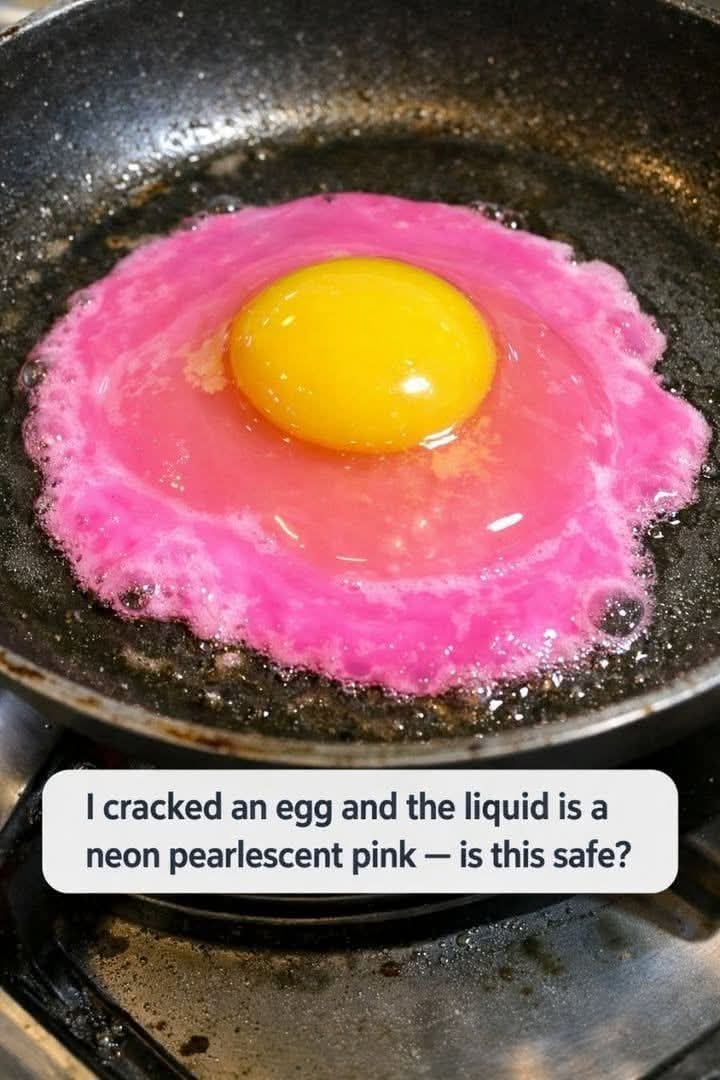
A neon pink or pearlescent egg white may look fascinating, but it’s usually not something to experiment with. Unusual pink coloration can be a sign of bacterial spoilage, and food safety experts recommend discarding any egg that shows abnormal colors.
When it comes to eggs, appearance matters. If the color seems wrong, trust your instincts and play it safe. A single egg isn’t worth the risk of foodborne illness.
The next time you crack an egg and see something that looks more like a science experiment than breakfast, the safest response is simple: don’t eat it—throw it out.
