🔥🍎
“I did it, I’m so happy!! My first batch! Nobody understands but the people that are holistic—this stuff works!”
There is something incredibly satisfying about making your very first jar of fire cider. You wash, chop, slice, peel, layer, pour, and suddenly you have a beautiful jar packed with colorful ingredients that looks like something straight out of an old-fashioned herbal kitchen. ❤️🌿
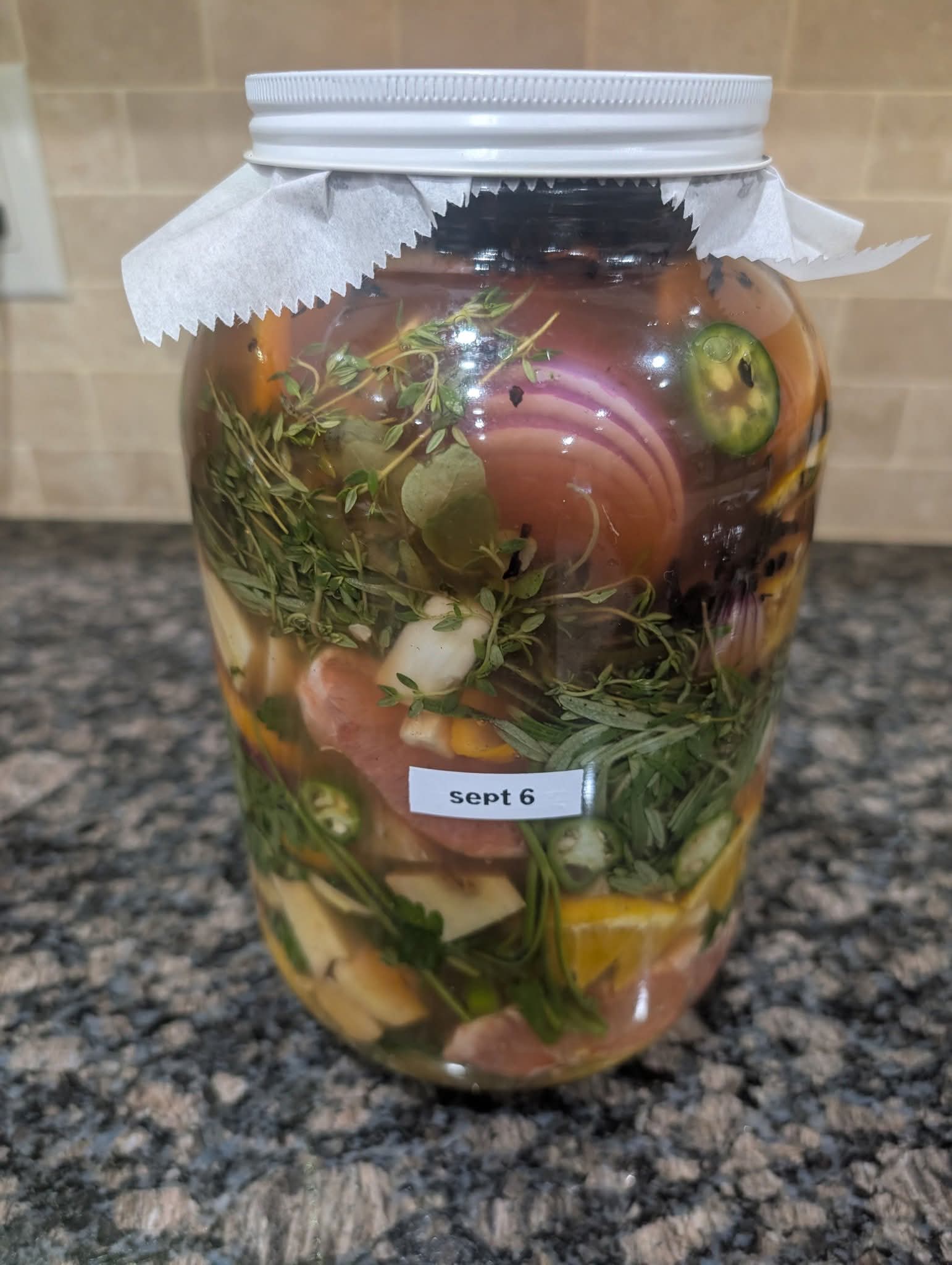
This batch is especially impressive because it is stuffed with citrus, herbs, peppers, roots, spices, and garlic, all covered with apple cider vinegar.
Fire cider is traditionally made as a strongly flavored vinegar infusion and is often used as a folk or herbal preparation. It isn’t a proven treatment for illness, so it’s best thought of as a flavorful traditional tonic rather than a substitute for medical care. (Extension de l’Université du Minnesota)
And whether you make it for the traditional reasons, enjoy a spoonful in your cooking, or simply love having a homemade herbal infusion sitting in the pantry, making your own is quite an experience!
🌶️ What Is Fire Cider?
Fire cider is essentially apple cider vinegar infused with a combination of pungent roots, vegetables, fruits, herbs, spices, and peppers.
There isn’t one single recipe.
That’s part of the fun.
Some people keep theirs very simple with garlic, onion, ginger, horseradish, citrus, and hot peppers.
Others turn the jar into a full herbal garden.
This batch definitely falls into the second category! 😂
🌿 Ingredients for This Batch
Here’s everything that went into this beautiful jar:
🍋 Citrus
- Lemon
- Limes
- Oranges
- Grapefruit
🌶️ Vegetables & Roots
- Garlic
- Fresh ginger
- Horseradish
- Turmeric
- Red onion
- Jalapeños
- Serrano peppers
🌿 Fresh Herbs
- Rosemary
- Oregano
- Thyme
- Cilantro
- Parsley
🌺 Dried Botanicals & Spices
- Elderberry
- Hibiscus
- Star anise
- Whole cloves
- Cinnamon sticks
- Black peppercorns
- A shake or two of cayenne pepper
🍎 The Vinegar
- Apple cider vinegar, preferably one with the “mother”
The jar was packed full before the vinegar was added.
And just LOOK at all those colors! 🌈
The red onion, citrus, peppers, herbs, ginger, garlic, turmeric, and spices make this jar almost as pretty as it is aromatic.
🫙 How I Would Make This Fire Cider
1. Start with a clean jar
Use a clean food-grade glass jar and clean utensils.
Wash your hands and thoroughly wash the fresh fruits, vegetables, and herbs under running water before preparing them. Extension food-safety guidance recommends washing fresh produce under running water and keeping preparation surfaces and equipment clean. (Extension de l’Université du Minnesota)
2. Prepare your ingredients
Slice the lemons, limes, oranges, grapefruit, and red onion.
Peel and roughly chop the garlic, ginger, and horseradish.
Slice the jalapeños and serrano peppers.
Fresh herbs can be left in larger pieces.
The idea isn’t to make everything tiny.
You’re simply creating plenty of surface area so the vinegar can surround and extract flavor from the ingredients.
3. Build your jar
Add your ingredients in layers.
Start adding:
🌶️ Peppers
🧄 Garlic
🫚 Ginger
🧅 Onion
🍋 Citrus
🌿 Herbs
🌺 Elderberry and hibiscus
🌰 Spices
Keep layering until you’ve added everything.
One important safety note:
Although this particular jar is beautifully packed, don’t assume that completely stuffing a jar makes a safer or stronger fire cider.
A food-safety recipe from University of Minnesota Extension recommends avoiding overpacking and gives a starting ratio of about 1 cup of fruits and vegetables to 2 cups of apple cider vinegar for fire cider. (Extension de l’Université du Minnesota)
That’s especially important when you’re making a batch you intend to keep.
🍎 4. Add the Apple Cider Vinegar
Pour the apple cider vinegar over the ingredients until they are completely covered.
Using vinegar labeled with an appropriate acidity for food preservation is important.
The vinegar is what provides the acidic environment—but once you start adding fresh fruits, vegetables, and herbs, you can’t simply assume the final mixture has the same acidity as the vinegar that went into the jar.
Adding produce can change the final pH. (Extension de l’Université du Minnesota)
That’s why homemade fire cider should not automatically be treated like a shelf-stable canned product.
🌶️ 5. Let the Ingredients Infuse
This is the part that requires patience.
The traditional approach is to let the ingredients infuse in the vinegar in a cool, dark place for several weeks.
University of Minnesota Extension’s food-safety guidance recommends an infusion period of 10–30 days, depending on the desired strength. (Extension de l’Université du Minnesota)
As it sits, the vinegar takes on the flavors, aromas, colors, and heat from everything you’ve packed into the jar.
And with this ingredient list?
You know that jar is going to be powerful! 🔥😂
🥵 The Name “Fire Cider” Makes Sense!
Between the:
- Horseradish
- Jalapeños
- Serrano peppers
- Cayenne
- Garlic
- Ginger
- Black pepper
you’re definitely not making a mild vinegar.
This is the kind of jar where you open the lid and immediately know what you’re dealing with. 😂🔥
The citrus and herbs help balance the intense ingredients, while the cinnamon, cloves, and star anise bring warmth and complexity.
🍯 Should You Add Honey?
You absolutely can if you want to balance the sharpness.
A common approach is to strain the finished vinegar first and then add honey to taste.
That gives you much more control over the sweetness.
You don’t need to add it during the infusion.
In fact, I’d wait until the solids have been removed so you can taste the finished infusion before deciding how much sweetness it needs.
🫙 After the Infusion: Strain It
When your fire cider has reached the flavor you want, strain out all of the fruits, vegetables, herbs, and spices.
A fine strainer works, and a coffee filter can help catch smaller particles. University of Minnesota Extension specifically recommends straining the finished infusion to remove solid foods before bottling. (Extension de l’Université du Minnesota)
Squeeze or press the solids if you want a stronger infusion, then discard the spent ingredients.
Now you’ll be left with a beautifully colored, intensely flavored vinegar.
❄️ How Should Homemade Fire Cider Be Stored?
This is one place where I would be more cautious than many viral fire-cider recipes online.
Don’t assume that because something contains vinegar, it is automatically shelf-stable.
The addition of fresh fruits and vegetables can change the acidity and introduce food-safety concerns. (Extension de l’Université du Minnesota)
For a homemade batch like this, the safest simple approach is:
After straining:
Refrigerate it, particularly once opened.
University of Minnesota Extension states that after bottling, fire cider should be stored in a cool, dark location and refrigerated once opened. If mold, bubbling, or cloudiness develops, it should be discarded. (Extension de l’Université du Minnesota)
If you want to make a shelf-stable product, that’s a different project and requires controlling and verifying the final pH and following an appropriate validated preservation process. (Extension de l’Université du Minnesota)
❤️ Why Making It Yourself Feels So Special
There is something different about homemade herbal preparations.
You’re not opening a bottle with a label full of ingredients you’ve never seen.
You know exactly what went into the jar.
You watched the citrus go in.
You chopped the garlic.
You added the ginger.
You smelled the rosemary.
You watched the peppers disappear under the vinegar.
And then you get to watch the whole thing transform over time.
That’s the part that makes homemade fire cider so satisfying.
🌿 A Jar Full of Traditional Ingredients
This particular combination is especially interesting because it brings together ingredients that have been used traditionally in foods and herbal preparations for generations.
Garlic and onion bring pungency.
Ginger and horseradish bring heat and bite.
Citrus contributes brightness.
Rosemary, oregano, thyme, parsley, and cilantro bring layers of herbal flavor.
Cinnamon, cloves, star anise, and black pepper add warmth and spice.
And then you’ve got the peppers and cayenne bringing the FIRE. 🔥🌶️
It’s almost like making an herbal version of a very intense homemade drinking vinegar.
🥄 How Can You Use Fire Cider?
You don’t have to think of it only as something to drink by the spoonful.
Try using a little in:
🥗 Salad dressing
Whisk it with olive oil and a little honey.
🥕 Roasted vegetables
A splash over roasted vegetables can add a bright, spicy finish.
🍲 Soups
Add a small amount to finished soups for acidity and heat.
🫘 Beans
A little fire cider can wake up a pot of beans.
🥑 Avocado
Drizzle a tiny amount over avocado with salt.
🥪 Sandwiches
Use a small splash in a sandwich dressing.
🍎 Warm drinks
Some people enjoy a small amount diluted in warm water, with honey added for flavor.
Just remember that this is an intensely acidic, spicy preparation, so more isn’t necessarily better.
🔥 My First Batch!
And honestly, I can understand the excitement.
You started with a collection of fresh ingredients and ended up with this gorgeous jar:
Lemon. Lime. Orange. Grapefruit. Garlic. Ginger. Horseradish. Turmeric. Rosemary. Oregano. Thyme. Red onion. Jalapeño. Serrano. Cilantro. Parsley. Elderberry. Hibiscus. Star anise. Cloves. Cinnamon. Black peppercorns. Cayenne.
Then you covered the whole thing with apple cider vinegar.
That’s not a little batch of fire cider.
That’s a JAR OF FIRE. 😂🔥🌶️
And when you finally strain it and take that first taste, you’ll know exactly why people get so excited about making their own.
Whether you make it because you enjoy traditional herbal preparations, because you love the intense flavor, or simply because you enjoy knowing exactly what’s in your food, there’s something incredibly satisfying about making a batch from scratch.
Just remember: fire cider is a traditional food/herbal preparation, not a proven cure or treatment for illness, and good food-safety practices matter when fresh produce is infused into vinegar. (Extension de l’Université du Minnesota)
🔥🌿 Have You Ever Made Fire Cider?
First batch? Experienced fire-cider maker?
And the most important question…
🌶️ How much heat are you putting in YOUR jar? 😂🔥
Mild 🔥 | Medium 🔥🔥 | HOT 🔥🔥🔥 | “I Regret Everything” 🔥🔥🔥🔥
