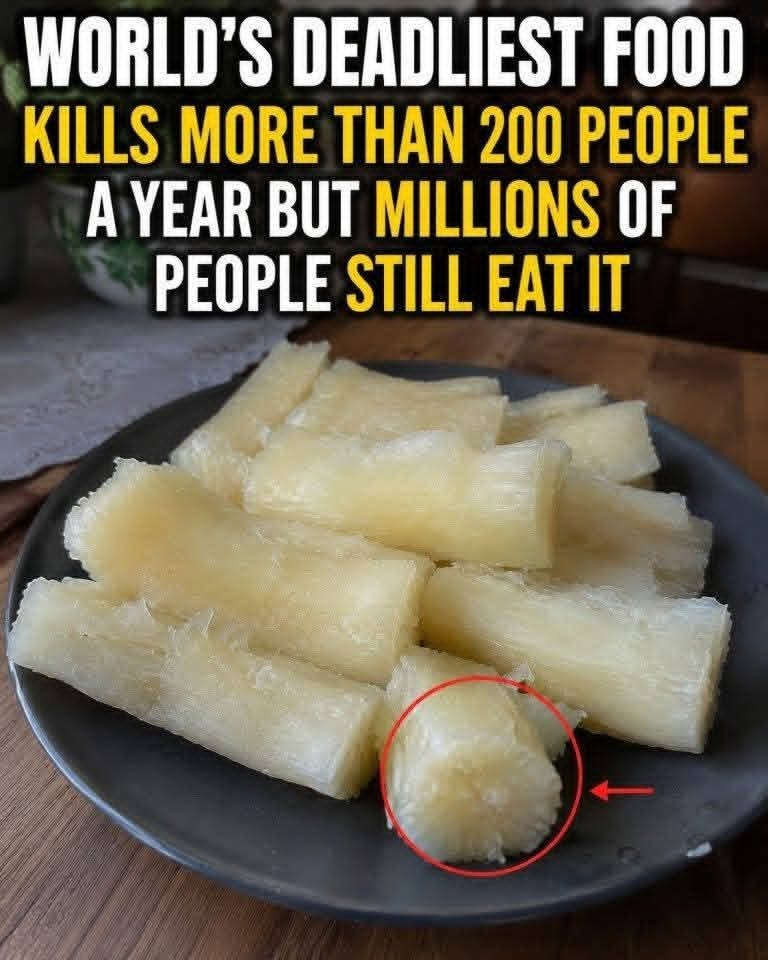
Every year, reports suggest that cassava, a root vegetable central to diets across the tropics, is linked to over 200 deaths due to improper preparation.
ADVERTISEMENT
Yet nearly 500 million people worldwide continue to rely on it as a staple food. The reason? Cassava contains natural compounds that can release cyanide if not handled correctly, turning a nutritious root into a potential hazard.
But here’s the reassuring part: with proper techniques passed down through generations, these risks can be virtually eliminated, allowing you to enjoy its benefits safely.
In this article, we’ll explore everything you need to know – including a simple process that makes all the difference.
What Is Cassava?
Cassava, also known as yuca, manioc, or mandioca, is a starchy root vegetable native to South America but now grown extensively in Africa, Asia, and the Caribbean.
ADVERTISEMENT
It thrives in poor soil and drought conditions, making it a reliable crop for food security in many developing regions. The root looks similar to a long, brown-skinned potato but has white or yellowish flesh inside.
But that’s not all. Cassava is incredibly versatile – it can be boiled, mashed, fried, or processed into flour for breads and porridges.
Understanding the Potential Risks Associated with Cassava
The “dangerous” label comes from cyanogenic glycosides, natural compounds in the plant that can break down into hydrogen cyanide (HCN) when the root is damaged or eaten raw.
Research indicates that consuming improperly prepared cassava can lead to acute poisoning in severe cases or chronic issues with long-term exposure.
This is why health authorities emphasize careful handling. However, the good news is that these compounds are not inevitable threats when the right steps are followed.
Here’s where it gets interesting: the level of these compounds varies significantly between varieties.
Sweet Cassava vs. Bitter Cassava: Know the Difference
There are two main types of cassava:
- Sweet cassava: Lower in cyanogenic compounds, commonly sold in grocery stores in Western countries. Simple peeling and cooking are usually sufficient.
- Bitter cassava: Higher in toxins, more common in certain regions. This variety requires more thorough processing like soaking and fermenting.
Always check with your local supplier if unsure about the variety. The truth is, most commercially available cassava in many places is the sweeter type.
How to Prepare Cassava Safely: Step-by-Step Guide
Preparing cassava properly is straightforward and worth the effort. Here’s a reliable method based on traditional practices and safety guidelines:
- Peel thoroughly: Remove the outer brown bark and the thin layer beneath it. Most of the cyanogenic compounds are concentrated in the skin and just under it.
- Cut into pieces: Slice the peeled root into smaller chunks or grate it. This increases surface area for toxin removal.
- Soak in water: Place the pieces in clean water for at least 24-48 hours (or longer for bitter varieties). Change the water daily. This step helps leach out the compounds.
- Boil or cook thoroughly: Discard the soaking water, then boil in fresh water for at least 20-30 minutes. Always throw away the cooking water.
- Additional steps for safety: For bitter cassava or flour, drying, fermenting, or further processing is recommended. Studies show that fermentation and drying can reduce toxins dramatically.
But wait – there’s more. Traditional methods often combine these steps for maximum safety.
Traditional Processing Methods That Work
TO CONTINUE READING THE ARTICLE PLEASE SEE PAGE 2
