A mountain trail.
But nature doesn’t stop at the edge of a city or disappear when we walk indoors.
It’s there in gardens, balconies, sidewalks, walls, parks, window frames, and yes—even occasionally in hotel rooms.
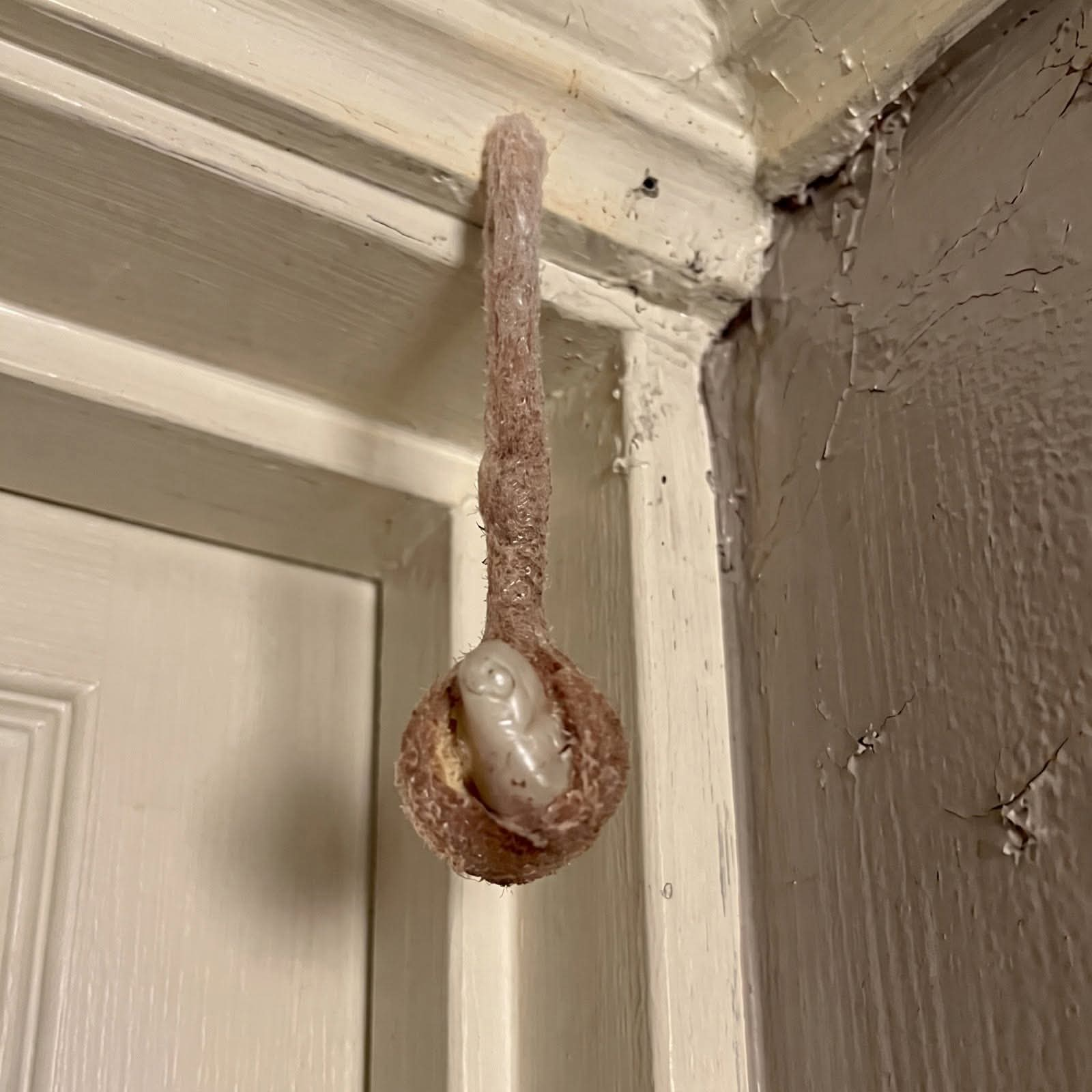
A mud dauber nest can be a tiny window into that larger world.
You don’t have to travel far to encounter something worth observing.
Sometimes you just have to look carefully.
A Reminder of the Wild
There’s something humbling about discovering evidence of wildlife where you least expect it.
That small mud structure may have been built while people walked past completely unaware.
Guests checked into the room.
Doors opened and closed.
Lights switched on.
Suitcases came and went.
Meanwhile, a tiny architect had been quietly constructing a home.
It is a wonderful reminder that we’re sharing our environment with countless other living things.
What to Do If You Find a Mud Dauber Nest
If you discover a mud dauber nest in a hotel room, the best approach is simple and calm.
Don’t Panic
A mud dauber nest isn’t automatically a sign of danger.
Mud daubers are generally solitary wasps and are not typically aggressive toward people.
Don’t Disturb the Nest
Avoid poking, crushing, shaking, or attempting to remove the nest yourself.
Even when an insect is generally nonaggressive, it’s best to give it space.
Observe From a Distance
If you’re curious, take a moment to look at the nest without getting close enough to disturb it.
Notice its shape, texture, location, and construction.
You may be looking at something that took considerable effort to build.
Contact Hotel Staff
Let the hotel staff know about the nest.
They can assess the situation and decide whether removal is necessary, particularly if the nest is in an area where guests could accidentally disturb it.
Take a Picture
If it is safe to do so, take a photograph.
A close-up picture can be a wonderful way to remember the encounter and can also make it easier to identify the type of nest later.
Enjoy the Moment
Most importantly, don’t let the unexpected encounter immediately turn into fear.
Pause.
Look.
Be curious.
You’ve just encountered a tiny piece of natural history.
The Importance of Observation
This is perhaps the most valuable lesson a little mud dauber nest can teach us.
Notice the Details
How often do we move through the world without really looking at it?
The next time you’re outside—or even inside—pay attention to the small things.
Look at unusual structures.
Watch insects.
Notice birds.
Examine leaves.
Look for signs that other creatures have been there before you.
Stay Curious
Curiosity changes the way we experience ordinary surroundings.
Instead of asking, “What is that weird thing?”
You start asking:
Who made it?
Why is it here?
How did they build it?
What purpose does it serve?
Those questions can turn a strange discovery into an opportunity to learn.
Learn From What You See
A quick observation can lead to an entire rabbit hole of discovery.
You might learn about solitary wasps, insect behavior, natural building materials, predator-prey relationships, or the remarkable ways insects care for their offspring.
Nature has an incredible way of turning a five-minute observation into a lesson.
Appreciate the Small Things
Not every encounter with wildlife needs to be dramatic.
Sometimes the most memorable moments are tiny.
A bird sitting on a railing.
A spider building a web.
A butterfly resting on a flower.
Or a mud dauber quietly constructing a nest in an unexpected corner.
Feel Connected to the Natural World
Moments like this can remind us that we’re part of a much bigger ecosystem.
The natural world isn’t somewhere far away.
It’s happening around us all the time.
Practice Mindfulness
There’s something wonderfully grounding about stopping to observe a small creature or structure.
For a moment, you’re not thinking about your schedule.
You’re not rushing to the next thing.
You’re simply paying attention.
And sometimes that’s enough.
Are Mud Daubers Beneficial?
Yes.
Mud daubers are generally considered beneficial insects because they prey on other arthropods.
Many species specialize in spiders, which they capture and provision inside their nests for their developing young.
So although the word “wasp” can make people nervous, mud daubers can actually play a useful role in the ecosystem.
They’re predators, builders, pollinators in some circumstances, and an important part of the food web.
Frequently Asked Questions
What Is a Mud Dauber?
A mud dauber is a type of solitary wasp known for building nests out of mud.
Several different wasp species are commonly called mud daubers, and their nests can vary in shape and appearance.
Is a Mud Dauber Nest Dangerous?
Generally, mud dauber nests aren’t considered dangerous to people.
Mud daubers are usually solitary rather than colony-forming and tend to be less defensive than many social wasps.
However, any wild insect should still be given appropriate space, particularly if you don’t know exactly what species you’re dealing with.
What Should I Do If I Find a Nest?
Don’t disturb it.
If you’re in a hotel or other accommodation, notify the staff so they can inspect it and determine whether it needs to be removed.
Do Mud Daubers Sting?
Mud daubers can sting, but they are generally considered nonaggressive toward humans and rarely sting unless handled or threatened.
It’s still best not to touch or provoke them.
Are Mud Daubers Beneficial?
Yes.
They prey on other insects and spiders and contribute to the natural balance of local ecosystems.
Can Mud Daubers Build Nests Indoors?
They can sometimes build nests in sheltered indoor or semi-indoor spaces.
Garages, sheds, porches, eaves, and protected corners can provide suitable nesting locations.
What Does a Mud Dauber Nest Look Like?
Depending on the species, a nest may look like a collection of small mud tubes, elongated chambers, or a lumpy mud structure attached to a protected surface.
Its appearance can vary considerably.
A Final Thought
When I found that mud dauber nest, my first instinct could easily have been to wonder whether I should be worried.
Instead, I stopped and looked.
And the longer I looked, the more fascinating it became.
That little structure wasn’t random.
It was the result of instinct, effort, material gathering, construction, and an elaborate reproductive strategy—all carried out by an insect small enough to go unnoticed.
It was a reminder that nature doesn’t need to be spectacular to be extraordinary.
Sometimes wonder is hiding in a corner.
Sometimes it’s made of mud.
And sometimes all it takes is a few extra seconds of attention to notice it.
Have you ever discovered a mud dauber nest somewhere completely unexpected?
Share your experience in the comments. I’d love to hear where you found it and what you thought when you first noticed it.
