Follow current design trends (hello, minimalist stripes!).
But—and this is a fun but—some lines do serve a purpose beyond looking pretty. In the world of textiles, weaving techniques can tell you a lot about durability, absorbency, and even the age of the towel. Let’s dive deeper into the four types of towel lines and what they really signal.
🔍 The 4 Types of Towel Lines (And What They Really Signal)
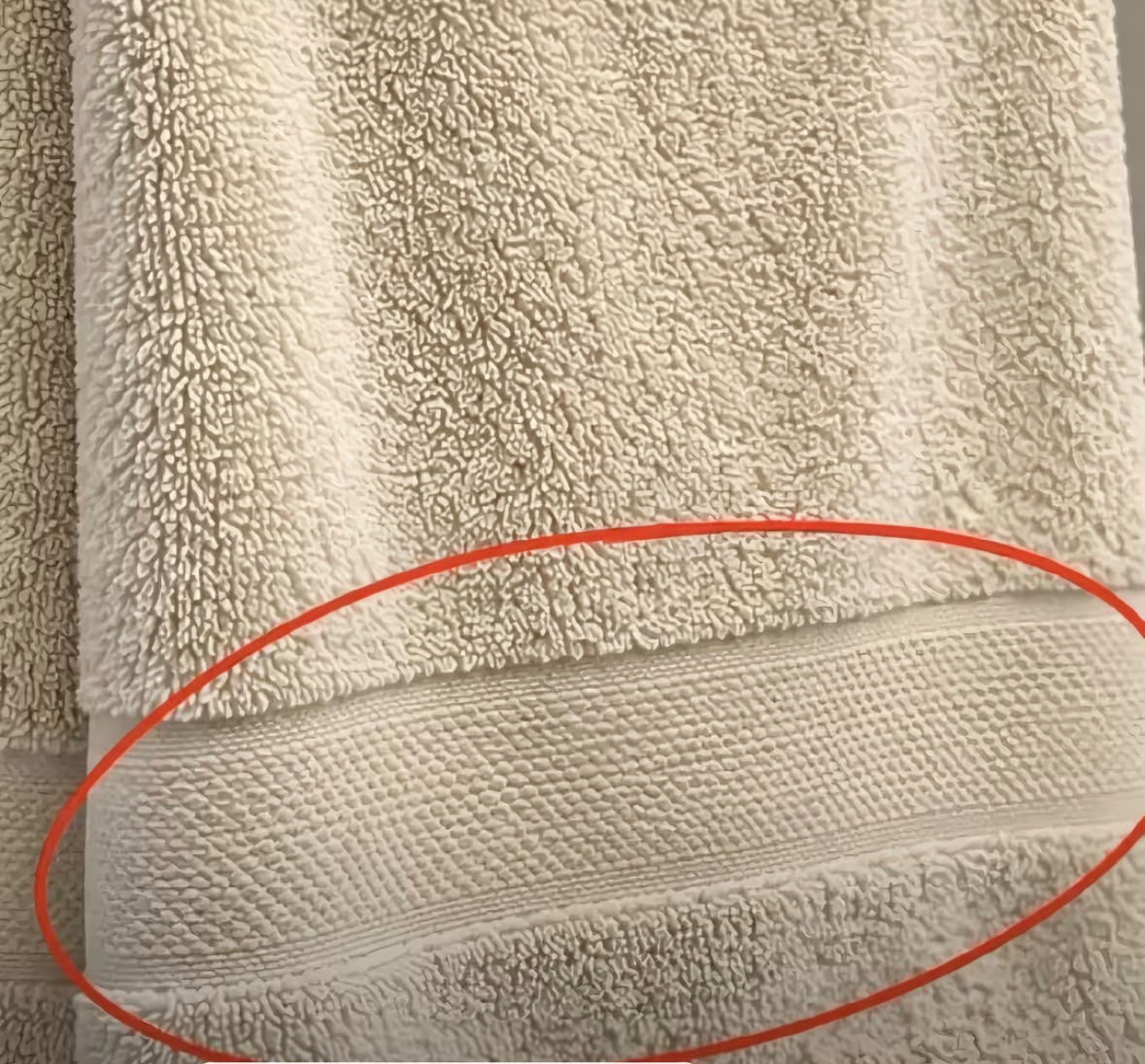
- The Dobby Border: Quality’s Quiet SignatureIf you see a narrow, textured band (often geometric or honeycomb-patterned) near the edge of the towel, you’re looking at a Dobby border.
What it means: This isn’t just printed on; it’s woven using a special attachment on the loom called a “dobby head.” This technique allows for intricate, small-scale patterns that standard jacquard looms can’t easily handle.
Why it matters: Dobby borders are often found on higher-quality towels. They add structural integrity to the
-
- edge, preventing fraying, and signal that the manufacturer invested in more complex weaving technology. If you see a dobby border, you’re likely holding a mid-to-high-tier towel.
Look closely at the very edge. Do you see tiny, evenly spaced holes or a ladder-like pattern where the fabric seems to be pulled together? That’s a hemstitch.
What it means: This is a classic finishing technique where groups of threads are drawn together and bound. It’s traditional, elegant, and often associated with luxury linens.
Why it matters: Hemstitching is labor-intensive. It’s a sign of craftsmanship. However, it can be delicate. If you’re rough with your laundry (looking at you, heavy-duty cycle enthusiasts), hemstitched edges may snag or unravel faster than a simple folded hem. It’s beautiful, but it requires gentle care.
- The Solid Band: The Modern MinimalistMany
- contemporary towels feature a solid, wide band of color at the ends, distinct from the main body of the towel.What it means: This is usually a design choice driven by trends. Think spa-like aesthetics, hotels, or modern home decor.
Why it matters: While mostly aesthetic, these bands can sometimes indicate a change in weave density. Manufacturers might use a tighter weave for the band to create a crisp contrast. Be aware: if the band is made of a different material (like cotton vs. polyester blend), it might dry at a different rate than the rest of the towel, leading to slight warping over time. - The “No-Line” Edge: The Everyday WorkhorseSome towels have no distinct border at all—just a simple folded-over hem sewn down.
What it means: Efficiency. This is the standard for mass-market, budget-friendly towels.
Why it matters: There’s nothing wrong with this! In fact, these edges are
- often the most durable because there are no intricate weaves to snag. If you want a towel that can withstand high-heat drying, bleach, and years of heavy use without fuss, the simple hemmed edge is your best friend.
💡 Why Does This Knowledge Matter?
You might be thinking, “Okay, but does knowing about dobby borders change my life?”
Maybe not dramatically, but it does help you become a smarter shopper and a better caretaker of your linens.
- Assessing ValueWhen you’re standing in the aisle comparing two white towels—one $10 and one $30—look at the edges. The $30 towel likely has a dobby border or a fine hemstitch. The $10 towel probably has a simple hem. Understanding this helps you decide if the extra cost is worth it for the aesthetic and potential durability.
- Proper Care InstructionsHemstitched/Dobby Towels: Wash on gentle cycles. Avoid washing with items that have zippers
- or hooks (like bras or jeans) that can snag the intricate edges. Air drying or low heat is recommended to preserve the weave.Simple Hemmed Towels: Throw them in with everything else. High heat? No problem. These are your gym towels, beach towels, and guest bathroom workhorses.
- Spotting Wear and TearKnowing what the edge should look like helps you spot when it’s time to retire a towel. If a dobby border starts pulling apart or a hemstitch unravels, the towel’s structural integrity is compromised. It’s not just ugly; it’s a sign the towel is nearing the end of its life
