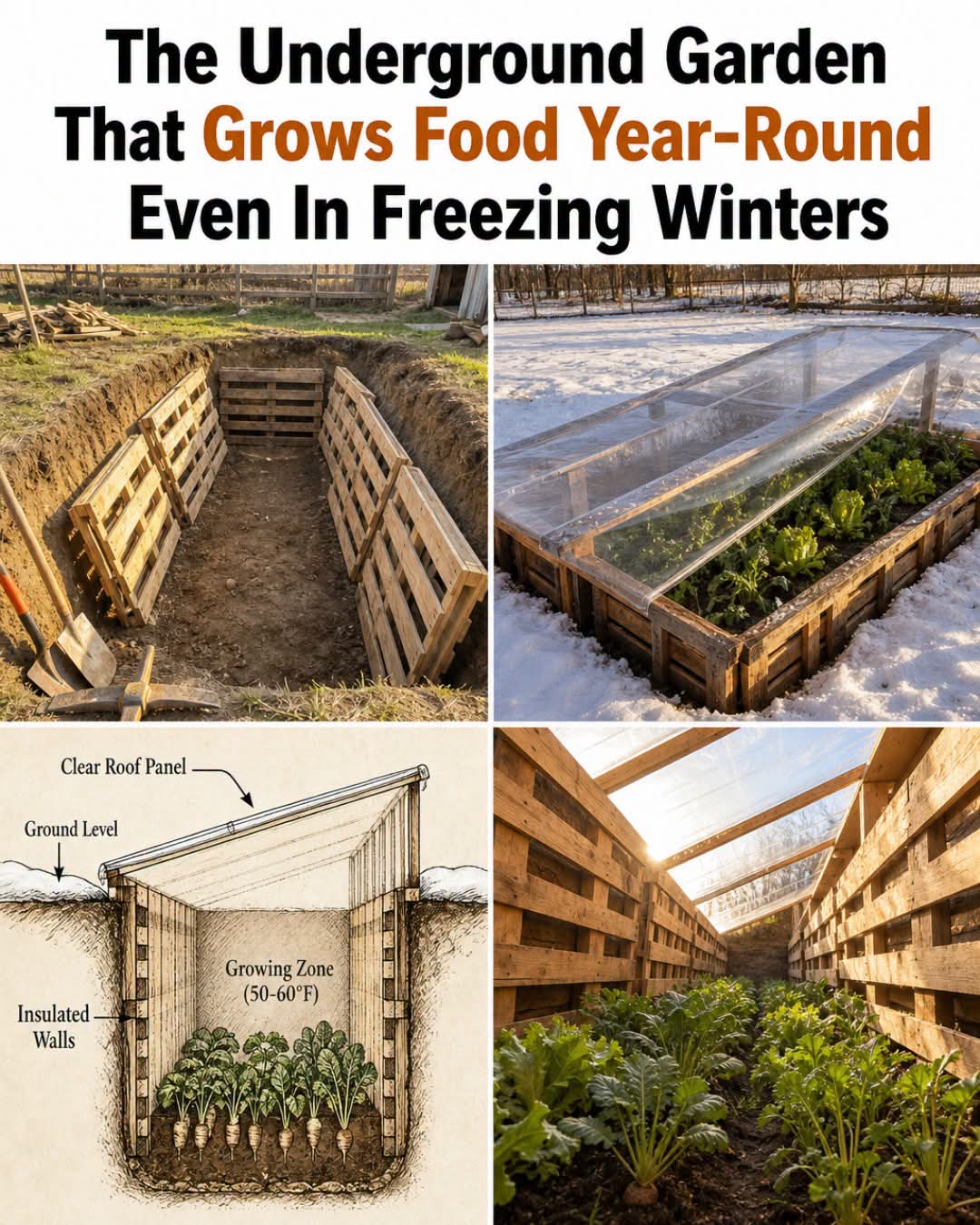
The Underground Garden That Grows Food Year-Round—Even in Freezing Winters
Imagine harvesting fresh lettuce, spinach, carrots, and herbs while snow covers the ground outside. It may sound impossible, but gardeners around the world have discovered that growing below ground can create a surprisingly productive space for year-round gardening.
Known as an underground garden or walipini (a word meaning “place of warmth” in the Aymara language of the Andes), this clever growing method uses the earth itself as natural insulation to protect plants from extreme temperatures.
What Is an Underground Garden?
An underground garden is essentially a greenhouse built several feet below ground level.
Instead of relying entirely on heaters, it takes advantage of the relatively stable temperature of the surrounding soil. While the air above ground may swing from freezing winters to scorching summers, the soil below the surface changes temperature much more slowly.
A transparent roof allows sunlight to enter while helping trap warmth inside, creating a more stable environment for plants.
Why Does It Stay Warmer?
One of the biggest advantages of an underground garden is the insulating effect of the earth.
A few feet below the surface, soil temperatures remain much more consistent than the outside air. This natural insulation helps reduce temperature extremes, making it easier to grow cool-season crops through much of the winter in many climates.
While an underground garden can significantly extend the growing season, very cold regions may still require additional frost protection or supplemental heating during prolonged periods of severe freezing weather.
Crops That Grow Well
Many cool-season vegetables thrive in this protected environment, including:
- Lettuce
- Spinach
- Kale
- Swiss chard
- Arugula
- Radishes
- Carrots
- Beets
- Green onions
- Parsley
- Cilantro
Some gardeners also grow herbs and start warm-season seedlings weeks before outdoor planting time.
The Benefits
Gardeners appreciate underground gardens for many reasons:
- Protection from freezing winds.
- Better temperature stability.
- A longer growing season.
- Reduced water evaporation.
- Shelter from hail and heavy storms.
- Lower heating needs than many above-ground greenhouses.
Because the surrounding earth helps regulate temperatures, plants often experience less stress from sudden weather changes.
Important Design Considerations
Building an underground garden requires careful planning.
A successful design should include:
- Excellent drainage to prevent flooding.
- A roof that captures as much winter sunlight as possible.
- Good ventilation to reduce excess humidity and overheating on sunny days.
- Strong structural support for the walls and roof.
- Safe access in and out of the structure.
The ideal depth and roof angle depend on your climate, latitude, and local conditions.
Is It Truly Year-Round?
An underground garden can make year-round harvesting possible in many regions, especially for leafy greens and other cool-weather crops. However, it isn’t a guarantee that every fruit or vegetable will grow through every winter without extra protection.
In colder climates, gardeners may still use row covers, thermal blankets, or supplemental heat during the harshest weather. Warm-season crops such as tomatoes, peppers, and cucumbers usually need more warmth and light than an unheated underground garden can provide during the darkest months.
A Smart Way to Garden
As more people look for sustainable ways to grow fresh food, underground gardens are gaining renewed attention. By working with nature instead of against it, these unique structures make use of the earth’s insulating properties to create a more stable growing environment.
Whether you’re hoping to harvest fresh greens in winter, extend your growing season, or simply explore an innovative gardening technique, an underground garden offers a fascinating example of how thoughtful design can help produce food in challenging climates.
Sometimes, the secret to growing more isn’t building higher—it’s digging a little deeper.
