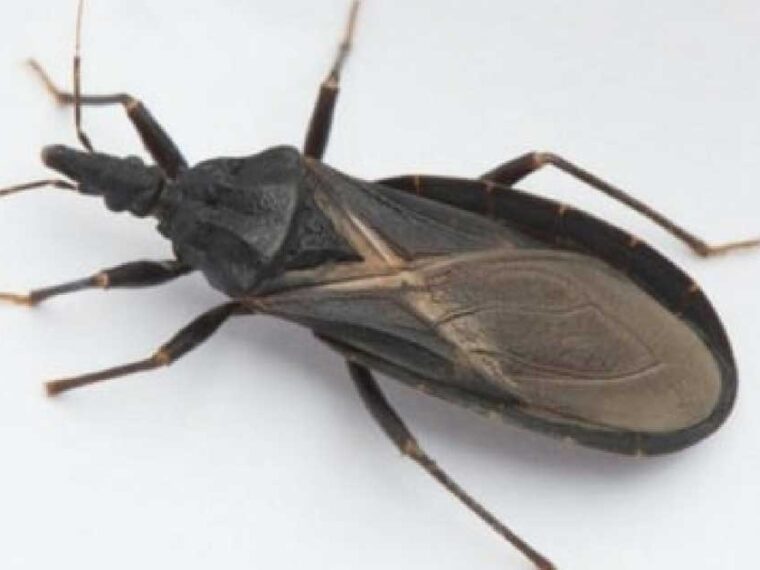
Summertime is wonderful. The days are longer, the weather is warmer, and people spend more time outdoors enjoying gardens, patios, parks, and hiking trails. Unfortunately, summer also brings an unwelcome collection of pests: ticks, mosquitoes, flies, ants, wasps, and countless other insects.
And just when it seems like there are already enough bugs to worry about, another unusual insect sometimes gets attention: the assassin bug.
The name alone sounds alarming. But what exactly is an assassin bug? Are they dangerous? Can they really transmit disease? And what should you do if you find one in or around your home?
The answers are a little more complicated than many viral posts suggest.

What Exactly Is an Assassin Bug?
“Assassin bug” is a common name used for insects belonging to the Reduviidae family.
There are thousands of species of assassin bugs, and they don’t all behave in the same way.
In fact, most assassin bugs are predators that feed on other insects. They use a distinctive, straw-like mouthpart called a proboscis to pierce their prey and consume its bodily fluids.
Some species can even be helpful in gardens because they prey on insects that damage plants.
However, a particular group within this large family is known as triatomine bugs, or “kissing bugs.” These are the insects that are relevant when discussing the transmission of Chagas disease.
That distinction is important because not every insect that looks like an assassin bug is a kissing bug, and most assassin bugs do not transmit Chagas disease.
Why Are They Called “Kissing Bugs”?
The nickname “kissing bug” comes from where some triatomine bugs have historically been known to bite humans: around the face, particularly near the lips.
These insects are generally nocturnal and may become active at night when people are sleeping.
They can feed on humans and other mammals, but simply being bitten does not automatically mean someone has contracted Chagas disease.
The disease is caused by a parasite called Trypanosoma cruzi, and transmission has specific requirements.

The Connection to Chagas Disease
Chagas disease is a parasitic infection caused by Trypanosoma cruzi.
Certain triatomine bugs can carry the parasite. The important part of transmission is that the parasite is generally found in the insect’s feces rather than directly in its saliva.
After feeding, an infected bug may defecate near the bite. If contaminated material gets into the bite wound or comes into contact with the eyes, mouth, or another opening, the parasite can potentially enter the body.
This is why scratching or rubbing the area can increase the opportunity for contaminated material to enter the wound.
Chagas disease is a genuine medical condition, but online descriptions sometimes make it sound as though every assassin bug bite automatically causes the disease. That is not the case.
Where Are These Bugs Found?

Triatomine bugs are native to the Americas and occur in parts of the United States, Mexico, Central America, and South America.
In the United States, they are particularly associated with warmer regions, including parts of the southern states.
They can live in a variety of environments, including areas around homes, woodpiles, animal shelters, gardens, and other places where suitable hosts are available.
Some species are attracted to lights at night and may occasionally enter buildings.
Their presence can therefore be more noticeable during warm-weather months.
What Do They Look Like?
Triatomine bugs can vary considerably in appearance depending on the species.
Many have a relatively elongated body with a cone-shaped head and distinctive patterns along the edges of their abdomen.
However, appearance alone isn’t always enough to identify one confidently.
Many harmless insects can look surprisingly similar.
If you find an unfamiliar insect that you believe could be a kissing bug, avoid handling it with your bare hands. If possible, take a clear photograph or safely capture the specimen for identification.
A local extension service, pest professional, or appropriate public-health resource may be able to help identify it.
What Happens When They Bite?
A bite from a triatomine bug may be painless or relatively mild at first, which is one reason people may not realize they’ve been bitten.
Some people develop localized irritation, redness, or swelling.
However, a bite itself does not tell you whether the insect was infected with T. cruzi.
You also cannot diagnose Chagas disease simply by looking at the bite.
If you believe you have been bitten by a suspected kissing bug, especially if you live in or have recently traveled through an area where Chagas disease occurs, contacting a healthcare professional is a sensible precaution.
What Are the Symptoms of Chagas Disease?

Chagas disease can have different stages.
During the acute phase, some people develop relatively mild or nonspecific symptoms. These may include:
- Fever
- Fatigue
- Headache
- Body aches
- Rash
- Swollen lymph nodes
- Loss of appetite
- Swelling around the site where the parasite entered the body
Some infected people, however, experience few or no noticeable symptoms.
That’s one of the reasons the infection can go unnoticed.
Years or even decades later, a proportion of untreated people can develop chronic complications, particularly involving the heart and digestive system.
Potential complications can include abnormal heart rhythms, cardiomyopathy, heart failure, or enlargement of parts of the digestive tract.
Fortunately, early diagnosis and appropriate treatment can make a significant difference.
Does Every Kissing Bug Carry the Parasite?
No.
This is one of the most important points to remember.
A kissing bug must be infected with Trypanosoma cruzi for it to transmit the parasite.
Even in regions where triatomine bugs occur, not every individual insect is infected.
And again, not every assassin bug is a triatomine bug.
So seeing an unfamiliar assassin bug in your garden isn’t automatically a medical emergency.
What Should You Do If You Find One?

The safest approach is to avoid touching the insect directly.
Don’t crush an unidentified bug against your skin.
Instead, if you need to remove it, use an appropriate container or another method that avoids direct contact. You can also photograph it from a safe distance for identification.
If you think you’ve been bitten, wash the affected area with soap and water.
Avoid scratching the bite.
If you develop concerning symptoms or are worried about possible exposure to Chagas disease, contact a healthcare professional and explain what happened, including where the exposure occurred.
How Can You Reduce the Chances of Finding Them Around Your Home?
continue reading in page 2
