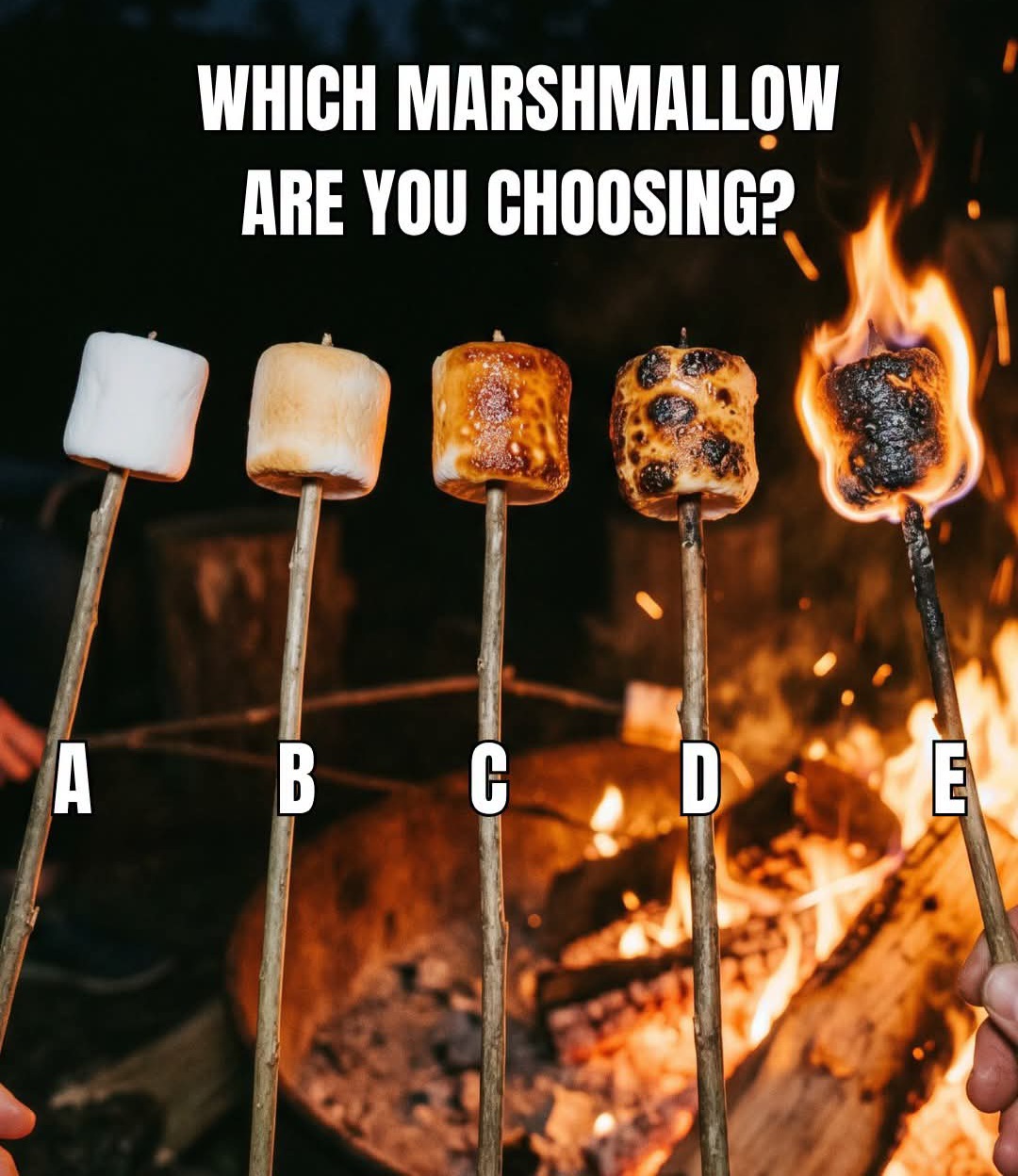
🔥 Which Marshmallow Are You Choosing? A, B, C, D, or E?
Few campfire debates are as passionate as the great marshmallow question:
How toasted should a marshmallow be?
Some people want it barely warmed. Others want it perfectly golden brown. And then there are those brave souls who accidentally (or intentionally) set theirs on fire and call it “extra flavor.”
If you’re standing around a campfire and presented with five marshmallows ranging from barely toasted to heavily charred, which one are you choosing?
Let’s find out!
🤍 Marshmallow A: Barely Warmed
Marshmallow A has only kissed the heat.
The outside remains soft, white, and fluffy, while the inside becomes slightly warmer and creamier.
Fans of A say:
✨ It’s closest to the original flavor
✨ No burnt taste
✨ Soft and pillowy
✨ Perfect for marshmallow purists
These people believe marshmallows don’t need much improvement.
🌟 Marshmallow B: Light Golden
This marshmallow has just begun to turn golden.
The exterior develops a delicate caramelized layer while staying soft and sweet.
Supporters love it because:
🔥 Gentle sweetness
🔥 Slight crispness
🔥 Balanced texture
🔥 Beautiful golden color
Many people consider this the safest and most crowd-pleasing option.
🏆 Marshmallow C: Perfectly Toasted
For countless campfire enthusiasts, C is the champion.
The outside is evenly golden brown while the inside transforms into a warm, gooey center.
Why people love it:
😋 Crispy outside
😋 Melted inside
😋 Rich caramel flavor
😋 Ideal for s’mores
This is often considered the “gold standard” of marshmallow roasting.
🔥 Marshmallow D: Deeply Toasted
Now we’re entering serious territory.
This marshmallow has a darker crust with stronger caramelization.
Fans appreciate:
🍫 Richer flavor
🔥 Extra crunch
🌟 Toasted sugar notes
😋 Gooey center
People who choose D often enjoy bold flavors and a little extra campfire character.
🖤 Marshmallow E: Charred and Fearless
The most controversial choice of all.
Some see a burnt marshmallow.
Others see perfection.
Fans of E insist:
🔥 The smoky flavor is unbeatable
🔥 The crunchy shell is amazing
🔥 Campfire food should taste like a campfire
🔥 It’s all about the contrast between the burnt outside and molten center
This choice tends to divide families, friendships, and camping groups everywhere.
🍢 Why Marshmallows Change When Heated
As marshmallows roast, their sugars begin to caramelize.
This process creates:
✨ New flavors
✨ Rich aromas
✨ Golden colors
✨ Crisp textures
The longer they’re exposed to heat, the darker and more intense the flavor becomes.
🏕️ The Art of Roasting
Some people carefully rotate their marshmallow for several minutes to achieve perfect browning.
Others accidentally catch it on fire and pretend that was the plan all along.
Both methods have their supporters.
🍫 The S’mores Factor
Your favorite marshmallow level may depend on whether you’re making s’mores.
Many people prefer:
🍫 B or C for balanced sweetness
🍫 D for extra flavor
🍫 E for a smoky twist
The melted chocolate and graham crackers can completely change the experience.
😄 What Your Choice Might Say About You
Just for fun:
🤍 A = You like simplicity.
🌟 B = You enjoy balance.
🏆 C = You appreciate perfection.
🔥 D = You like bold flavors.
🖤 E = You’re not afraid to take risks.
Of course, there’s no wrong answer—only delicious ones.
The Bottom Line
Marshmallows are one of the simplest campfire treats, yet they inspire endless debate.
Some people love them barely warmed. Others insist they need a golden crust. And a dedicated group proudly chooses the darkest marshmallow on the stick.
No matter where you stand, one thing is certain:
A toasted marshmallow shared around a fire is one of life’s simple pleasures.
🔥👇 So be honest…
Which marshmallow are you choosing: A, B, C, D, or E?
