🥩 🤤
If you’re a serious meat lover, this might be one of the toughest food choices imaginable.
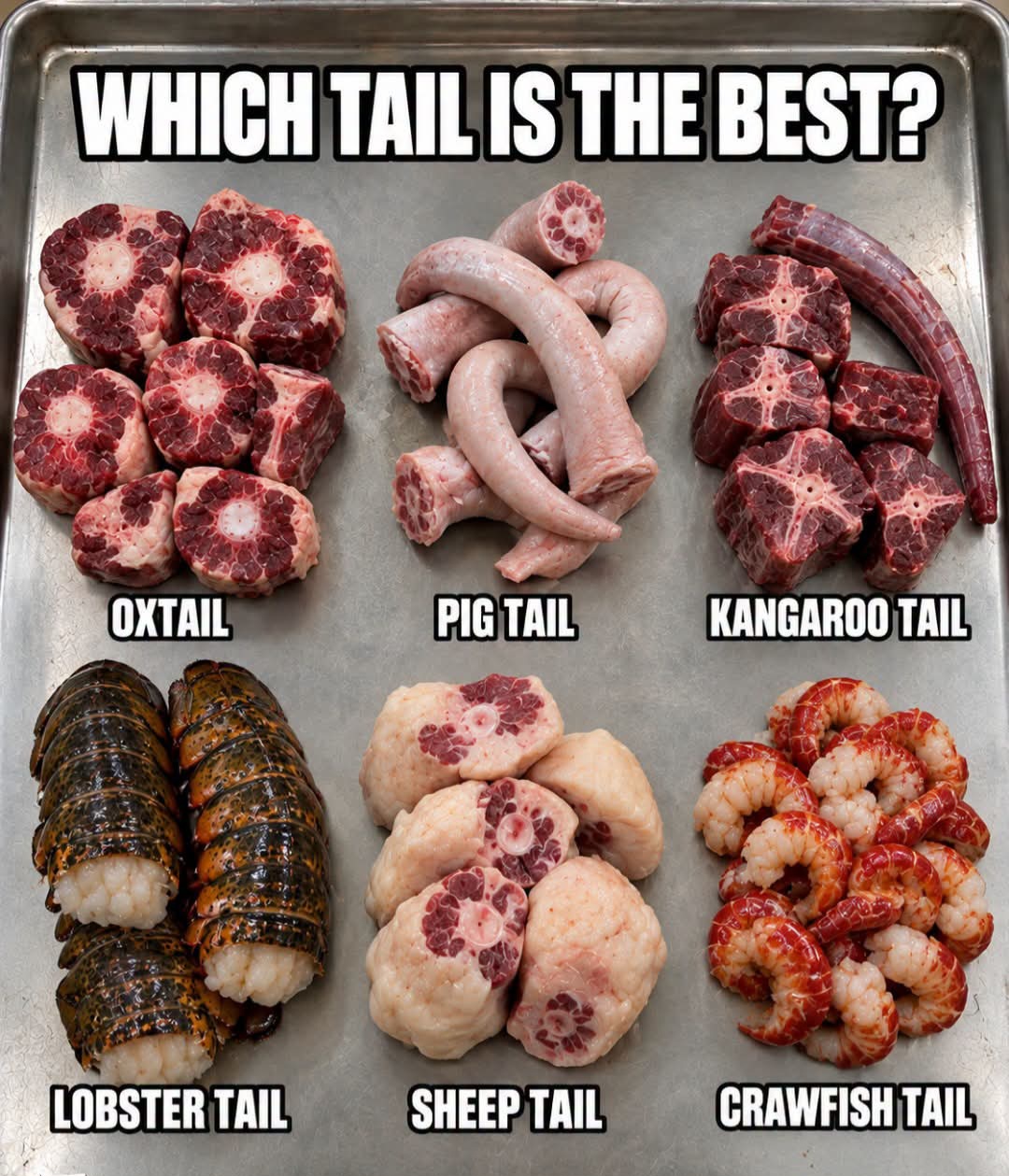
The image puts six very different options side by side: oxtail, pig tail, kangaroo tail, lobster tail, sheep tail, and crawfish tail. Each has its own texture, flavor, cooking style, and devoted fans.
So forget the usual steak debate for a moment. The real question is:
Which tail would make it onto your plate? 👀🔥
🐂 Oxtail
Oxtail is famous for its rich, deeply savory flavor and wonderfully gelatinous texture.
It’s especially popular in slow-cooked dishes because the connective tissue breaks down over time, producing an incredibly rich broth and tender meat.
A classic approach is to brown the pieces first, then slowly braise them with onions, garlic, herbs, vegetables, and stock. After several hours, the meat becomes fork-tender and the cooking liquid turns into a luxurious sauce.
Best for: slow braises, stews, soups, and hearty comfort food.
🐖 Pig Tail
Pig tail is a traditional ingredient in many cuisines and can be prepared in surprisingly different ways.
It contains skin, fat, connective tissue, and meat, making slow cooking particularly effective. Braising or simmering allows the skin and connective tissue to become tender while adding plenty of flavor to the dish.
It can also be seasoned and roasted or grilled after being cooked until tender.
Best for: braised dishes, stews, soups, beans, and smoky barbecue-style preparations.
🦘 Kangaroo Tail
Kangaroo tail is a less familiar choice for many people, but it has culinary traditions in Australia.
Like other collagen-rich cuts, it can benefit from slow cooking. The meat is generally quite lean, so gentle cooking methods can help prevent it from becoming dry.
For anyone interested in trying less-common meats, kangaroo tail is certainly an unusual option.
Best for: slow-cooked stews and traditional-style preparations.
🦞 Lobster Tail
Now we’re moving into completely different territory.
Lobster tail is prized for its sweet, delicate meat and is often treated as a special-occasion food.
It can be steamed, baked, broiled, grilled, or poached. One of the simplest preparations is lobster tail with melted butter, lemon, garlic, and herbs.
The key is avoiding overcooking. Lobster meat can become tough and rubbery when cooked too long.
Best for: grilling, broiling, steaming, or serving with garlic butter. 🧈🍋
🐑 Sheep Tail
Sheep tail is particularly associated with cuisines where fatty cuts are valued for their richness.
The fat can contribute tremendous flavor when rendered during cooking. Depending on the culinary tradition, sheep tail and tail fat may be grilled, roasted, or incorporated into other dishes.
For people who enjoy rich, fatty meat, this is a very different experience from leaner cuts.
Best for: grilling, roasting, and traditional regional dishes.
🦞 Crawfish Tail
Crawfish tails are small but packed with flavor.
They’re especially popular in Southern U.S. cooking and can be used in dishes such as crawfish étouffée, pasta, rice dishes, soups, and seafood boils.
Their slightly sweet seafood flavor pairs beautifully with garlic, butter, paprika, chili, herbs, and aromatic vegetables.
Best for: seafood boils, rice dishes, pasta, soups, and spicy Cajun-inspired recipes.
🔥 The Cooking Method Makes All the Difference
One interesting thing about the picture is that these aren’t really interchangeable ingredients.
A tender lobster tail doesn’t need the same treatment as collagen-rich oxtail.
Oxtail: slow and low.
Pig tail: braise, simmer, roast, or grill.
Kangaroo tail: gentle slow cooking works well.
Lobster tail: quick cooking is usually preferable.
Sheep tail: grilling or roasting can showcase the rich fat.
Crawfish tail: quick cooking keeps the meat tender.
That’s part of what makes cooking so interesting: the cut and the animal often determine how you should approach the dish.
🤤 What Would You Choose?
If you’re looking for rich, slow-cooked comfort food, oxtail is an obvious candidate.
If you want something decadent and seafood-focused, lobster tail is hard to ignore.
If you love spicy seafood, crawfish tail opens up a whole world of dishes.
If you’re adventurous, kangaroo or sheep tail offers something considerably less ordinary.
And if you’re a fan of traditional slow-cooked meats, pig tail deserves a place on the table.
🥩 The Ultimate Tail Challenge
Imagine someone puts all six options in front of you and says:
“You can only choose one.”
No steak.
No chicken.
No burger.
Just tails.
Would you go straight for the lobster? 🦞
Would you choose the rich, slow-cooked oxtail? 🐂
Maybe the crawfish? 🦞
Or would you surprise everyone and pick kangaroo, sheep, or pig tail?
There isn’t one universal answer—the fun is in the flavors, traditions, textures, and cooking methods each one brings to the table.
👀 So… which tail are you going for?
Oxtail 🐂 | Pig Tail 🐖 | Kangaroo Tail 🦘 | Lobster Tail 🦞 | Sheep Tail 🐑 | Crawfish Tail 🦞
Pick ONE! 🤤🔥
