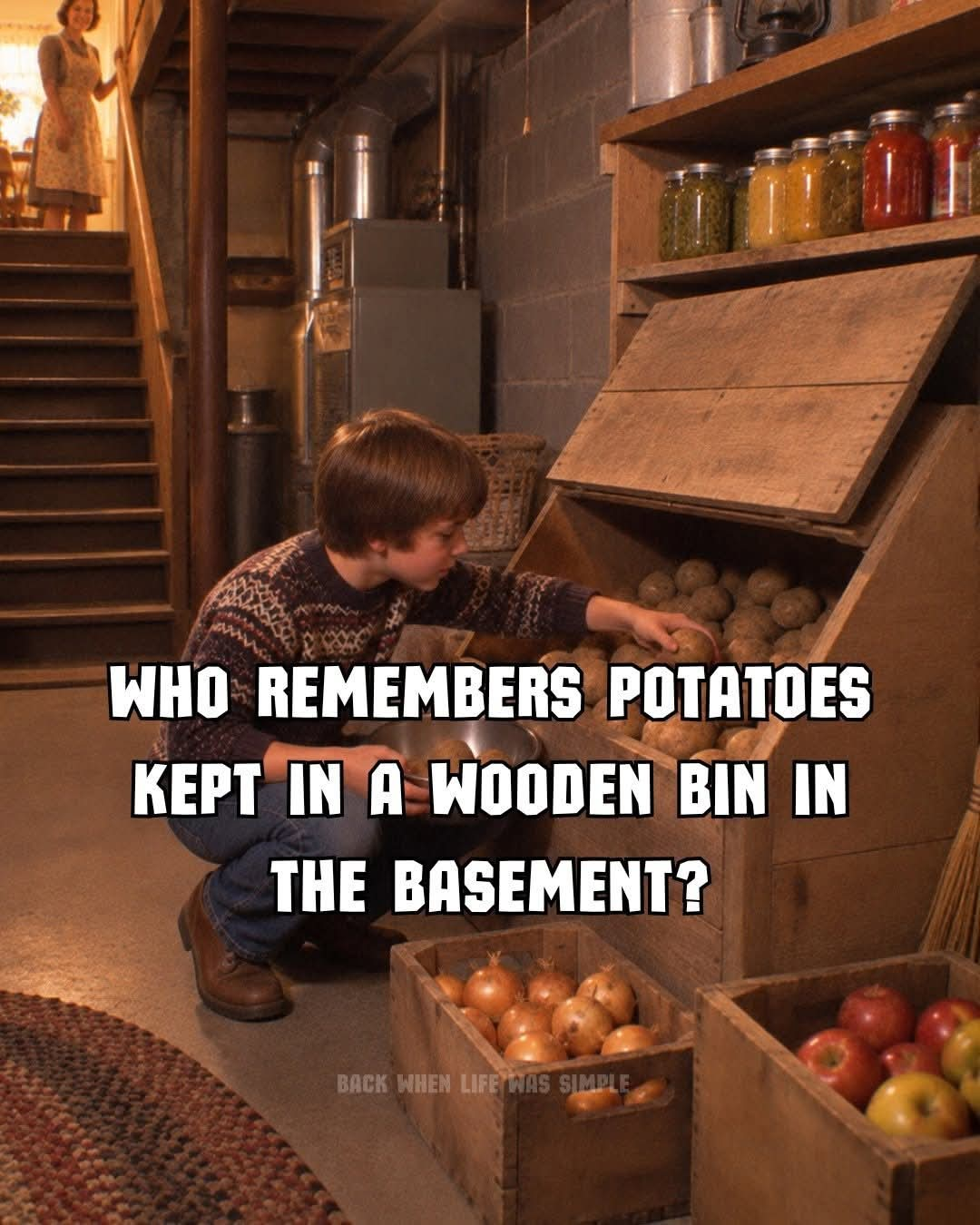
🥔🪵 Who Remembers Potatoes Kept in a Wooden Bin in the Basement?
There was a time when storing potatoes didn’t mean buying a small bag at the grocery store and tossing it into a kitchen cupboard.
For many families, potatoes were bought or harvested in large quantities and carried down to the basement, where they had their own special place—sometimes a wooden bin, crate, or even an entire section of a traditional root cellar. 🥔🏡
And honestly, if you grew up around one of these, you probably remember that unmistakable basement smell, the cool air, the wooden walls, and somebody saying:
“Don’t take the good potatoes!” 😂
🥔 Why Did People Store So Many Potatoes?
Potatoes were one of those foods that could help carry a family through the winter.
Before modern refrigeration and supermarkets made fresh food available year-round, people needed ways to preserve the crops they harvested during the growing season.
Root cellars and cool basement storage provided a naturally cool, dark environment where vegetables could be kept for months. Historically, potatoes were among the most important crops stored this way. (Colonial Williamsburg Research)
Instead of buying a few potatoes whenever dinner called for them, families might harvest or purchase large quantities at once and store them for later.
The basement essentially became an extension of the pantry.
🪵 The Famous Wooden Potato Bin
The wooden bin in the picture is a perfect example of old-fashioned food storage.
Wooden compartments and bins were commonly used in root cellars to keep different vegetables separated. Historical accounts describe potatoes being stored directly on the ground, on raised wooden surfaces, or inside bins and compartments. (Community Stories collection)
The goal wasn’t to make the potatoes look pretty.
It was about keeping them cool, dark, dry enough to avoid rot, and ventilated enough to breathe.
A simple wooden structure could accomplish surprisingly much.
🌡️ The Basement Was Basically a Natural Refrigerator
Long before everyone had a refrigerator humming in the kitchen, the ground itself provided a useful temperature buffer.
Traditional root cellars were often built underground or partially underground because the surrounding earth helped protect food from extreme temperatures. Some historic root cellars maintained temperatures around 50–55°F (10–13°C), while potato storage recommendations varied depending on the variety and intended use. (Administration publique)
That cool environment slowed down sprouting and spoilage.
The darkness mattered too.
Light can cause potatoes to turn green, and green potatoes can contain increased levels of glycoalkaloids such as solanine. That’s one reason potatoes intended for storage were kept away from sunlight. (Ask Extension)
🏡 The Basement Was More Than Just a Basement
For many older homes, the basement was almost like a second pantry.
You could find:
🥔 Potatoes
🧅 Onions
🥕 Carrots
🌽 Preserved vegetables
🍎 Apples
🎃 Squash
🥬 Cabbage
🫙 Jars of canned food
Traditional root cellars could contain different compartments for different crops. Potatoes and turnips might be stored in wooden sections, while carrots and parsnips could be packed in sand or sawdust to help maintain moisture. (Community Stories collection)
It was an entire food-storage system built around the seasons.
👵 “Go Downstairs and Get Some Potatoes”
And this is where the nostalgia really kicks in.
You didn’t necessarily have to run to the store.
Someone could simply say:
“Go downstairs and bring up six potatoes.”
Down you’d go.
You’d open the wooden lid or walk over to the storage bin, dig your hands into the pile, pick out the potatoes you needed, and head back upstairs.
Dinner was waiting.
It was simple.
It was practical.
And for a lot of families, it was completely normal.
🥔 Why Wooden Bins Made Sense
Wood was a practical material for food storage because a properly designed container could allow air movement rather than trapping moisture around the potatoes.
Modern guidance similarly emphasizes that potatoes store best in a cool, dark, well-ventilated environment. Good airflow helps reduce moisture buildup and deterioration. (Service de l’Extension Coopérative d’Arkansas)
That’s why the old-fashioned wooden bin wasn’t just decoration.
It had a job.
The potatoes needed somewhere cool and dark, while the storage area needed enough ventilation to prevent them from sitting in stagnant, humid air.
🍂 Harvest Time Meant Storage Time
Imagine a family garden in late summer or early fall.
The potato plants had finished growing.
The potatoes were dug from the soil.
They were sorted.
Damaged or diseased potatoes were separated from the good ones.
Then the keepers were moved into storage.
For freshly harvested potatoes, proper curing helps toughen the skin and heal minor surface damage before longer-term storage. Extension guidance recommends curing potatoes in a dark, well-ventilated place before moving them into long-term storage. (Ask Extension)
The best potatoes could then become part of the household’s food supply for months.
🥔 A Potato Wasn’t Just a Side Dish
Today, we might think of potatoes as mashed potatoes, fries, baked potatoes, or a side dish.
Historically, they could be much more important than that.
A good supply of potatoes represented food security.
They could be boiled, mashed, fried, baked, added to soups and stews, made into pancakes, or stretched into meals with whatever else was available.
That made a well-stocked potato bin more than a convenience.
It was part of the household’s winter plan.
🧺 And Then the Supermarket Changed Everything
Modern refrigeration, transportation, supermarkets, packaged foods, and year-round produce availability gradually reduced the need for household root cellars.
Root cellars were used for centuries and continued into the era when refrigeration became widespread. (Administration publique)
Instead of storing a season’s worth of vegetables, families could simply buy what they needed.
The giant wooden potato bin disappeared from many homes.
But the memory remained.
❤️ Why This Image Feels So Familiar
There’s something incredibly nostalgic about this scene.
The wooden shelves.
The jars lined up neatly.
The basement stairs.
The old storage bins.
The potatoes sitting there waiting for dinner.
It represents a time when food wasn’t necessarily hidden behind plastic packaging or neatly arranged in a supermarket display.
You could see where your food was being stored.
And you knew exactly where to go when Mom said:
“We need potatoes.” 🥔❤️
🥔 Could We Still Store Potatoes This Way Today?
Absolutely—but the conditions matter.
For home storage, potatoes should generally be kept somewhere cool, dark, and well ventilated. Avoid sealed plastic containers that trap moisture. Check stored potatoes regularly and remove any that are rotting so deterioration doesn’t spread. (Service de l’Extension Coopérative d’Arkansas)
A breathable basket, crate, or ventilated wooden box can recreate some of the advantages of those old-fashioned storage systems.
Just don’t assume that any warm basement will work. Modern homes can be considerably warmer than traditional root-cellar environments.
🪵 The Old Wooden Bin Was More Than a Storage Box
It was part of a whole way of life.
You grew food when the weather allowed it.
You harvested when it was ready.
You preserved what you could.
You stored it carefully.
And then, throughout the winter, you slowly worked your way through what you’d put away.
There was something deeply satisfying about knowing that the food in your basement had been grown months earlier and was still feeding the family.
No fancy gadgets. No smart refrigerator. No weekly grocery run just for potatoes.
Just a wooden bin, a cool basement, and a good supply of spuds. 🥔🪵
🥔❤️ WHO REMEMBERS?
Did your family—or your grandparents—have a wooden potato bin in the basement?
Did you ever have to go downstairs and dig through it to get potatoes for dinner?
And be honest…
Did you ever sneak a potato out of the bin just because you were hungry? 😂🥔
Who remembers this old-fashioned way of storing potatoes? 👇
