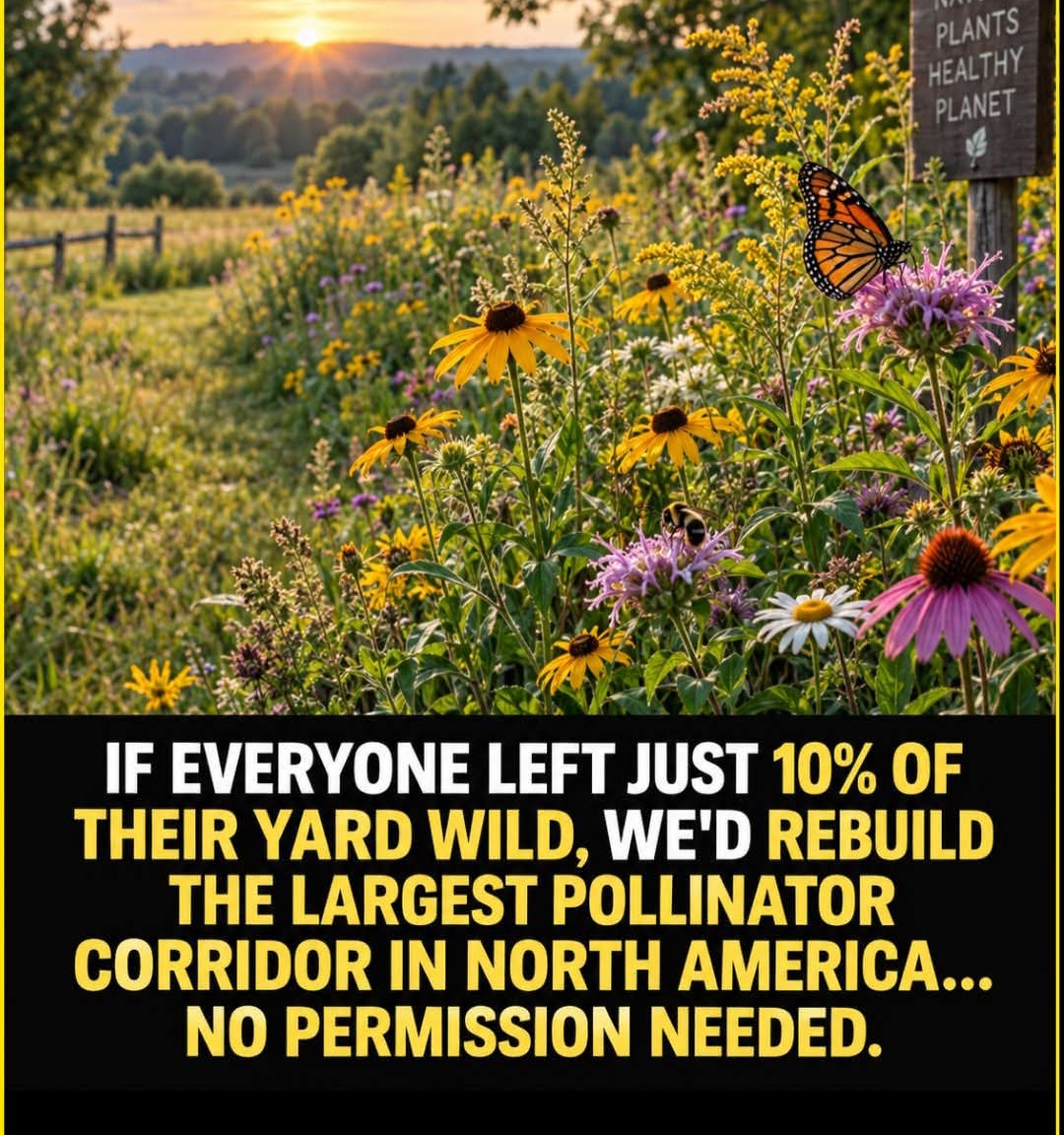
🌼 You Don’t Need a Huge Garden to Help Pollinators: How One Small Yard Can Make a Difference
You don’t need acres of land, a sprawling garden, or a backyard full of flower beds to create a little more space for wildlife.
Sometimes, one small patch of flowers can make a difference. 🌱🐝🦋
A corner of your yard planted with native, pesticide-free flowers can provide valuable food, shelter, and nesting resources for bees, butterflies, moths, and other beneficial insects.
And when many people do the same thing, those small patches can become something much bigger.
🐝 Start With What You Have
One of the biggest misconceptions about wildlife gardening is that you need a large property.
You don’t.
A small garden bed, a strip along a fence, a few containers, or even a neglected corner of the yard can become a useful habitat.
The goal isn’t to create a perfect garden.
It’s to create resources for wildlife.
A few flowering plants can provide nectar and pollen. Taller vegetation can offer shelter. Leaves, stems, and natural debris can provide places for insects to rest or complete parts of their life cycles.
Even allowing a small section of the yard to grow a little more naturally can provide opportunities that a completely manicured lawn doesn’t.
🌻 Choose Native Plants Whenever Possible
When planning a pollinator garden, one of the most important things to consider is what grows naturally in your region.
Native plants have evolved alongside local wildlife and can be particularly valuable to native insects.
The best choices will vary depending on where you live, your soil, sunlight, rainfall, and climate.
Depending on your region, possibilities might include:
- Clover
- Goldenrod
- Milkweed
- Asters
- Native sunflowers
- Coneflowers
- Bee balm
- Black-eyed Susans
- Native mint
- Yarrow
- Native shrubs and flowering trees
Don’t simply choose plants because they’re labeled “pollinator-friendly.” Check whether they’re appropriate for your specific region.
A local native-plant society, botanical garden, university extension service, or conservation organization can often help you identify suitable species.
🦋 Think Beyond Bees
When people hear the phrase pollinator garden, they often picture honeybees.
But honeybees aren’t the only visitors.
A diverse garden can attract many different kinds of insects, including:
🦋 Butterflies
🐝 Native bees
🪰 Hoverflies and other beneficial flies
🦋 Moths
🪲 Beetles
🐛 Caterpillars and other insect larvae
Different insects have different needs.
Some feed on flower nectar.
Others require particular plants as food for their young.
Some need bare soil for nesting, while others use hollow stems, leaf litter, or natural cavities.
That’s why a diverse garden is often more useful than a garden containing only one or two types of flowers.
🌼 Plant for a Long Season of Flowers
If you have the space, try to choose plants that bloom at different times of the year.
Early-blooming plants can provide resources when winter is ending and relatively few flowers are available.
Summer flowers can provide abundant nectar and pollen during the warmer months.
Late-season flowers, including many native asters and goldenrods, can provide important resources when fewer plants are still blooming.
Instead of having one spectacular week of flowers, aim for a garden where something is blooming throughout the growing season.
🌿 You Don’t Have to Remove Your Entire Lawn
This is important.
Creating wildlife habitat doesn’t have to mean ripping out every blade of grass.
If you enjoy having a lawn, keep some.
Instead, consider converting just a small section.
You could create a flower bed along the fence, plant underneath suitable trees, replace an unused strip of grass, or create a small island of native plants.
Even a few square meters can become a little pocket of habitat.
And once you see butterflies, bees, and other insects visiting, you may find yourself wanting to add another small patch.
🚫 Be Careful With Pesticides
A garden intended for pollinators should be managed with wildlife in mind.
Where practical, avoid unnecessary pesticide use.
Instead, consider approaches such as:
- Choosing plants suited to your growing conditions
- Encouraging natural predators
- Removing severely damaged plants when necessary
- Hand-picking pests from plants
- Accepting some insect damage as part of a healthy ecosystem
- Using physical barriers when appropriate
A few chewed leaves don’t necessarily mean something has gone wrong.
In a wildlife-friendly garden, insects are part of the garden—not automatically a problem to eliminate.
Always follow the label and local guidance if a pesticide is genuinely necessary.
🍂 Leave a Little Mess
A perfectly tidy garden isn’t always the best habitat.
Dead leaves, fallen stems, seed heads, and small amounts of natural debris can provide shelter and overwintering places for insects and other wildlife.
Instead of cleaning everything up immediately in autumn, consider leaving some plant material in place until spring where practical.
You can also leave a small area of bare soil for ground-nesting insects if your site and local conditions allow.
Think of it as giving nature a little room to work.
A garden doesn’t have to look perfectly manicured to be valuable.
🐛 Remember the Caterpillars
If you see caterpillars eating your plants, don’t automatically reach for the spray bottle.
Caterpillars are an important part of the life cycle of butterflies and moths.
They also provide food for birds and other wildlife.
Some butterfly and moth species depend on particular host plants for their caterpillars. This is another reason native plants can be so important.
A garden filled with flowers may attract adult butterflies.
A garden with appropriate host plants can help support them through another stage of their life cycle.
🏡 Small Gardens Can Connect
Here’s where the idea becomes especially interesting.
One isolated garden may be small.
But imagine hundreds of homes across a neighborhood each adding a little habitat.
One yard has native flowers.
The next has a flowering shrub.
Another has a small garden beneath a tree.
Someone else leaves part of their lawn unmowed.
Together, these spaces can create a more connected landscape with resources available in more locations.
Wildlife doesn’t necessarily recognize property boundaries.
A butterfly can move from one garden to another.
A bee can forage across multiple yards.
Birds can use trees and shrubs scattered throughout a neighborhood.
What looks like a collection of tiny gardens to us can function as a series of small habitat patches across the landscape.
🌱 You Can Start Small
You don’t need to spend a fortune.
Start with what you already have.
Try one of these simple projects:
Create a small native flower bed.
Choose several native species suited to your location.
Plant a flowering border.
A narrow strip along a fence can become a productive little garden.
Add native plants to containers.
Even renters or people with very small outdoor spaces can grow suitable flowering plants in pots.
Let one section of lawn grow.
If appropriate for your area, allow some flowering plants to remain rather than mowing everything immediately.
Plant a native shrub.
A single well-chosen shrub can provide flowers, foliage, shelter, and sometimes berries or seeds.
Leave some leaves.
Instead of removing every fallen leaf, allow some natural material to remain where it won’t create problems.
🌎 Think Local
The most important word in this entire idea is native.
A plant that supports wildlife in one part of the world may not provide the same benefits somewhere else.
Before buying seeds or plants, research what’s native to your region.
Look for plants that:
- Are naturally adapted to your climate
- Suit your soil and sunlight
- Provide flowers during different seasons
- Support local insects
- Don’t have invasive tendencies in your area
And remember that “native” isn’t simply a marketing label. Verify the plant’s status using reliable regional sources.
🌸 A Garden Doesn’t Have to Be Perfect
A wildlife-friendly garden may have holes in the leaves.
It may have a few weeds.
It may have fallen leaves beneath the plants.
It may not look like a perfectly manicured display garden.
That’s okay.
The goal isn’t perfection.
The goal is life.
A buzzing bee.
A butterfly moving between flowers.
A caterpillar tucked beneath a leaf.
A moth visiting after sunset.
A bird searching through vegetation for insects.
Those little moments are signs that your garden is doing more than simply looking pretty.
💚 One Small Patch Can Be the Beginning
You don’t need to replace your entire lawn.
You don’t need a huge backyard.
You don’t need to wait for a community project.
Start with one small patch.
Choose plants appropriate for your region. Avoid unnecessary pesticides. Provide flowers throughout the growing season when possible. Leave some natural material in place. Give wildlife a little room.
Then let your garden grow.
Because one yard may seem insignificant.
But when hundreds or thousands of small spaces provide food, shelter, and nesting opportunities, those individual efforts can become part of a much larger network of habitat.
A small garden isn’t just a garden. It can be one more place where wildlife finds what it needs. 🌼🐝🦋
🌱 What About Your Yard?
Would you turn a small corner of your lawn into a pollinator-friendly garden?
A. 🌼 Absolutely — I already have one!
B. 🐝 I’d love to start one.
C. 🌿 I’d rather keep most of my lawn.
D. 🦋 I already let part of my yard grow naturally.
Tell us your choice in the comments! 👇❤️
