Are you certain?”
I stared at the loan reminder on my screen. Refusing meant years more payments, but protecting my career mattered more.
“Yes,” I said. “Send me what I need to sign.”
Before work, I called Nora.
“I refused the money. You don’t need to file a complaint.”
“Refusing it now proves nothing,” she said. “You got caught.”
“I didn’t know about it.”
“Grandma talked about that money like it was our whole future. I buried my sister on Saturday. Now there’s a letter naming you.”
Nothing I said persuaded her.
“I’m sorry,” I said.
She hung up. I dressed and drove to the hospital.
***
Dr. Patel waited outside the ward.
“Your patients have been reassigned,” she said. “I need your badge.”
“Why?”
“You married an 18-year-old patient and now stand to inherit her money.” Her jaw tightened. “What the hell were you thinking?”
“But I transferred her care…”
“Marrying a patient crosses a professional boundary. Transferring her care didn’t erase that.”
“Am I losing my job?”
“That’s what the review has to determine.”
Walking out without my patients felt unreal. I had spent years preparing to work in those rooms, yet I suddenly had no permission to enter them as their doctor. I wondered how I could explain that to anyone who knew how much the job meant to me.
She extended her hand. I unclipped my badge and surrendered it.
***
At home, I finally unfolded Alicia’s note.
Her grandmother had given both sisters money for education and a fresh start.
You told me you worked your way through school. Everyone calls you lucky to be a doctor. I don’t think they know what it cost.
I hadn’t expected to feel so understood.
Nora still has her half. I can’t use mine for the life Grandma wanted me to have. Maybe it can give you some of yours back.
The wedding was something I wanted. This is something I want to give you. You deserve to have a good life, doc.
She’d drawn a smiley face beside her name.
***
My parents invited me to dinner that evening.
Mom served rice, and for a moment I enjoyed being cared for.
“Any news?” Dad asked.
“Not yet,” I said.
Mom lowered her fork.
“Who was this girl, Lucas? Why risk everything for her?”
I described Alicia, but mentioning her age changed their expressions.
“Eighteen!?” Dad shouted. “Why would you marry an eighteen-year-old patient?”
Mom covered her mouth.
I explained her prognosis, her wish, and the absence of romance.
Dad waited until I finished.
“But why did you say yes?”
“Don’t make it sound weird. It wasn’t like that.”
“That doesn’t answer the question,” Mom said.
“I’m asking why you married her.”
I stared at my plate.
“Because there wasn’t anything else I could do for her.”
“Oh, Lucas.” Mom’s voice softened. “That doesn’t mean marrying her was the solution.”
I hoped Dad would disagree, but he reached for his water.
Neither parent believed I’d pursued Alicia’s money. Neither believed the marriage was right.
Dad eventually asked, “Do you need money while this plays out?”
“No.”
“Lucas.”
“Maybe. I’ll tell you.”
They embraced me at the door. Their love hadn’t changed, and I held on gratefully.
***
Back home, I began the account requested by the hospital.
I initially wrote that Alicia had insisted. Then I stopped. She’d asked; I’d agreed.
The distinction was uncomfortable but necessary. Calling her request an insistence made my agreement sound unavoidable. It was not. I had been the professional in the room, and my responsibility had not disappeared simply because Alicia was running out of time.
I corrected the wording. Explaining my choice without blaming her took most of the night. I submitted it before I could soften it again.
***
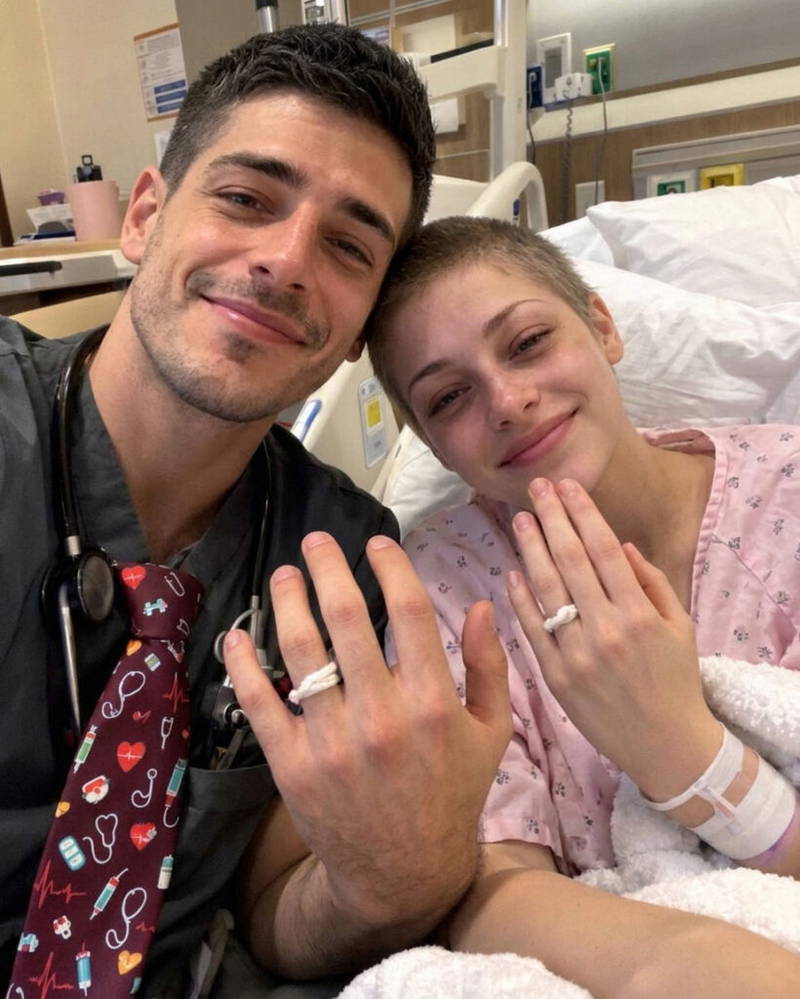
Later that week, Nora posted our wedding photograph online: me in my tie, Alicia in her scarf.
This doctor exploited my dying sister to obtain an inheritance, she wrote.
My hand shook as I called.
“Why would you do this? The review isn’t finished.”
“Because I think the hospital will protect you. They’ll quietly bury it.”
“I’ve refused the money.”
“After I complained.”
She disconnected.
People were sharing the picture. I began typing an explanation, then opened Alicia’s note.
I almost photographed it for my reply. But she’d trusted me with private words, and now I wanted to expose them to escape strangers’ judgment.
Besides, her note couldn’t prove what I’d known before the wedding.
I knew the silence might be mistaken for guilt. Still, releasing her private message would not change the choice I had made, and it would turn a gift meant for me into an argument for strangers to dissect.
I put my phone down without posting.
***
An aunt contacted my parents. A former professor who’d recommended me asked whether the allegation was true.
I drafted a response, deleted it, and tried again.
Then Dad called.
“The shop could use a hand,” he said. “If you want some work.”
“I’m a doctor, Dad.”
“I know what you are. I’m offering you a way to pay your bills. That’s all.”
I glanced at the bills beside my computer.
“What time should I come?”
“Eight. I’ll show you what needs doing.”
***
On Monday, I unpacked merchandise behind his counter.
When a customer asked whether I was his son, I expected a question about the photograph. Instead, she wanted lightbulbs. I nearly laughed with relief.
At lunch, Dad handed me a sandwich and left me alone with my phone.
I’d signed the refusal papers and submitted my account, yet Nora’s accusation kept spreading. People sharing it didn’t know she’d helped arrange the wedding or that she couldn’t prove I’d expected money.
I called Nora and requested a meeting.
She wanted Alicia’s scarf and bandage ring back; she’d placed them in the box after the funeral.
“I’ll bring them. I also need you to tell the hospital what you actually witnessed.”
“I’m not withdrawing my complaint.”
“I’m not asking you to.”
I did not expect forgiveness. I only hoped she could separate what she feared from what she had witnessed, even while continuing to believe I had crossed a line.
She agreed to Saturday. I gathered the keepsakes, lawyer’s notice, and signed refusal.
***
Nora invited me into her kitchen. I opened the box between us, showing her the scarf and ring.
She touched the fabric, then closed the lid.
“I’m not apologizing,” she said. “I had every right to complain.”
“You did.”
Her hand rested on the box.
“I was her doctor,” I said. “I was responsible for my decision. Her asking didn’t change that.”
“So you admit it. You took advantage of her.”
My face warmed. I still couldn’t defend the marriage honestly.
“I should have refused the marriage. But I didn’t marry her for money.”
“You were in her room every day.”
“Yes. You can tell them that. You can also tell them what you knew about the wedding when you helped with it.”
She withdrew her hand.
“The inheritance changed everything.”
“It raised questions. I understand why.”
I passed her the documents. She checked the dates on the notice and refusal.
“This doesn’t prove you didn’t know.”
“No. It shows when I was formally notified and what I did afterward.”
“You want me to say you’re innocent?”
“I want you to say what you saw. You knew it wasn’t a romance. You helped with the ceremony. You don’t know that I expected money.”
She pushed the papers back.
“People will think I’m taking your side.”
“You can keep your concerns in the statement.”
“And you can get out.” Her voice broke. “I thought I was giving her something good. But you…”
I looked at the box, remembering how carefully she’d fixed Alicia’s scarf.
I wanted to reassure her we’d both done the right thing, but I’d spent too many nights trying to believe that myself.
“I thought I was helping too,” I said. “I still made a decision I shouldn’t have made.”
She wiped her face with her sleeve.
“And if they let you go back?” Nora asked. “What happens when someone else asks you for something you shouldn’t give?”
I nearly promised never to repeat the mistake, then recognized another easy reassurance.
“I’ll ask for help before I answer,” I said.
Nora lifted her phone, hesitated, then lowered it.
“What you did was wrong. And I’m not deleting the complaint.”
“I know.”
She opened an email to the hospital reviewer and began writing. Her statement might not save my job.
She described helping with a wedding she’d understood was nonromantic and said she had no firsthand knowledge that I’d anticipated an inheritance. She maintained her concerns about the marriage.
I read her draft twice. It wasn’t an endorsement. I thanked her, and she sent it.
She also corrected her public post, hesitating before publishing.
I left the keepsakes behind. At the door, I saw her opening the box again.
***
Several weeks later, the review concluded.
The hospital considered Nora’s statement, my account, and other evidence. Investigators found no evidence of deliberate financial exploitation, but determined I’d shown poor professional judgment.
I could return with a formal reprimand, mandatory boundary training, and supervised clinical duties.
I read the conditions at my parents’ table.
Dad asked whether I’d accept.
“Yes.”
Mom squeezed my shoulder.
The inheritance refusal was finalized. Alicia had meant well, but I couldn’t accept her gift.
The outcome was neither complete vindication nor the professional disaster I had feared. I would have to regain trust through my conduct, not by repeating how good my intentions had been.
My loans remained, and I’d help at Dad’s shop some Saturdays until I caught up.
***
On my first morning back, I waited outside the ward while Dr. Patel confirmed my arrangements.
A loan reminder appeared on my phone. I put it away and took out my replacement badge.
My hand trembled as I held it to the reader.
It beeped. The door unlocked.
“No more weddings, Lucas.” Patel frowned at me.
I nodded.
