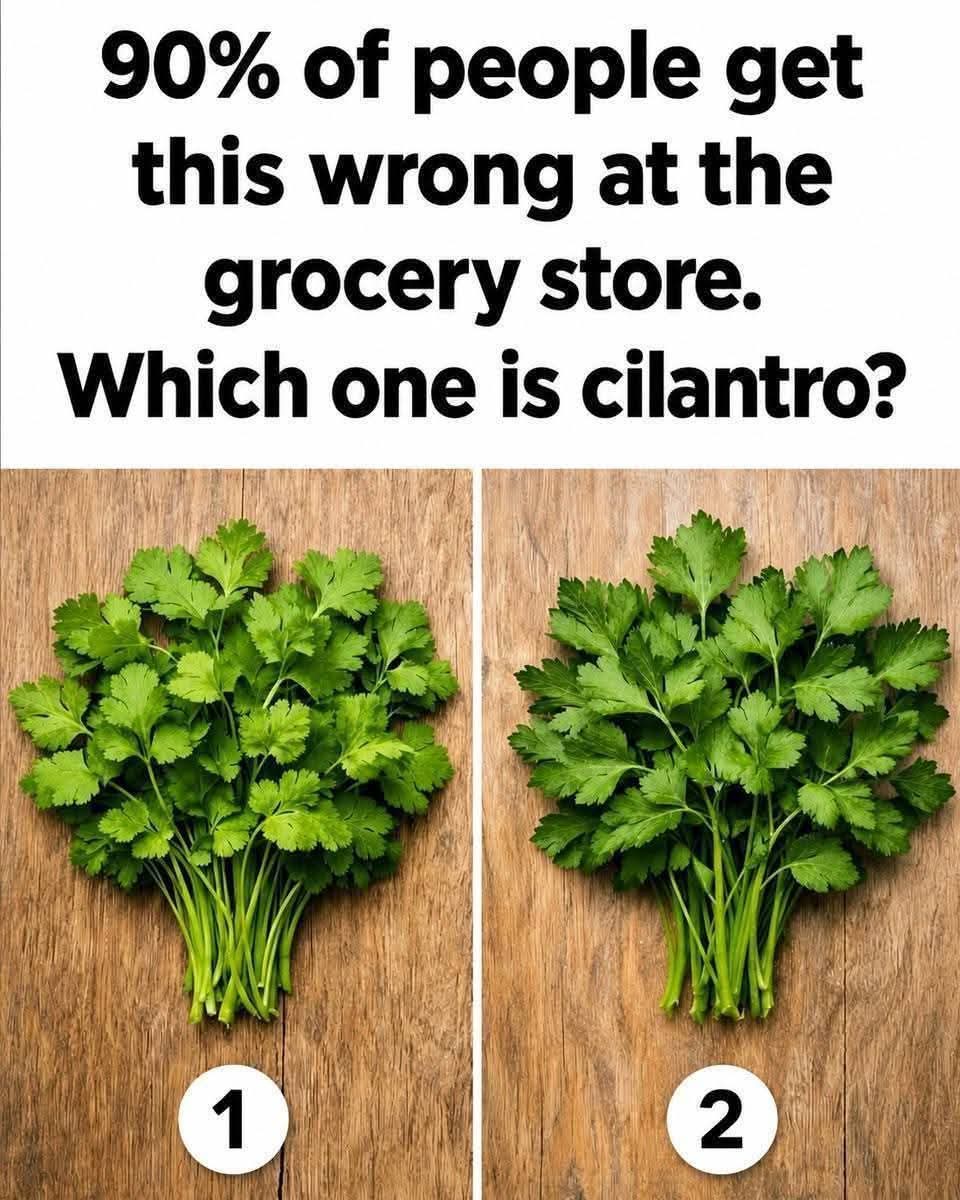
Cilantro or Parsley? How to Tell These Two Look-Alike Herbs Apart 🌿
Have you ever stood in the produce aisle, staring blankly at two nearly identical bundles of green leaves?
You look left.
You look right.
Then comes the ultimate culinary question:
“Is this cilantro, or am I about to ruin my homemade salsa with parsley?” 😂
If you’ve ever experienced that little moment of grocery-store confusion, you’re definitely not alone.
Cilantro and flat-leaf parsley can look remarkably similar, especially when they’re bundled together, misted with water, and surrounded by other fresh herbs. An internet meme may claim that 90% of people get them mixed up, but there’s no reliable evidence behind that exact number.
What is true is that these two herbs are close botanical relatives and share several visual characteristics.
The good news? Once you know what to look for, identifying them becomes surprisingly easy.
Let’s become herb detectives! 🕵️♀️🌿
🌿 Why Are Cilantro and Parsley So Hard to Tell Apart?
The confusion starts with their botanical family.
Both cilantro and parsley belong to the Apiaceae family, commonly known as the carrot or parsley family.
This large plant family also includes familiar plants such as:
- Carrots
- Celery
- Fennel
- Dill
- Anise
- Cumin
Because cilantro and parsley are relatives, they have some similar characteristics.
Both can have:
- Thin green stems
- Flat, branching leaves
- Small leaflets
- Bright green coloring
- Similar bunch shapes
- A fresh, leafy appearance
And when they’re tied into compact bunches at the grocery store, many of their distinguishing features become harder to see.
But there are several clues that can help.
🌿 The First Clue: Look at the Leaves
The leaves are probably your best visual tool.
Cilantro
Cilantro leaves tend to have a rounder, softer, more delicate appearance.
The upper leaves are often divided into small, rounded lobes that give them a somewhat fan-like or scalloped appearance.
Think:
Soft + rounded + delicate
The leaves can look almost feathery when viewed closely.
Flat-Leaf Parsley
Flat-leaf parsley, sometimes called Italian parsley, usually has leaves with more pointed, angular lobes.
The individual sections tend to look more defined and somewhat sharper than cilantro.
Think:
Pointed + angular + sturdy
If you place the two bunches side by side, parsley generally looks a little more structured, while cilantro tends to look softer and more delicate.
🌿 The Second Clue: Look at the Stems
Don’t ignore the stems!
Cilantro usually has relatively thin, delicate stems.
Parsley stems can feel somewhat firmer and sturdier, particularly toward the bottom of the bunch.
Of course, grocery-store herbs can vary depending on age, growing conditions, and variety, so the stem isn’t a foolproof test by itself.
But when combined with the leaf shape, it can be very helpful.
👃 The Ultimate Test: Smell Them!
If you’re still unsure, this is where things get much easier.
Pick up the bunch and give it a gentle sniff.
Cilantro has a very distinctive aroma.
For many people, cilantro smells:
- Fresh
- Citrus-like
- Herbal
- Bright
- Slightly peppery
- Almost earthy
But there’s an important twist.
Some people perceive cilantro as having a soapy or unpleasant flavor.
This isn’t simply a matter of being picky. Genetic differences can influence how certain people perceive the aroma compounds in cilantro.
That’s why one person might say:
“This smells amazing!”
while someone else says:
“Why does this taste like soap?” 😂
Parsley has a different personality.
Flat-leaf parsley generally has a fresher, greener, more vegetal aroma.
It’s usually much milder than cilantro.
If the herb has a strong, distinctive scent that immediately reminds you of salsa, tacos, guacamole, or fresh Mexican dishes, you’re probably holding cilantro.
🌿 Cilantro vs. Parsley at a Glance
| Feature | Cilantro | Flat-Leaf Parsley |
|---|---|---|
| Leaf shape | Rounded, delicate lobes | Pointed, angular lobes |
| Texture | Softer and more delicate | Firmer and sturdier |
| Aroma | Strong, distinctive, citrusy/herbal | Mild, fresh, grassy |
| Flavor | Bright, citrusy, herbal | Fresh, green, slightly peppery |
| Common uses | Salsa, guacamole, tacos, curries | Pasta, salads, sauces, soups |
| Common name | Cilantro/coriander leaves | Italian parsley |
One important note: cilantro and coriander are the same plant. In many English-speaking regions, “cilantro” refers to the fresh leaves and tender stems, while “coriander” usually refers to the dried seeds.
🌮 Where Is Cilantro Usually Used?
Cilantro is especially popular in cuisines around the world.
You’ll commonly find it in:
Mexican-inspired dishes
- Salsa
- Guacamole
- Tacos
- Burrito bowls
- Enchiladas
- Fresh corn salads
Asian dishes
- Curries
- Noodle dishes
- Spring rolls
- Soups
- Stir-fries
- Rice dishes
Fresh sauces and condiments
- Chimichurri-style sauces
- Green sauces
- Chutneys
- Herb dressings
Cilantro is often added near the end of cooking or sprinkled over a finished dish so its fresh flavor remains noticeable.
🍝 Where Is Parsley Usually Used?
Parsley is one of the great all-purpose kitchen herbs.
Flat-leaf parsley works beautifully in:
- Pasta
- Garlic butter
- Roasted vegetables
- Salads
- Soups
- Stews
- Grain bowls
- Fish dishes
- Meat dishes
- Herb sauces
- Homemade dressings
It’s also frequently used as a garnish.
But don’t think of parsley as merely decoration!
Fresh parsley contributes flavor, freshness, color, and a pleasant herbal quality to a dish.
🌿 What About Curly Parsley?
Here’s another reason the grocery-store herb aisle can be confusing.
There are two common culinary types of parsley:
Flat-leaf parsley and curly parsley.
Curly parsley is much easier to distinguish from cilantro because its leaves have tightly curled edges.
Flat-leaf parsley is the one most likely to be confused with cilantro.
If you’re trying to identify a bunch that looks almost identical to cilantro, you’re probably comparing cilantro with Italian flat-leaf parsley.
🛒 A Simple Grocery-Store Herb Detective Trick
Next time you’re standing in the produce aisle, don’t panic.
Use this quick three-step test:
1. Look
Check the shape of the leaves.
Rounded and delicate? Think cilantro.
Pointed and angular? Think flat-leaf parsley.
2. Touch
Cilantro tends to feel more delicate.
Parsley generally has a slightly sturdier texture.
3. Smell
This is often the giveaway.
Strong, distinctive citrusy/herbal aroma? Probably cilantro.
Mild, fresh, grassy aroma? Probably parsley.
If you’re still unsure, compare the bunch with another package nearby.
Once you’ve seen the difference a few times, you’ll probably start recognizing them immediately.
⚠️ Can You Substitute Cilantro for Parsley?
Technically, yes.
But whether you should depends on the recipe.
These herbs don’t taste alike.
Replacing parsley with cilantro can dramatically change the flavor of a dish. Likewise, replacing cilantro with parsley won’t reproduce the distinctive flavor that cilantro contributes.
For a simple garnish, substitution may not matter much.
For a recipe where the herb is a major ingredient, however, the difference can be substantial.
For example, replacing cilantro in a fresh salsa with parsley will produce something completely different.
It may still be delicious—but it won’t taste like the original recipe.
🌱 How to Keep Fresh Herbs Fresh Longer
Once you’ve successfully identified your herb, the next challenge is keeping it fresh!
Fresh herbs can wilt quickly, but a little proper storage can make a big difference.
For cilantro
Trim a small amount from the bottom of the stems.
Place the bunch in a jar or glass with a little water, much like a bouquet of flowers.
Loosely cover the leaves with a breathable bag and refrigerate.
Change the water when necessary and remove any leaves that begin to spoil.
For parsley
Parsley can also be stored upright in a small amount of water in the refrigerator.
Another option is to wrap it loosely in a slightly damp paper towel and place it inside a storage bag or container.
The goal is to keep the herb hydrated without trapping excessive moisture around the leaves.
❄️ Can You Freeze Cilantro and Parsley?
Absolutely!
Freezing is particularly useful when you have more herbs than you can use before they wilt.
Wash and dry the herbs thoroughly.
Then you can:
- Chop them and freeze them in small portions
- Freeze them in ice cube trays with water
- Freeze them with a little olive oil for cooking
- Spread chopped herbs on a tray and freeze before transferring them to a container
Keep in mind that frozen herbs usually lose some of their fresh texture.
They’re best used in cooked dishes, sauces, soups, marinades, and other recipes where texture isn’t the main concern.
🌿 Don’t Confuse the Seeds!
There’s another interesting botanical detail.
Cilantro and coriander come from the same plant.
The fresh leaves and tender stems are commonly called cilantro, while the dried seeds are commonly called coriander.
Coriander seeds have a completely different flavor profile from fresh cilantro and are commonly used as a spice.
So when a recipe calls for coriander, pay attention to whether it means fresh leaves or coriander seeds.
🤔 Why Does Cilantro Taste Like Soap to Some People?
This is one of the most fascinating things about cilantro.
Some people absolutely love it.
Others take one bite and immediately say:
“This tastes like dish soap!”
Research has identified genetic differences associated with the way some people perceive the aroma compounds in cilantro.
That doesn’t mean everyone who dislikes cilantro has the same genetic variation, but genetics can contribute to differences in perception.
So if cilantro tastes soapy to you, you’re definitely not imagining it.
And if you love cilantro, you’re not imagining that either!
Taste perception can vary considerably from person to person.
🌿 The Easiest Way to Remember the Difference
Here’s your quick memory trick:
🌿 CILANTRO
C = Citrus + Curvy
Cilantro tends to have a distinctive citrusy/herbal aroma and softer, rounded leaves.
🌿 PARSLEY
P = Pointed + Pleasantly mild
Flat-leaf parsley generally has more pointed leaves and a milder, greener flavor.
It’s not a scientific identification system—but it makes remembering the difference much easier!
🌱 Final Verdict: Are You an Herb Detective Yet?
The next time you’re standing in the produce aisle wondering whether you’ve picked up cilantro or parsley, don’t let those nearly identical green bunches intimidate you.
Look at the leaves.
Feel the stems.
Then give them a sniff.
Rounded, delicate leaves with a distinctive aroma? You’re probably looking at cilantro.
More pointed leaves with a mild, fresh, grassy scent? That’s likely flat-leaf parsley.
And once you’ve learned the difference, you’ll probably wonder why they ever seemed so confusing in the first place!
Now it’s your turn:
Have you ever accidentally bought cilantro when you needed parsley—or parsley when you needed cilantro? 🌿😂
And the really important question…
Do you think cilantro tastes fresh and delicious, or does it taste like soap? 👀
Tell us in the comments!
