🥩 How Marbled Do You Like Your Meat? The Delicious Science of Steak Marbling
There are steak lovers who look at a piece of beef and think:
“That’s way too much fat.”
And then there are people who see the same steak and think:
“PERFECT. 🤤🥩”
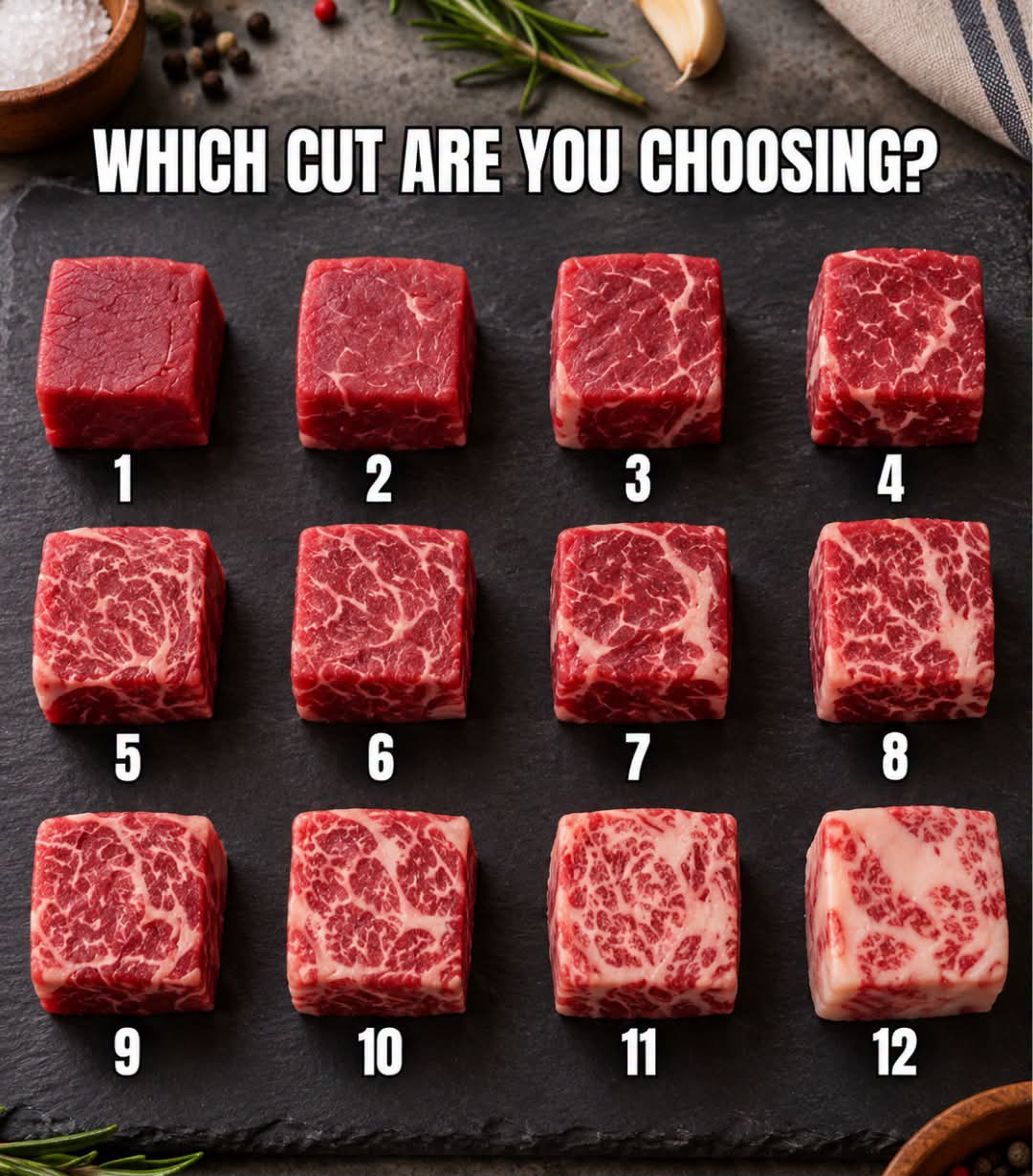
The image above puts that debate on display, with 12 pieces of beef showing progressively heavier levels of visible marbling.
But how much marbling is actually ideal?
Is more always better?
And when does a beautifully marbled steak cross the line from juicy and luxurious to way too fatty?
Let’s get into it.
🥩 First Things First: What Is Marbling?
Marbling is the small streaks and flecks of fat distributed throughout the lean muscle of meat.
It’s called intramuscular fat because it sits within the muscle rather than simply forming a thick layer around the outside.
And that little detail matters.
When a well-marbled steak is cooked, some of that fat melts and contributes to the steak’s richness, juiciness and flavor. USDA’s current beef-grading guidance specifically describes marbling as fine threads of fat within the meat and links greater marbling with more flavor, moisture and tenderness. (AMS)
So those little white lines aren’t necessarily something you should be trying to remove.
For many steak lovers…
They’re the good stuff. 🔥
👀 Looking at the 12 Levels
The image is essentially a visual marbling challenge.
At the beginning, the beef is relatively lean.
As you move toward 12, the amount of visible white fat increases dramatically.
🥩 1–2: Very Lean-Looking
These pieces have relatively little visible marbling.
If you prefer beef that looks predominantly red with only small amounts of intramuscular fat, this is your territory.
The potential advantage?
A leaner eating experience.
The trade-off is that you don’t have as much intramuscular fat available to contribute richness and juiciness.
🥩 3–4: Light to Moderate Marbling
Now we’re starting to see more of those little white streaks.
This is where the steak begins to look noticeably more marbled without becoming overwhelmingly fatty.
For someone who wants a balance between lean beef character and richness, this can be an appealing range.
🥩 5–6: The Classic Steak Look
Now we’re getting into the territory that many people immediately associate with a beautiful steak.
The marbling is obvious.
There are white lines running throughout the red muscle rather than just a few isolated flecks.
When cooked properly, this kind of beef can deliver a satisfying combination of:
Beefy flavor + richness + juiciness.
🥩 7–8: Serious Marbling
Now the steak starts looking luxurious.
There is significantly more intramuscular fat, and the white marbling becomes a major visual feature.
For people who love rich steaks, this is where things get exciting. 🤤
It’s also where cooking becomes particularly important.
You want enough heat to develop a delicious crust while allowing the steak’s internal fat to render appropriately.
🥩 9–10: Marbling Lover’s Territory
We’re getting into seriously fatty beef now.
The meat looks almost patterned with white veins.
If you love buttery, rich steak, this may look absolutely incredible.
But if you’re someone who prefers a leaner, more straightforward beef flavor, you might look at this and think:
“That’s a little too much.”
And that’s perfectly reasonable.
🥩 11–12: Maximum-Richness Territory
At the highest end of the image, the marbling is extremely prominent.
There is so much visible intramuscular fat that the meat almost looks artistic.
This is the point where the question changes from:
“Does this steak have enough marbling?”
to:
“How much richness do I actually want?”
More isn’t automatically better for every person or every cut.
🔥 Why Does Marbling Matter So Much?
Think about cooking a steak.
You put it into a hot pan.
The surface develops a browned crust.
Inside, the steak heats up.
As the fat within the muscle warms, some of it renders.
That combination of beef + rendered fat + browning is a huge part of why a well-marbled steak can taste so rich.
USDA explains that Prime beef has abundant marbling, while Choice has less and Select has less again; USDA also notes that Select beef can be fairly tender but may have less juiciness and flavor because it has less marbling. (AMS)
So marbling isn’t merely something that looks pretty in a photograph.
It is one of the characteristics used in beef quality grading.
🏆 Prime vs. Choice vs. Select
If you’ve ever stood in a supermarket staring at steak packages wondering what those labels mean, here’s the basic idea.
🥇 USDA Prime
Prime has the highest marbling of the three major retail quality grades.
USDA says Prime beef has at least slightly abundant marbling and is generally associated with higher-end restaurant use. (AMS)
🥩 USDA Choice
Choice is also high-quality beef, but has less marbling than Prime.
It can still produce an excellent steak.
🥩 USDA Select
Select is generally leaner.
USDA describes it as fairly tender but notes that its lower marbling can mean less juiciness and flavor compared with higher grades. (Ask USDA)
Importantly, these are USDA quality grades, not simply a universal ranking of every steak sold around the world. Other countries and producers use different grading systems and terminology.
🥩 Is More Marbling Always Better?
Not necessarily.
This is probably the biggest misconception about marbling.
More marbling can contribute to richness, juiciness and flavor, but your ideal amount depends on your personal preference, the cut of beef and how you’re cooking it.
Imagine two steaks.
Steak A
Very lean, intensely beefy and relatively light.
Steak B
Heavily marbled, rich, buttery and decadent.
Which one is better?
There isn’t a universal answer.
Some people want to taste the beef itself.
Others want the steak to feel almost buttery.
And some want something right in the middle.
🔥 Marbling vs. Fat Cap
There’s another important distinction.
Marbling isn’t the same as external fat.
Marbling is distributed inside the muscle.
A fat cap is a layer of fat sitting on the exterior of a cut.
You can have a steak with excellent marbling and relatively little external fat.
That’s one reason marbling is so visually interesting.
Those tiny white streaks are dispersed throughout the meat rather than simply sitting on top.
🍳 How Should You Cook a Highly Marbled Steak?
If you’ve paid for beautifully marbled beef, you don’t want to ruin it.
A few basics go a long way.
1. Get the cooking surface hot
A hot pan or grill helps develop a flavorful browned crust.
2. Don’t constantly move the steak
Give the surface time to brown.
3. Watch the fat
Highly marbled beef can render more fat during cooking, so be prepared for more smoke or flare-ups on a grill.
4. Don’t overcook it
The ideal doneness is personal, but heavily marbled premium steaks are often cooked in ways that preserve their juicy texture rather than taking them far beyond the desired level.
5. Let it rest
After cooking, giving the steak some time before slicing can make for a more enjoyable eating experience.
🧂 What About Seasoning?
With a beautifully marbled steak, you don’t necessarily need a complicated ingredient list.
Sometimes the best combination is simply:
Salt + pepper + beef + heat.
Then, if you want to get fancy:
🧈 Butter
🧄 Garlic
🌿 Rosemary
🌿 Thyme
🌶️ Chili
🥩 Steak sauce
But there’s something satisfying about putting a gorgeous piece of beef into a hot pan with nothing more than salt and letting the meat do the talking.
🥩 The Great Marbling Debate
Now let’s make this personal.
Which one in the picture would you choose?
Team 1–3 🥩
“Keep it lean.”
You want plenty of beef and don’t need lots of visible fat.
Team 4–6 🥩
“Balanced is best.”
Enough marbling for flavor and juiciness, but not so much that the steak looks overwhelmingly fatty.
Team 7–9 🤤
“Now we’re talking.”
You actively look for marbling when buying steak.
Team 10–12 🔥
“MORE FAT. MORE FLAVOR.”
You see those white streaks and immediately start planning dinner.
🤤 My Pick?
For a steak, I’d personally go somewhere around the middle-to-high marbling range shown here.
Enough intramuscular fat to make the steak rich and juicy…
but not so much that the fat completely dominates the experience.
Because the perfect steak, for me, is about balance:
🥩 Beefy flavor
🔥 Beautiful crust
🧈 Rendered fat
🧂 Good seasoning
🤤 Juicy interior
That’s the magic combination.
🍽️ And Then Comes the Most Important Question…
How are you serving it?
Steak + fries? 🍟
Steak + mashed potatoes? 🥔
Steak + vegetables? 🥦
Steak + creamy peppercorn sauce? 🌶️
Or are you the type who says:
“Just give me the steak. Don’t get in its way.” 😂
🥩 Final Verdict: How Marbled Do You Like It?
There is no single perfect marbling level for everyone.
Some people want a lean, beef-forward steak.
Some want moderate marbling for a balance of flavor and richness.
And some see a piece of heavily marbled beef and immediately start drooling. 🤤
The USDA’s grading system reflects the relationship between marbling and beef quality, with Prime requiring more marbling than Choice, and Choice more than Select. (AMS)
But your perfect steak is ultimately your preference.
So forget the numbers for a moment.
Look at the picture again.
👀 Which one are you choosing?
1–3: Lean 🥩
4–6: Balanced 🔥
7–9: Marbled 🤤
10–12: Absolutely loaded 🧈
Drop your number below! 🥩👇
📌
Tags:
Steak, Beef, Marbling, Steak Marbling, Beef Marbling, Prime Beef, USDA Prime, USDA Choice, USDA Select, Steak Lovers, Meat, Grilling, BBQ, Steak Cooking, Beef Grades, Food Debate, Meat Lovers, Ribeye, Cooking Tips
