🍳
Few foods are as simple, versatile, and endlessly debatable as the humble egg.
You can scramble it, fry it, poach it, boil it, fold it into an omelette—or cook it until every last bit of yolk is firm. And somehow, everyone seems to have a very specific opinion about which version is “perfect.” 🤩
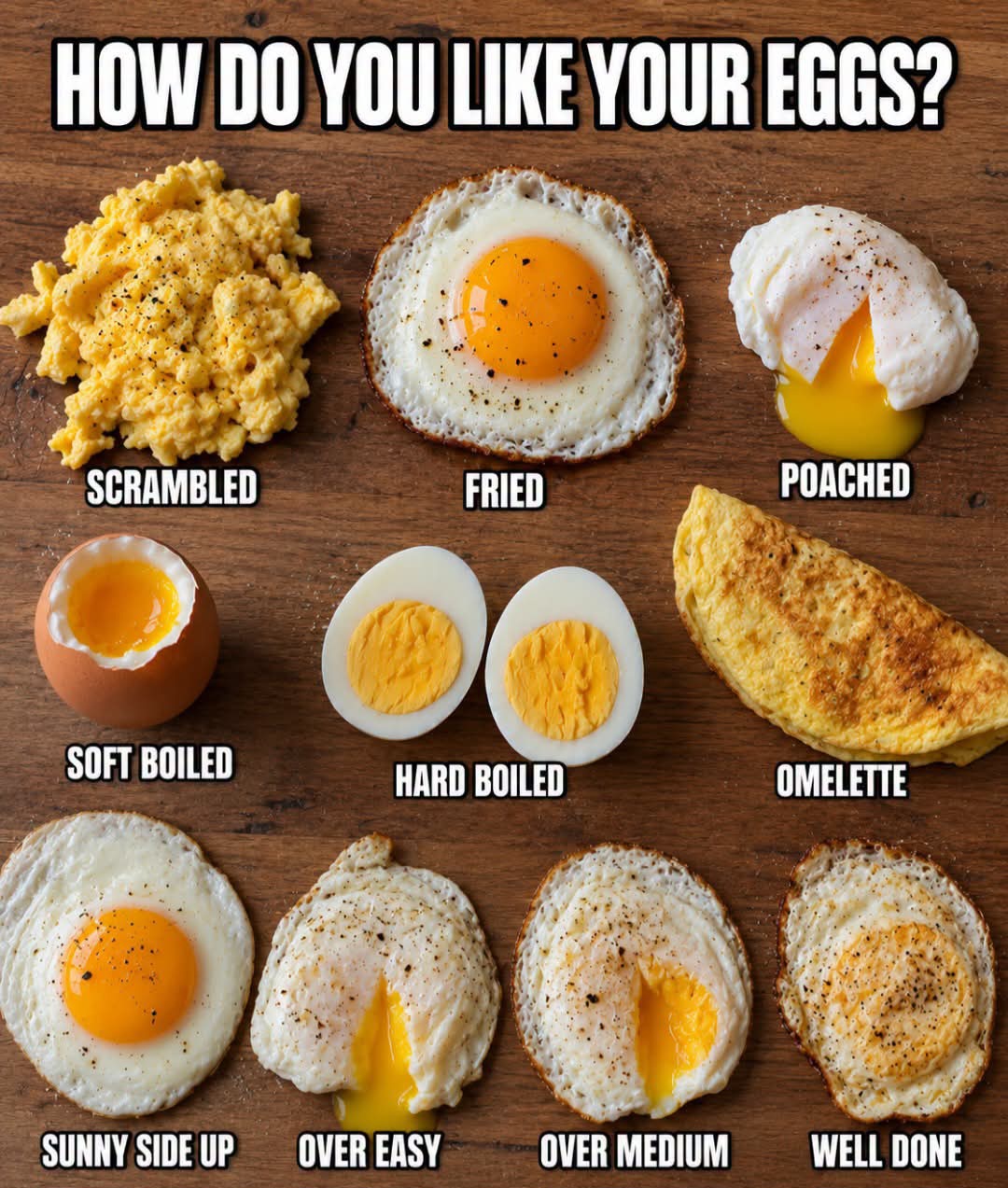
The image says it all: scrambled, fried, poached, soft-boiled, hard-boiled, omelette, sunny-side up, over easy, over medium, and well done.
So what actually makes an egg perfect?
The answer may depend entirely on who’s eating it.
🥚 Scrambled Eggs — Soft, Fluffy & Comforting
Scrambled eggs are all about texture.
Some people prefer large, soft curds that remain creamy in the center. Others like their eggs cooked until firm and fluffy.
For tender scrambled eggs, gentle heat and frequent stirring can help prevent them from becoming dry. Butter adds richness, while salt and pepper keep the seasoning simple.
Add cheese, herbs, mushrooms, onions, or vegetables and you’ve got an entirely different breakfast.
Perfect for: toast, breakfast plates, sandwiches, and lazy weekend mornings.
🍳 Fried Eggs — Crispy Edges or Gentle Perfection?
A fried egg can have dramatically different personalities.
A lower cooking temperature can produce a tender white with a beautifully runny yolk, while higher heat can create those crispy, browned edges that many people love.
Then comes the great question:
Do you flip it?
That’s where the different styles come in.
☀️ Sunny Side Up
The egg isn’t flipped, so the yolk remains visible on top.
The goal is usually a cooked white surrounding a warm, liquid yolk.
Break into that yolk with a piece of toast and you’ve got one of breakfast’s great pleasures.
🍳 Over Easy
The egg gets flipped briefly so the top cooks while the yolk remains runny.
It’s perfect for anyone who wants the classic fried-egg appearance but prefers a little more cooking on top.
And when you cut into it?
That golden yolk starts flowing.
That’s the moment. 🤤
🍳 Over Medium
Over medium takes the yolk a little further.
The white is fully cooked, while the yolk becomes thicker and partially set rather than completely liquid.
It’s a nice middle ground for people who like some creaminess without having yolk running everywhere.
🍳 Well Done
For people who want absolutely no runny yolk, there’s the well-done egg.
Both the white and yolk are fully cooked.
It may not satisfy the runny-yolk crowd, but for someone who likes a firm, thoroughly cooked egg, this can be exactly right.
And that’s the important thing:
“Perfect” doesn’t have to mean the same thing for everyone.
🥚 Poached Eggs — Delicate & Elegant
Poached eggs have a reputation for being tricky.
Instead of cooking the egg inside its shell or directly in a frying pan, the egg is gently cooked in hot water.
The result is a softly set white surrounding a warm, often runny yolk.
They’re particularly good on:
- Toast
- English muffins
- Avocado toast
- Eggs Benedict
- Salads
- Grain bowls
A perfectly poached egg can feel almost restaurant-worthy—even when you’re eating breakfast at home.
🥚 Soft-Boiled Eggs — The Golden Center
Soft-boiled eggs are all about that yolk.
The white should be cooked enough to hold together while the center remains soft and creamy.
Crack one open over toast, dip bread soldiers into it, or slice it over a bowl of noodles.
It’s simple, but incredibly satisfying.
🥚 Hard-Boiled Eggs — Reliable & Versatile
Hard-boiled eggs take things in the opposite direction.
The yolk is completely set, making the egg easy to slice, pack, store, and use in other dishes.
They’re perfect for:
- Egg salad
- Salads
- Sandwiches
- Deviled eggs
- Snacks
- Picnic lunches
And they’re one of those foods that can quietly sit in the refrigerator waiting to become part of another meal.
🧀 Omelette — The Egg’s Blank Canvas
An omelette is where things get creative.
Cheese?
Absolutely.
Mushrooms?
Yes.
Peppers?
Definitely.
Ham, spinach, onions, herbs, tomatoes, leftover vegetables?
Throw them in.
A good omelette combines a tender egg exterior with whatever fillings you happen to love.
It’s basically the ultimate “use what’s in the refrigerator” breakfast.
🤔 So What Makes an Egg Perfect?
There isn’t one universal definition.
For some people, perfection means:
A runny yolk.
For others:
A completely firm yolk.
Some want crispy fried edges.
Others want delicate, soft whites.
Some want creamy scrambled eggs.
Others prefer them fluffy and fully cooked.
And someone else might say the perfect egg is an omelette loaded with cheese and vegetables.
The beauty of the egg is that you get to decide.
🍳 The Perfect Egg Is About Preference
Cooking an egg is almost like choosing your steak doneness.
There’s no single texture that everyone will enjoy.
The “perfect” egg is the one that gives you the texture and flavor you’re actually craving.
Want something rich and runny?
Go sunny-side up or over easy.
Want something creamy?
Try soft scrambled eggs or a soft-boiled egg.
Want something firm and convenient?
Hard-boiled is your friend.
Want something customizable?
Make an omelette.
Want something crispy?
Turn up the heat on a fried egg and let those edges brown.
❤️ The Humble Egg Never Gets Boring
That’s what makes eggs so remarkable.
One ingredient can produce an astonishing number of completely different meals simply by changing how you cook it.
The difference between a runny yolk and a firm yolk can turn the same egg into two completely different experiences.
So maybe there isn’t a single perfect egg.
Maybe there’s simply your perfect egg. 🍳
👀 Now the important question:
Scrambled, fried, poached, soft-boiled, hard-boiled, omelette, sunny-side up, over easy, over medium, or well done?
And if you had to choose ONE forever…
Which egg gets your vote? 🍳🤩
