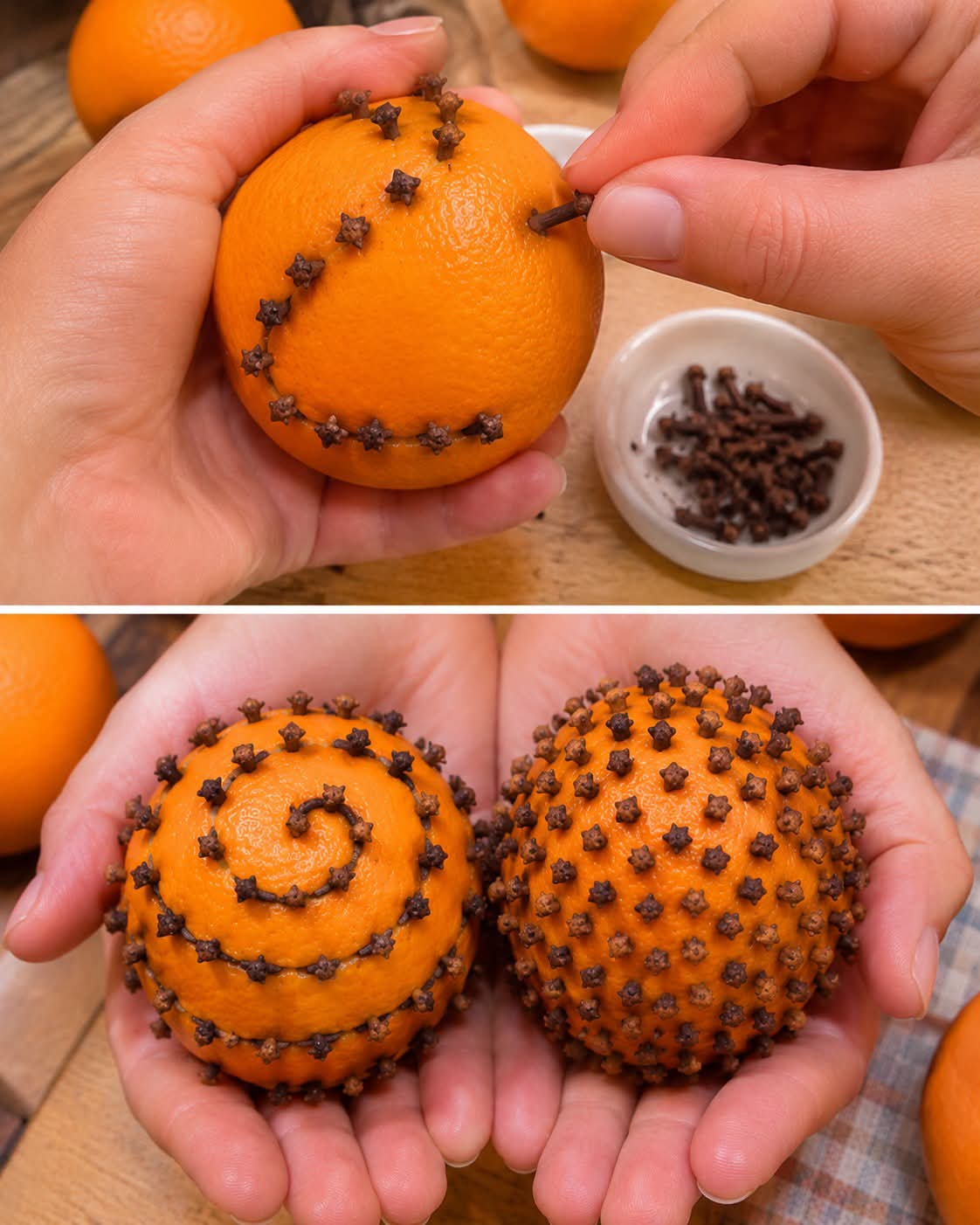
Every holiday season, a simple old-fashioned tradition returns to homes around the world: pushing whole cloves into fresh oranges.
At first glance, it might seem like an unusual thing to do with a perfectly good orange. But this centuries-old Christmas craft has a surprisingly beautiful purpose.
The combination of sweet citrus and warm, spicy cloves creates a naturally fragrant decoration known as an orange pomander.
These little aromatic ornaments can be displayed in bowls, hung with ribbons, or arranged with pinecones and evergreen branches to create beautiful homemade Christmas decorations.
And unlike many store-bought holiday decorations, they require only a handful of inexpensive ingredients.
Here’s why people have been making them for generations, how to create your own, and the secrets to helping them last longer.
What Is an Orange Pomander?
An orange pomander is a whole orange decorated with dried cloves pressed into its peel.
As the cloves pierce the orange’s skin, the fruit releases its natural citrus aroma, which blends with the warm, slightly sweet fragrance of the cloves.
The result is a distinctive scent that many people associate with Christmas, winter evenings, and traditional holiday celebrations.
Pomanders have a long history in Europe.
Centuries ago, people carried small containers filled with aromatic substances, including herbs, spices, and perfumes, to mask unpleasant smells.
The word pomander comes from the French expression pomme d’ambre, meaning “apple of amber.”
Over time, the tradition evolved, and oranges studded with cloves became popular seasonal decorations.
Today, making orange pomanders is a simple Christmas activity that brings together natural ingredients, traditional craftsmanship, and holiday fragrance.
Why Do People Put Cloves Into Oranges?
There are several reasons this tradition has remained popular.
1. They Create a Wonderful Natural Holiday Fragrance
The most obvious reason is the smell.
Orange peels contain fragrant citrus oils, while cloves contain eugenol, an aromatic compound responsible for much of their distinctive spicy scent.
Together, they create a warm fragrance reminiscent of Christmas baking, mulled cider, and festive kitchens.
The aroma is usually strongest when the pomander is freshly made.
2. They Make Beautiful Homemade Christmas Decorations
Orange pomanders are surprisingly decorative.
The deep orange color contrasts beautifully with the dark brown cloves, creating a rustic, traditional appearance.
You can arrange cloves in spirals, stars, stripes, snowflakes, or simple geometric patterns.
Finished pomanders look especially attractive alongside cinnamon sticks, dried orange slices, pinecones, and evergreen branches.
3. They Are an Old-Fashioned Holiday Craft
Making pomanders is a wonderful activity for families.
Children can help design the patterns, while adults assist with piercing the peel and handling sharp tools.
The finished decorations also make thoughtful handmade gifts.
4. Cloves Can Help the Fruit Dry
Whole cloves contain aromatic compounds with antimicrobial activity demonstrated in laboratory settings.
However, this does not mean that cloves make fresh oranges mold-proof.
When enough cloves are inserted and the fruit is dried under suitable conditions, the finished pomander may last much longer than an ordinary fresh orange.
Proper drying and ventilation are essential.
What You’ll Need to Make Orange Pomanders
For 3–4 pomanders:
- 3–4 fresh, firm oranges
- Approximately 100–200 g of whole dried cloves, depending on how densely you decorate them
- A toothpick, wooden skewer, or small pointed tool
- A pencil or washable marker for planning patterns (optional)
- Narrow decorative ribbon or natural twine (optional)
- A shallow plate or drying rack
- Cinnamon sticks, pinecones, and evergreen branches for decoration (optional)
For traditional dried pomanders (optional):
- 2 tablespoons ground cinnamon
- 1 tablespoon ground orris root powder, traditionally used as a fragrance fixative
The spice mixture is optional. Orris root is not necessary for making pomanders, and anyone sensitive to fragrance powders should avoid handling or inhaling them.
How to Make Traditional Orange Pomanders: Step by Step
Step 1: Choose the Right Oranges
Start with fresh, firm oranges that have smooth, healthy skins.
Avoid fruit with soft spots, bruises, cracks, or signs of mold.
Medium-sized oranges are usually easiest to decorate.
Smaller oranges and mandarins can also work, although their thinner skins may require a gentler touch.
Tip: Choose oranges that feel firm and relatively heavy for their size. Avoid overripe fruit.
Step 2: Wash and Dry the Oranges
Rinse the oranges thoroughly under running water.
Gently rub the skins to remove dirt and surface residues.
Dry each orange completely with a clean kitchen towel.
Starting with a clean, dry surface makes the cloves easier to insert and reduces unnecessary surface moisture.
Step 3: Plan Your Design
Before inserting the cloves, decide how you want your pomander to look.
You can create:
- A spiral wrapping around the orange
- Straight vertical stripes
- A star or snowflake pattern
- A heart shape
- A simple checkerboard pattern
- A fully covered orange for a more traditional appearance
For a classic Christmas look, try leaving two crossing bands without cloves so you can wrap a ribbon around the orange.
Tip: A fully studded pomander requires many more cloves but has a particularly beautiful, textured appearance.
Step 4: Make Small Holes in the Peel
Use a toothpick or wooden skewer to make small holes in the orange peel.
Space them approximately 5–10 mm apart, depending on your design.
Making the holes first prevents the delicate clove heads from breaking when pressed into the peel.
The holes should be just large enough to hold the stems of the cloves.
Avoid piercing deeply into the fruit, as excessive damage can release juice and encourage spoilage.
Step 5: Push the Cloves Into the Orange
Take one whole dried clove and gently push its pointed stem into a prepared hole.
The rounded flower head should remain visible on the surface.
Continue inserting cloves until your design is complete.
For a spiral pattern, start near the top and work your way around the orange.
For a star or snowflake, begin in the center and build the pattern outward.
See Continuation On Next Page 👇
