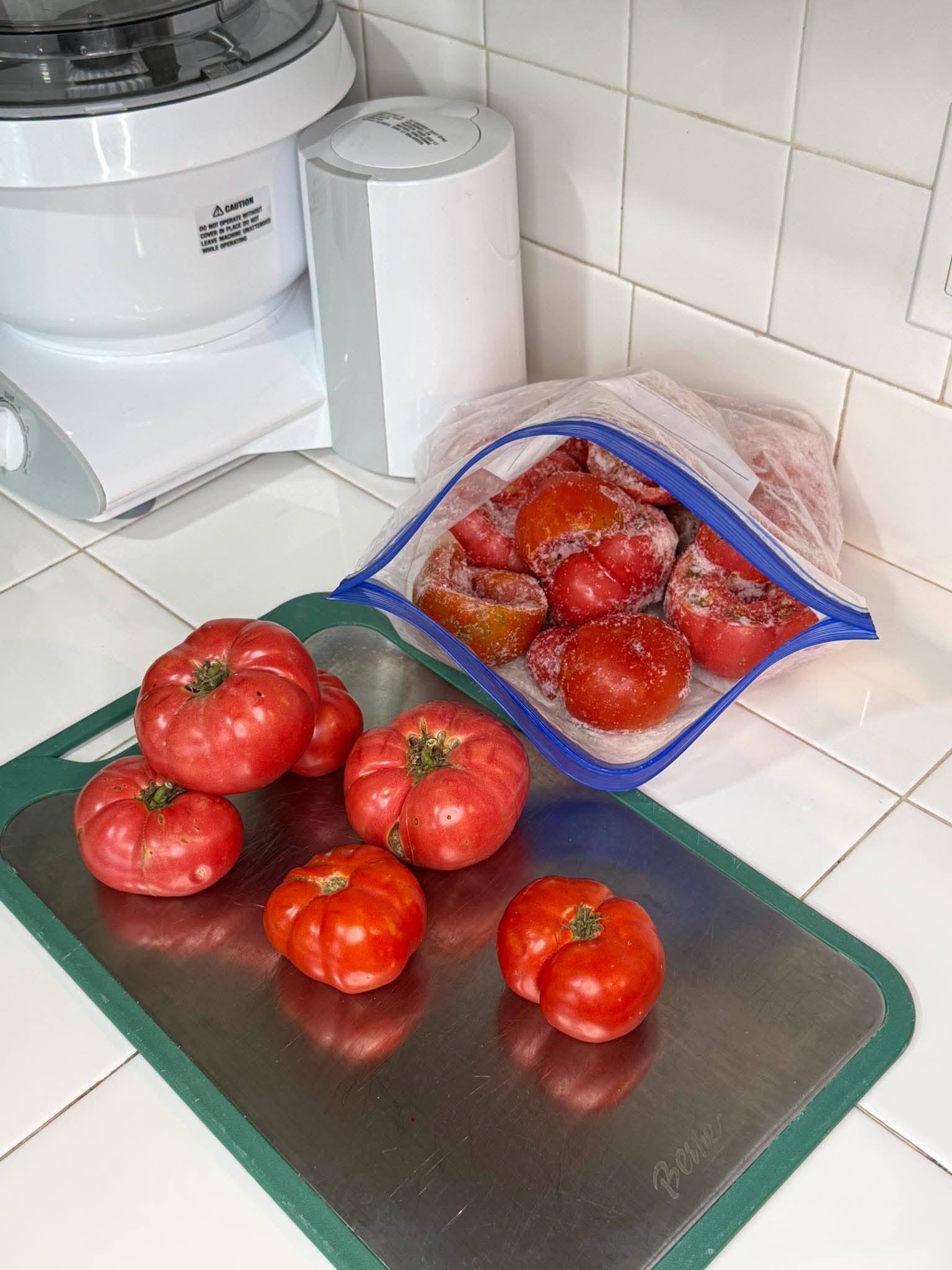
🍅 Throwing Tomatoes in the Freezer? Here’s Why More Gardeners Are Doing It
If you grow your own tomatoes, you know the harvest doesn’t always arrive all at once.
One day you have two ripe tomatoes.
Three days later you have twelve.
Before long, your kitchen counter is overflowing, and you’re scrambling to use them before they become too soft.
Fortunately, there’s an incredibly simple solution that many experienced gardeners rely on:
Freeze them until you’re ready to use them.
It takes only a few minutes, helps reduce food waste, and makes preparing cooked tomato recipes even easier later on.
Why Freeze Fresh Tomatoes?
Home gardens rarely produce tomatoes on a perfect schedule.
Instead, they ripen gradually over several weeks, leaving you with small batches that may not be enough for a full recipe.
Freezing lets you save those tomatoes until you have enough to make:
- Homemade pasta sauce
- Tomato soup
- Chili
- Salsa for cooking
- Stews
- Casseroles
- Homemade ketchup
- Pizza sauce
Instead of rushing to use every tomato immediately, you can preserve them for future meals.
How to Freeze Tomatoes
The process couldn’t be easier.
1. Choose Ripe Tomatoes
Select tomatoes that are ripe but still in good condition.
Avoid fruit with extensive mold or signs of spoilage.
2. Wash and Dry
Rinse each tomato thoroughly under cool running water.
Pat them dry with a clean towel.
3. Remove the Core
Using a small knife, remove the tough stem core.
4. Trim Any Imperfections
Cut away bruised, damaged, or blemished areas.
5. Freeze
Place the tomatoes into freezer-safe bags or airtight containers.
Remove as much air as possible before sealing.
Label each bag with the date.
Then simply place them in the freezer.
That’s it.
No blanching required if your main goal is to use them later in cooked dishes.
The Best Part? The Skins Practically Slip Off
One of the biggest advantages comes after thawing.
As frozen tomatoes defrost, the skins often loosen dramatically, making them much easier to peel than fresh tomatoes.
For many recipes, you can simply pinch the skin and slide it off with your fingers.
It’s a handy time-saver when making soups or sauces.
What Happens to the Texture?
Freezing changes the texture of tomatoes.
After thawing, they become much softer because ice crystals break down the fruit’s cell structure.
That means frozen tomatoes are generally not ideal for fresh salads or sandwiches, where a firm texture is important.
However, they work beautifully in cooked recipes where the tomatoes are simmered, blended, or roasted.
Best Uses for Frozen Tomatoes
Frozen tomatoes are excellent for:
- Pasta sauces
- Homemade tomato soup
- Marinara sauce
- Chili
- Curries
- Shakshuka
- Stews
- Braised dishes
- Slow cooker recipes
Because they’ll soften during cooking anyway, you may not notice much difference compared to fresh tomatoes.
How Long Can You Freeze Them?
For the best quality, try to use frozen tomatoes within 8 to 12 months.
Keep them stored in well-sealed freezer bags or airtight containers to help prevent freezer burn and preserve their flavor.
Tips for Success
- Freeze tomatoes as soon as they’re fully ripe for the best flavor.
- Remove excess air from freezer bags before sealing.
- Freeze tomatoes in portions you’ll actually use.
- Label bags with the freezing date.
- If you have different tomato varieties, label those too.
Is Freezing Better Than Letting Them Sit?
If you won’t be using ripe tomatoes within a few days, freezing is often a practical way to prevent unnecessary food waste.
Instead of watching perfectly good tomatoes become overripe on the counter, you can save them for future meals when you have more time to cook.
The Bottom Line
Freezing tomatoes is one of the simplest ways to preserve a homegrown harvest. With just a little preparation, you can keep ripe tomatoes on hand for months and make meal prep easier when it’s time to cook.
The next time your tomato plants produce more than you can use, don’t stress. Pop them in the freezer, and let your future self enjoy the convenience.
🍅 Do you freeze your garden tomatoes, or do you prefer canning or making sauce right away? Share your favorite method in the comments!
