🌼 Drying Calendula? Here’s How to Choose the Best Oils for Salves, Lotions, and Body Butters
If your garden is overflowing with bright orange and yellow calendula flowers, you’re not alone.
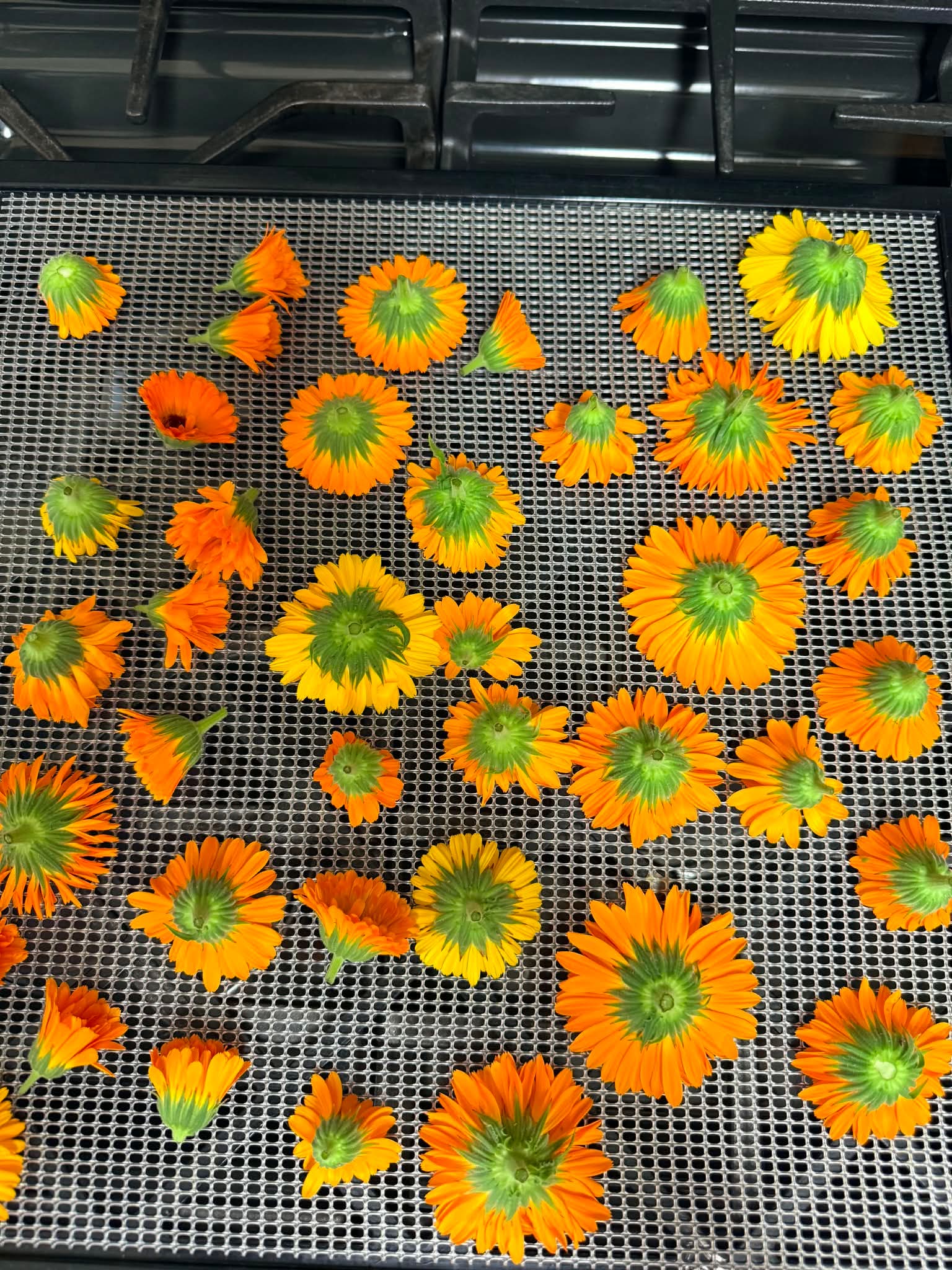
Many gardeners harvest baskets of blooms throughout the growing season, drying tray after tray to preserve them for homemade skincare products.
Calendula (Calendula officinalis) has long been a favorite ingredient in herbal preparations thanks to its soothing properties and beautiful golden color. One of the first steps in making calendula-infused skincare is choosing the right carrier oil.
So which oils work best?
Let’s explore the most popular options and what each one brings to homemade salves, lotions, and body butters.
Why Infuse Calendula in Oil?
Calendula flowers contain naturally occurring plant compounds that can be extracted into oil over time.
Once infused, the oil becomes the foundation for many DIY skincare products, including:
- Herbal salves
- Body butters
- Lotion bars
- Massage oils
- Lip balms
- Hand creams
- Cuticle balms
- Soap recipes
The carrier oil you choose affects the finished product’s texture, shelf life, and skin feel.
Start With Completely Dry Flowers
This is one of the most important steps.
Fresh flowers contain moisture that can shorten the shelf life of your infused oil and increase the risk of mold.
Before infusing:
- Harvest blooms on a dry day.
- Remove damaged petals or insects.
- Dry the flowers thoroughly in a well-ventilated area out of direct sunlight.
- Make sure they feel crisp and papery before using them.
Properly dried flowers help create a longer-lasting infusion.
Best Carrier Oils for Calendula
🌿 Olive Oil
One of the most traditional choices.
Pros
- Easy to find
- Budget-friendly
- Stable for infusions
- Rich and moisturizing
Best For
- Salves
- Healing balms
- Hand creams
- Foot balms
Olive oil produces a rich infusion that’s ideal for products intended for dry skin.
🥥 Fractionated Coconut Oil
Unlike regular coconut oil, fractionated coconut oil stays liquid at room temperature.
Pros
- Lightweight
- Non-greasy
- Long shelf life
- Mild scent
Best For
- Massage oils
- Lotion recipes
- Body oils
🥑 Avocado Oil
A deeply nourishing oil that’s popular in homemade skincare.
Pros
- Rich texture
- Excellent for very dry skin
- Packed with natural vitamins
Best For
- Body butter
- Winter salves
- Rich moisturizers
🌻 Sunflower Oil
Often overlooked but an excellent choice.
Pros
- Affordable
- Light texture
- Easily absorbed
- High in vitamin E
Best For
- Everyday lotions
- Body oils
- Calendula infusions
Choose high-oleic sunflower oil when possible for improved stability.
🌰 Sweet Almond Oil
A favorite among soap makers and herbalists.
Pros
- Smooth texture
- Light feel
- Gentle on skin
- Pleasant finish
Best For
- Body butter
- Facial oils
- Massage blends
People with tree nut allergies should avoid almond oil.
🌱 Jojoba Oil
Technically a liquid wax rather than an oil.
Pros
- Very stable
- Long shelf life
- Light and silky
Best For
- Facial products
- Luxury body oils
- Premium skincare blends
Because it’s more expensive, many people combine it with other oils.
🌿 Grapeseed Oil
A very lightweight option.
Pros
- Fast absorption
- Thin consistency
- Ideal for oily-feeling products
Best For
- Facial oils
- Lightweight lotions
Keep in mind that grapeseed oil generally has a shorter shelf life than some other carrier oils.
Popular Oil Blends
Many herbalists combine oils instead of using only one.
Examples include:
Blend #1
- 70% olive oil
- 30% sweet almond oil
Excellent for salves.
Blend #2
- 50% sunflower oil
- 50% avocado oil
Great for body butter.
Blend #3
- 80% olive oil
- 20% jojoba oil
Produces a rich but silky infusion.
How to Infuse Calendula
Cold Infusion
Fill a clean, dry glass jar about halfway with dried calendula flowers.
Cover completely with your chosen carrier oil.
Stir gently to remove air bubbles.
Seal tightly and store in a cool, dark place for 4–6 weeks, shaking the jar every few days.
Once infused, strain through cheesecloth or a fine-mesh sieve and store the oil in a clean bottle.
Warm Infusion
If you prefer a faster method, place the dried flowers and oil in a heat-safe container over a double boiler or in a slow cooker set to very low heat.
Warm gently for several hours, taking care not to overheat the oil.
Afterward, strain well and allow the oil to cool before bottling.
Making a Simple Calendula Salve
Once your oil is ready, making a basic salve is easy.
You’ll need:
- 1 cup calendula-infused oil
- About 1 ounce (28 g) beeswax pellets (adjust for desired firmness)
Gently melt the beeswax into the infused oil over low heat, stir until fully combined, then pour into clean tins or jars.
Allow it to cool completely before sealing.
Storage Tips
To help your infused oil last longer:
- Store in dark glass bottles if possible.
- Keep away from direct sunlight.
- Avoid introducing water into the oil.
- Use clean, dry utensils when handling.
- Label each bottle with the oil type and infusion date.
Depending on the carrier oil used and storage conditions, infused oils often keep for several months. Using fresh-smelling oils and proper storage helps maximize quality.
A Note About Homemade Herbal Skincare
Calendula has a long history of traditional use in skincare, but homemade herbal products are not medicines. While many people enjoy calendula-infused oils for moisturizing and soothing the skin, they are not intended to diagnose, treat, cure, or prevent disease.
Before applying any new product widely, perform a small patch test on a small area of skin to check for sensitivity. If you have allergies to plants in the daisy family (Asteraceae), use extra caution. If you have a persistent skin condition, an infected wound, or concerns about your skin, consult a qualified healthcare professional.
The Bottom Line
Calendula is one of the easiest and most rewarding herbs to preserve for homemade skincare. Whether you choose olive oil for a traditional herbal salve, sweet almond oil for a silky body butter, or sunflower oil for a lightweight lotion, the right carrier oil can help you create beautiful handcrafted products.
With a little patience and properly dried flowers, you can transform your garden harvest into nourishing oils you’ll enjoy using throughout the year.
🌼 Do you make your own calendula products? Which carrier oil has become your favorite, and what do you love making most—salves, lotions, body butters, lip balms, or something else? Share your experience in the comments!
