🍎🌳
If you’ve ever dreamed of growing your own apples but thought, “My garden is way too small for a fruit tree,” this might change your mind.
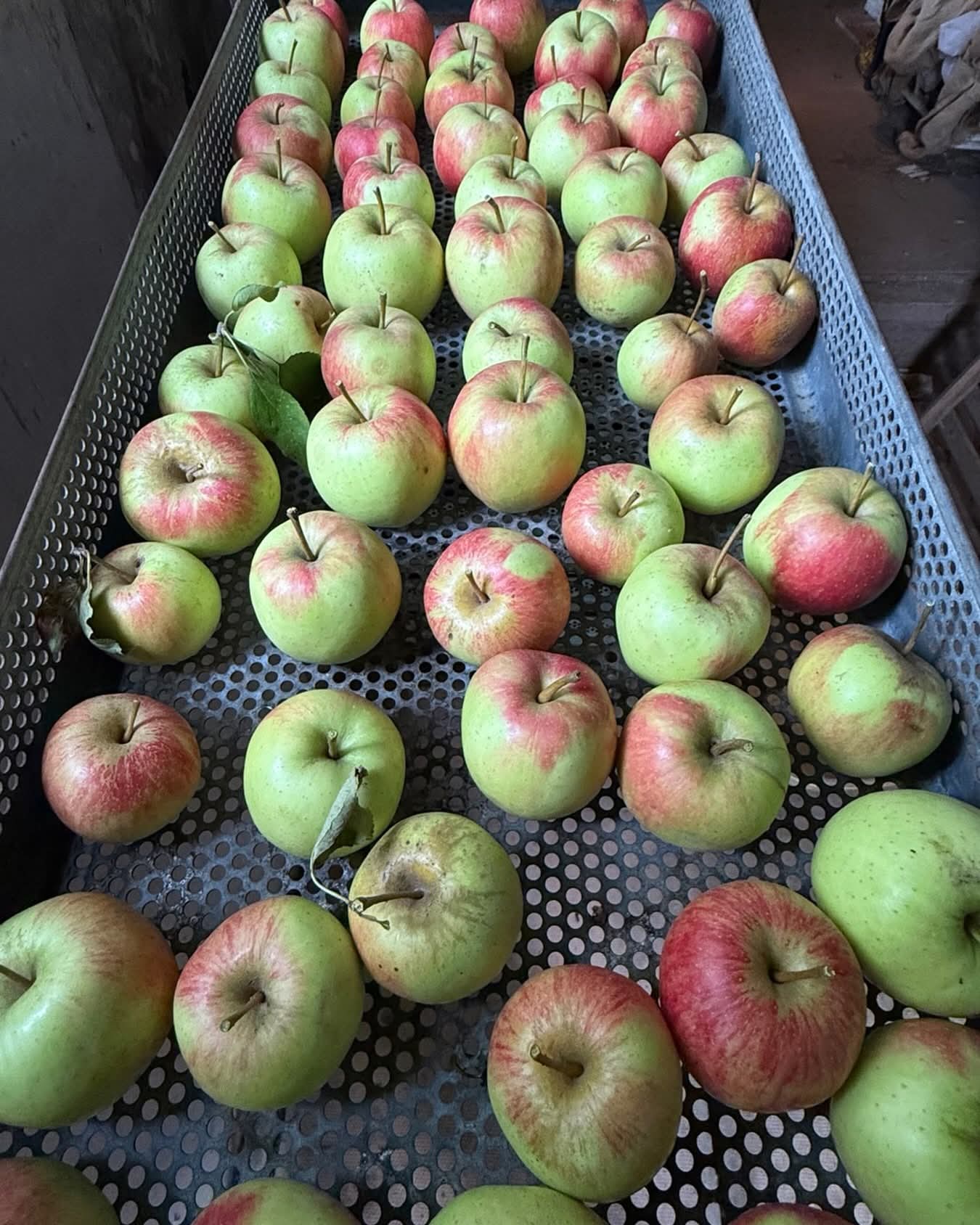
These beautiful apples were harvested from one tiny step-over apple tree that stands only about 1 foot high! 🍎
And amazingly, there were still around a dozen more apples left on the little tree.
It’s a wonderful reminder that you don’t always need a huge backyard, orchard, or acres of land to grow your own fruit. With the right tree and a little planning, even a small garden can produce an impressive harvest.


🌱 What Is a Step-Over Apple Tree?
A step-over apple is a specially trained, very low-growing apple tree.
Instead of allowing the tree to grow upward like a traditional apple tree, its branches are trained horizontally, often creating a low framework that can be planted along the edge of a garden bed, pathway, lawn, or border.
The name comes from the fact that the tree is low enough to literally step over.
And that’s exactly what makes these trees so interesting for small gardens.
🍎 Small Tree, Surprisingly Big Harvest
Looking at a tiny tree only around a foot tall, you might expect it to produce just a handful of apples.
But this little tree has proved otherwise.
The harvest pictured here came from one small step-over apple tree, with approximately another dozen fruits still hanging on the branches.
That’s a lot of apples for such a compact piece of garden space!
Of course, yields vary depending on the variety, age of the tree, pollination, growing conditions, pruning, weather, and overall tree health.
But the example demonstrates an important gardening principle:
You don’t necessarily need a big tree to grow fruit.
🏡 Perfect for Small Gardens
One of the biggest advantages of compact and trained fruit trees is that they can make productive use of spaces that might otherwise go unused.
A step-over apple can potentially work along:
- Garden paths
- The edge of a raised bed
- A lawn border
- A vegetable garden
- A sunny fence line
- A small courtyard
- A cottage garden
- The edge of a patio
Instead of thinking vertically, you’re using a low horizontal growing space.
That can make fruit growing much more accessible for gardeners with limited room.
🌿 Why Training Matters
The secret isn’t simply planting an ordinary apple tree and keeping it short.
Step-over trees are trained and maintained in a specific form.
Young branches can be guided along a low framework, creating a horizontal shape. Regular pruning helps maintain the structure and encourages productive fruiting wood.
This type of training requires some patience and learning, but once established, it can become a beautiful feature in the garden.
The branches can almost look like a living garden border.
🍏 You Don’t Need to Know the Variety to Appreciate the Harvest
The gardener who shared this harvest couldn’t remember the exact apple variety.
But they did know two important things:
It’s a good eater and it stores well.
And honestly, those are pretty useful qualities!
A good eating apple can be enjoyed fresh straight from the tree, while a variety with good storage qualities can extend the harvest well beyond picking day.
If you’re planting an apple tree yourself, knowing the variety is helpful because different apples have different characteristics, including flavor, harvest season, storage life, disease resistance, and pollination requirements.
🧺 Don’t Forget About Storage
One of the great things about growing apples is that the harvest doesn’t necessarily have to be eaten immediately.
Depending on the variety and storage conditions, some apples can keep for quite a while.
For the best storage life, choose sound, undamaged fruit and keep apples in a cool, dark, humid environment with good air circulation.
Check stored apples regularly and remove any that begin to rot. One spoiled apple can quickly affect the fruit around it.
And remember: some apples actually develop better flavor after a period of storage.
🌸 Pollination Is Important
Before buying an apple tree, it’s worth checking its pollination requirements.
Many apple varieties produce better crops when another compatible apple variety flowers nearby at the same time.
That doesn’t necessarily mean you need a huge orchard.
A nearby apple tree—whether yours or a neighbor’s—may sometimes provide compatible pollen, depending on the varieties and flowering times.
Some varieties are partially or fully self-fertile, but even these can benefit from cross-pollination.
So if you’re planning your own miniature apple garden, check the variety’s pollination information before planting.
☀️ Give Your Little Tree the Right Start
Even a tiny fruit tree needs the right conditions to thrive.
☀️ Plenty of sunlight
Apples generally perform best in a sunny position.
💧 Consistent moisture
Young trees especially need reliable watering while they establish themselves.
🌱 Healthy soil
Good drainage and suitable soil conditions help support healthy roots.
✂️ Proper pruning
Training and pruning help maintain the desired shape and encourage productive growth.
🐝 Good pollination
Flowers need pollinators and, depending on the variety, compatible apple trees nearby.
🍎 Imagine This in Your Garden
Picture walking along your garden path and seeing a little row of apple branches just a foot or so above the ground.
In spring, they’re covered with blossoms. 🌸
Then tiny green apples appear.
Over the summer, the fruit grows and gradually develops its mature color.
And eventually…
You walk outside with a basket and pick your own apples. 🧺🍎
That’s the magic of growing fruit at home.
It doesn’t have to be a massive orchard.
Sometimes one tiny tree is enough to get started.
🌳 Small Gardens Can Be Productive Gardens
There’s a common misconception that you need a large property to grow fruit.
But modern gardening offers plenty of ways to make productive use of limited space.
Dwarf fruit trees, trained trees, cordons, espaliers, containers, and step-over trees can all provide options for gardeners who don’t have room for a traditional orchard.
The trick is choosing the right plant and training system for the space you actually have.
🍎 Could This Change Your Mind?
If you’ve always said:
“I’d love an apple tree, but I don’t have room…”
Maybe it’s time to rethink that.
A tiny step-over apple tree can occupy a surprisingly small footprint while still producing a meaningful harvest.
And even if you don’t get dozens of apples the first year, watching a fruit tree grow, flower, and produce its first harvest is incredibly rewarding.
🌱 You don’t need an orchard.
🍎 You just need somewhere to start.
Would you grow a step-over apple tree in your garden?
YES 🌳🍎 or NO?
And if you already grow apples, tell us:
What variety are you growing, and how many apples did you harvest this year? 👇🍎🌿
