🍎🥧 ?
Apple pie is one of those desserts where everyone has an opinion. Some people want a pale, soft crust with a tender filling, while others won’t consider a pie finished until the crust is deeply golden, crisp, and beautifully browned.
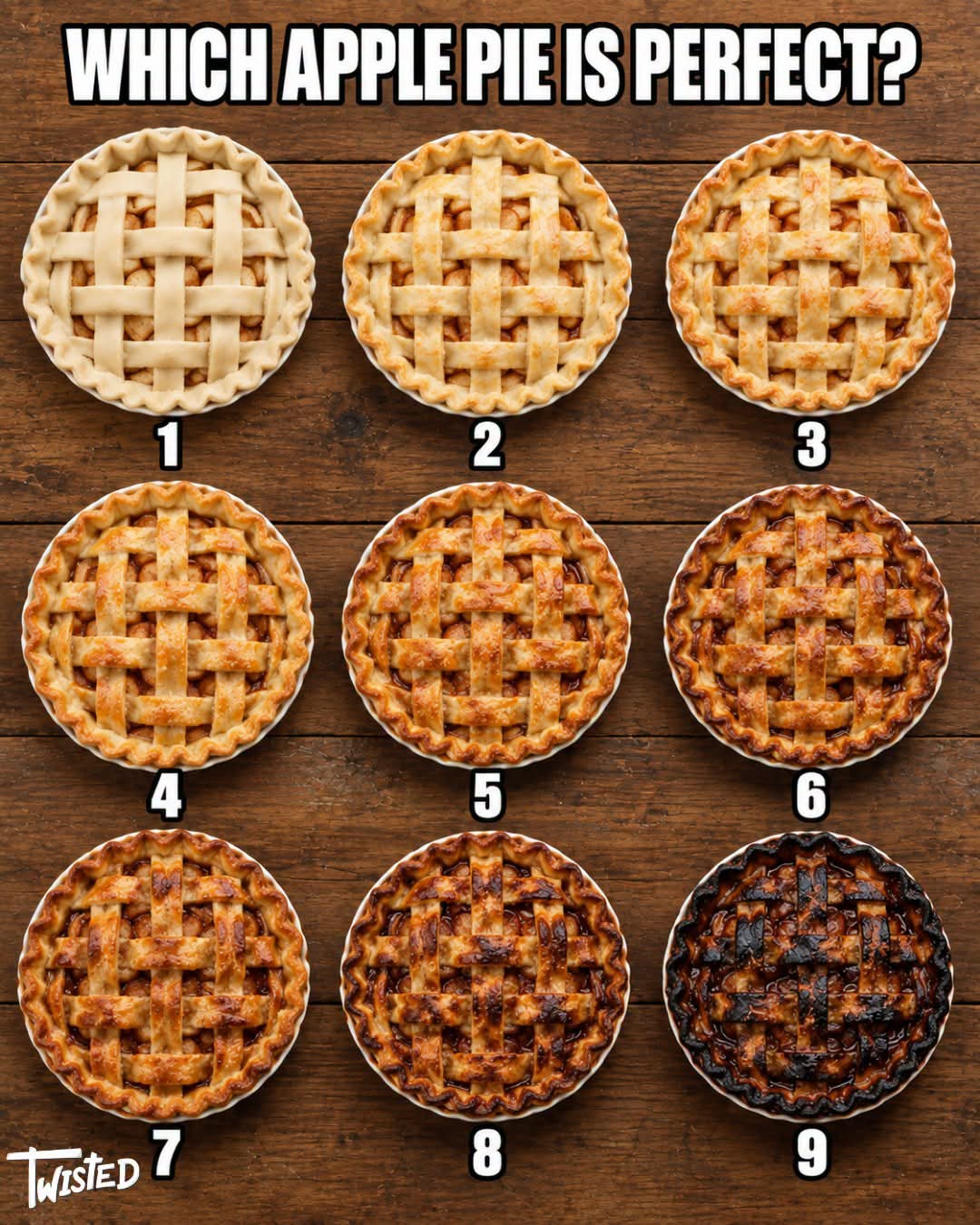
This delicious-looking lineup takes us through nine different levels of browning, from barely baked to seriously dark.
So the question is:
👀 Which apple pie would you choose?
Would you stop at #3, wait for that perfect golden-brown #5, or keep baking until you reach the deep color of #8?
And yes… someone is definitely choosing #9. 😂
🥧 #1 — Barely Golden
This pie has a very light crust with minimal browning.
The pastry looks soft and pale, with just enough color to suggest that it has been baked.
If you prefer a delicate, tender crust rather than a deeply toasted one, this might be your style.
🥧 #2 — Lightly Baked
Number two has developed a little more color.
The crust is beginning to turn golden, but it’s still relatively pale overall.
There’s something beautiful about this stage—the pie looks homemade, rustic, and gently baked without becoming overly dark.
🍎 #3 — Golden
Now we’re getting somewhere!
The crust has developed a lovely golden hue, with the lattice beginning to brown around the edges.
This is where the pie starts looking like the classic apple pie many people picture when they hear the words “fresh from the oven.”
🥧 #4 — Golden Brown
Number four takes things a little further.
The lattice is noticeably browned while the edges have a beautiful baked-pastry color.
At this point, the crust should have more developed toasted flavor while still looking inviting and golden.
🥧 #5 — Deep Golden Brown
This one has serious pie-shop energy. 😍
The crust is deeply golden, with darker spots across the lattice and beautifully browned edges.
For people who love a crisp, flavorful crust, this could be the sweet spot.
It’s golden without looking excessively dark.
🔥 #6 — Dark Golden Brown
We’re entering serious browning territory.
The crust has plenty of dark caramel-colored spots, particularly around the lattice and edges.
That extra browning can create deeper roasted flavors in the pastry.
If you like your crust with plenty of color and crispness, this one may catch your eye.
🥧 #7 — Very Brown
Number seven is noticeably darker.
The lattice has plenty of deeply browned patches, and the edges are becoming quite dark.
Some people would pull the pie out at this stage, while others would say:
“Give it a few more minutes!” 😂
🔥 #8 — Deeply Browned
Now we’re firmly in dark-crust territory.
The pie has a rich brown color throughout, with some areas approaching very dark brown.
This could appeal to someone who loves an intensely toasted pastry flavor—but there’s a fine line between beautifully browned and burnt.
😳 #9 — Burnt?
And then there’s number nine.
This pie has crossed into extremely dark territory, with large areas of blackened crust.
While a little browning can add wonderful flavor, heavily burnt pastry can taste bitter and unpleasant.
So if you’re looking for that beautiful balance between crisp and flavorful, you probably don’t want to take the pie quite this far.
🍎 What Makes the Perfect Apple Pie?
Of course, crust color isn’t the only thing that matters.
A truly satisfying apple pie is about the combination of:
🥧 Flaky crust
The pastry should be tender and crisp rather than tough.
🍎 Soft apple filling
The apples should be cooked through while retaining enough texture to avoid becoming completely mushy.
✨ Balanced sweetness
Sugar should complement the natural flavor of the apples rather than completely hiding it.
🌿 Warm spices
Cinnamon is classic, while nutmeg, allspice, ginger, or a touch of cloves can add extra depth.
🧈 Rich buttery flavor
A good pastry gets much of its character from butter and proper handling of the dough.
🔥 Proper browning
The crust should develop enough color for flavor and texture without becoming burnt.
👩🍳 How Do You Get That Beautiful Golden Crust?
A few simple techniques can make a big difference.
Use an egg wash.
Brushing the pastry with beaten egg or an egg-and-milk mixture before baking can encourage a shiny, golden finish.
Watch the edges.
The outer crust can brown much faster than the center. A pie shield or strips of foil can help protect the edges if they’re getting dark too quickly.
Bake until the crust is actually browned.
Don’t rely solely on the timer. Ovens vary, and the appearance and bubbling of the filling are useful clues.
Let it rest.
Fresh apple pie smells incredible, but cutting it immediately can result in a very runny filling. Giving it time to cool allows the filling to thicken.
🍦 And Let’s Talk About the Best Part…
What goes on top?
Some people insist on vanilla ice cream. 🍨
Others want whipped cream.
Some prefer caramel sauce.
And traditionalists may say:
“Nothing. Just give me the pie.” 😂
Warm apple pie with a scoop of cold vanilla ice cream creates that wonderful contrast between hot and cold, crisp and creamy.
🍎🥧 SO… WHICH ONE?
Take another look at the nine pies:
1️⃣ Barely baked
2️⃣ Light golden
3️⃣ Golden
4️⃣ Golden brown
5️⃣ Deep golden brown
6️⃣ Dark golden
7️⃣ Very brown
8️⃣ Deeply browned
9️⃣ Seriously burnt
👇 What’s your choice?
Which apple pie are you going for—1 through 9? 🍎🥧
And here’s the real question:
Do you want your crust lightly golden, perfectly golden-brown, or DARK and crispy? 😍🔥
Drop your number in the comments! 👇❤️
