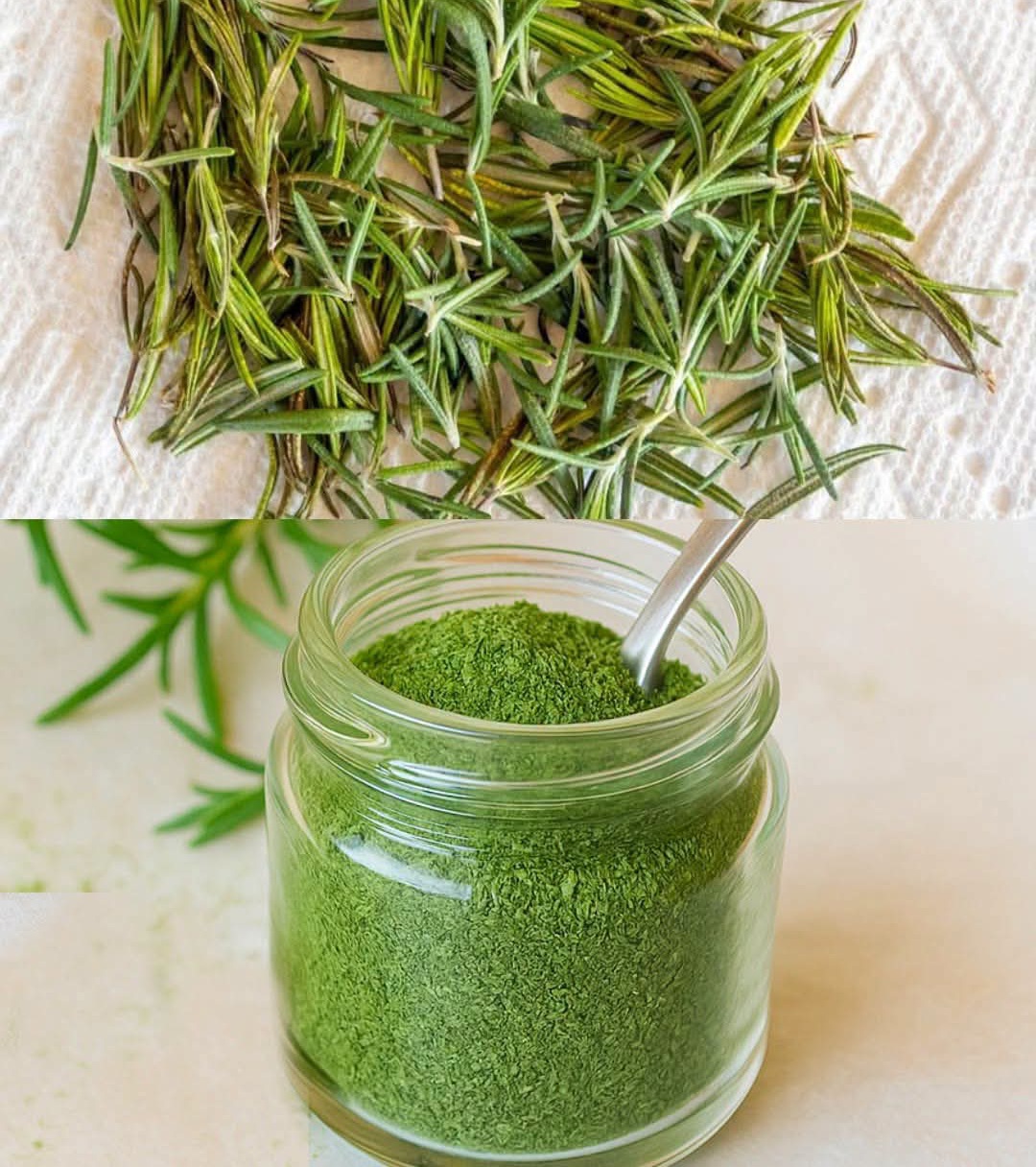
Rosemary Powder: A Simple Homemade Seasoning That Adds Incredible Flavor 🌿
If you love cooking with fresh herbs, you’ll want to keep a jar of homemade rosemary powder in your pantry. Just a small pinch can add a warm, woodsy aroma and delicious flavor to roasted vegetables, baked potatoes, meats, soups, eggs, and homemade breads.
Making your own rosemary powder is easy, inexpensive, and a great way to preserve extra rosemary from your garden or grocery store before it loses its freshness.
Why Make Rosemary Powder?
Fresh rosemary is wonderful, but it doesn’t last forever. Drying and grinding it into a fine powder gives you a convenient seasoning that’s always ready to use.
Homemade rosemary powder is:
- Easy to make
- Long-lasting
- Full of natural flavor
- Great for everyday cooking
- A wonderful way to reduce food waste
Ingredients
- Fresh rosemary sprigs
That’s it!
How to Make Rosemary Powder
Step 1: Wash the Rosemary
Rinse the rosemary sprigs under cool running water to remove any dirt or dust.
Shake off the excess water and pat the sprigs dry with a clean kitchen towel or paper towels.
Step 2: Dry the Rosemary
There are several ways to dry rosemary.
Air Drying
Tie the sprigs into small bundles and hang them upside down in a warm, dry, well-ventilated place away from direct sunlight. Depending on humidity, they may take one to two weeks to dry completely.
Oven Method
Spread the rosemary sprigs on a baking sheet.
Dry them in the oven at the lowest temperature (around 170–200°F (75–95°C)) for 20–40 minutes, checking frequently to prevent burning.
Food Dehydrator
Arrange the sprigs in a single layer and dry according to your dehydrator’s instructions until the leaves crumble easily.
Step 3: Remove the Leaves
Once completely dry, gently strip the rosemary leaves from the woody stems.
Discard the stems.
Step 4: Grind into Powder
Place the dried leaves into a spice grinder, coffee grinder reserved for spices, food processor, or mortar and pestle.
Grind until you achieve a fine powder.
If desired, sift the powder through a fine mesh strainer and grind any larger pieces again.
Step 5: Store Properly
Transfer the rosemary powder to a clean, dry, airtight glass jar.
Store it in a cool, dark cupboard away from heat, moisture, and direct sunlight.
For the best flavor, use within 6 to 12 months.
Delicious Ways to Use Rosemary Powder
A little goes a long way! Try adding a pinch to:
- Roasted potatoes
- Baked potatoes
- Roasted chicken
- Beef roast
- Pork tenderloin
- Lamb
- Omelets
- Scrambled eggs
- Roasted vegetables
- Homemade bread and focaccia
- Pizza dough
- Soups and stews
- Rice dishes
- Pasta sauces
- Garlic butter
- Marinades
- Herb seasoning blends
Tips for the Best Results
- Use only completely dry rosemary before grinding to prevent clumping.
- Grind small batches for maximum freshness.
- Label your jar with the preparation date.
- Keep the container tightly sealed after each use.
- Start with a small amount when seasoning dishes, as rosemary has a strong, concentrated flavor.
Health Benefits of Rosemary
Rosemary is more than just a flavorful herb. It naturally contains plant compounds with antioxidant properties and has long been used in traditional cooking and herbal practices. While rosemary can be part of a healthy diet, it should not be considered a treatment or cure for any medical condition.
Final Thoughts
Homemade rosemary powder is one of the easiest pantry staples you can make. With just a few sprigs of rosemary and a little patience, you’ll have a fragrant seasoning that adds depth and flavor to countless recipes.
Whether you’re sprinkling it over crispy roasted potatoes, stirring it into an omelet, seasoning grilled meats, or adding it to fresh bread dough, just a pinch of rosemary powder can make everyday meals taste extra special. 🌿✨
