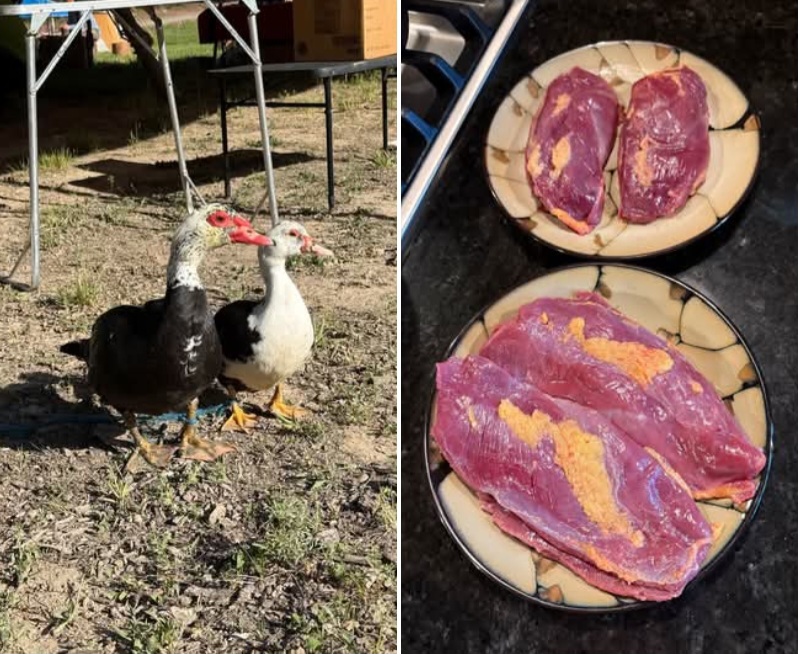
Muscovy Duck Breast “Steak” 🦆🥩
A Rich, Juicy Way to Cook This Surprisingly Lean Meat
Muscovy ducks have a reputation for being a little different from the ducks many people are familiar with. They are a separate species from the mallard-derived domestic ducks, and they are particularly valued as a meat bird. University of Kentucky Extension notes that Muscovies thrive under free-range conditions and produce meat that is leaner than many other domestic ducks. (Poultry Extension)
Their breast meat is especially substantial, making it a great candidate for a steak-style preparation.
One important correction to the popular backyard claim, though: Muscovies shouldn’t be considered a bird that can safely live on grass and bugs alone if you’re raising them for healthy growth. Ducks can obtain some nutrients from foraging, but Extension guidance recommends supplemental feed to meet nutritional needs, particularly when raising birds for meat. (Poultry Extension)
And while Muscovies are often described as quieter than conventional ducks, the idea that they are completely silent isn’t accurate—they can hiss, make other sounds, and communicate without the familiar loud quacking associated with many ducks. (Poultry Extension)
Now let’s get to the delicious part.
🦆 Grilled Muscovy Duck Breast
This recipe treats the breast much like a steak: seasoned simply, seared over high heat, and finished until safely cooked.
Ingredients
- 2 Muscovy duck breasts, skin-on or skinless
- 1 tablespoon olive oil, if using skinless breasts
- 1 teaspoon kosher salt
- 1/2 teaspoon freshly ground black pepper
- 1 teaspoon garlic powder
- 1/2 teaspoon smoked paprika
- 1 teaspoon fresh rosemary, finely chopped
- 1 teaspoon fresh thyme leaves
- 1 tablespoon butter
- 2 garlic cloves, lightly crushed
- 1 teaspoon fresh lemon juice
Optional Steak-Style Sauce
- 1 tablespoon butter
- 1 small shallot, finely minced
- 1/2 cup beef or chicken stock
- 1 teaspoon Dijon mustard
- 1 teaspoon balsamic vinegar
- 1 teaspoon honey
- Black pepper, to taste
Step 1: Prepare the Duck
Pat the duck breasts completely dry with paper towels.
If the breasts are skin-on, use a sharp knife to score the skin in a shallow crosshatch pattern.
Don’t cut deeply into the meat.
Scoring allows the fat under the skin to render more effectively and gives you a beautifully browned exterior.
If you’re working with skinless breasts, simply pat them dry and continue.
Step 2: Season
Combine the salt, black pepper, garlic powder, smoked paprika, rosemary, and thyme.
Rub the seasoning evenly over both sides of the duck.
Let the meat sit at room temperature for about 15–20 minutes while you prepare your skillet.
Step 3: Start With a Cold Skillet
If you’re using skin-on breasts, place them skin-side down in a cold, dry skillet.
Turn the heat to medium.
Starting cold gives the fat time to slowly render rather than immediately burning the skin.
Cook until the skin is deeply golden and much of the fat has rendered.
This can take several minutes depending on the thickness of the breast.
Don’t constantly move the meat around. Let the skin make good contact with the pan.
Step 4: Flip & Finish Cooking
Once the skin is beautifully browned, turn the breasts over.
Add the butter, garlic, and herbs to the skillet.
As the butter melts, spoon the fragrant butter over the duck.
Continue cooking until the thickest part of the breast reaches a minimum internal temperature of 165°F (74°C).
Because Muscovy duck is poultry, it should be treated as poultry for food-safety purposes. USDA FSIS recommends that all poultry reach 165°F, measured with a food thermometer. (Ask USDA)
Don’t rely on color alone to determine whether it’s safely cooked. USDA notes that appearance isn’t a reliable indicator of poultry safety. (Ask USDA)
Step 5: Let It Rest
Transfer the cooked duck to a cutting board.
Loosely cover it and let it rest for about 5 minutes before slicing.
This gives the juices time to redistribute.
Step 6: Slice Like a Steak
Slice the breast diagonally across the grain.
Arrange the slices on a plate and spoon some of the pan juices over the top.
Add a squeeze of fresh lemon juice just before serving.
The result is rich, savory, and substantial—more like a hearty meat dish than the mild chicken breast many people expect from poultry.
🍷 Optional Pan Sauce
Want to take it up another level?
After removing the duck from the skillet, leave about a tablespoon of the rendered fat behind.
Add the minced shallot and cook for 1–2 minutes.
Pour in the stock and scrape up the browned bits from the bottom of the pan.
Add the Dijon mustard, balsamic vinegar, and honey.
Simmer until slightly reduced.
Turn off the heat and whisk in the butter.
Taste and add black pepper as needed.
Spoon the sauce over the sliced duck.
What Should You Serve With Muscovy Duck?
Because the meat is rich and flavorful, it pairs beautifully with sides that provide some freshness or acidity.
Try:
🥔 Crispy roasted potatoes
🥕 Honey-roasted carrots
🥬 Sautéed greens
🍎 Roasted apples
🫘 White beans
🍠 Mashed sweet potatoes
🥗 Simple green salad
🍒 Cherry or cranberry sauce
🍷 A red-wine pan sauce
A little sweetness and acidity can work particularly well alongside rich duck meat.
🔥 Grilling Method
You can also take the recipe outdoors.
Preheat your grill and establish a moderate cooking zone.
Season the duck as described above.
Place the breasts on the grill and cook, turning as needed, until the thickest part reaches 165°F.
If using skin-on breasts, watch carefully for flare-ups because rendered duck fat can cause the grill to flame.
Move the meat to a cooler part of the grill if necessary.
Let it rest before slicing.
Can You Really Treat Muscovy Breast Like Steak?
For cooking technique, yes—but not for food-safety temperature.
Muscovy breast is substantial enough that steak-inspired techniques such as searing, grilling, pan sauces, and slicing across the grain work beautifully.
But duck is poultry, so you shouldn’t use beef steak temperature guidelines for it. The USDA minimum safe temperature for poultry is 165°F (73.9°C). (Ask USDA)
That’s an important distinction when adapting steak recipes to duck.
What Makes Muscovy Different?
Muscovies are unusual among domestic poultry.
University of Kentucky Extension describes them as a separate species from conventional domestic ducks and notes that they have been raised specifically for meat production. Muscovies are also known for being relatively lean compared with many other domestic ducks. (Poultry Extension)
They can also do well in free-range systems, although free-ranging doesn’t mean they don’t need proper nutrition, clean water, shelter, predator protection, and appropriate supplemental feed. (Poultry Extension)
If you’re considering keeping them as backyard meat birds, local zoning and poultry regulations should also be checked first. Extension guidance specifically notes that local ordinances may restrict backyard poultry. (Poultry Extension)
🦆 A Backyard Meat Bird Worth Knowing About
Muscovy ducks aren’t simply “quiet chickens with webbed feet.”
They’re a distinct domestic poultry option with characteristics that make them interesting for small-flock keepers—particularly their meat production, foraging ability, and relatively lean carcass compared with many other domestic ducks. (Poultry Extension)
And when those substantial breasts hit a hot grill or skillet, they can become the centerpiece of a seriously satisfying dinner.
🥩 Muscovy Duck Breast Recipe at a Glance
Prep: 15 minutes
Resting: 15–20 minutes before cooking + 5 minutes after
Cook: Varies by thickness
Servings: 2
You’ll Need:
- 2 Muscovy duck breasts
- Salt
- Black pepper
- Garlic powder
- Smoked paprika
- Rosemary
- Thyme
- Butter
- Garlic
- Lemon
Method:
- Pat duck dry.
- Score skin if using skin-on breasts.
- Season generously.
- Start skin-side down in a cold skillet.
- Slowly render and brown the skin.
- Flip and cook with butter and aromatics.
- Cook until the thickest portion reaches 165°F.
- Rest 5 minutes.
- Slice across the grain.
- Serve with your favorite sides and pan sauce.
Final Tip
If you’re new to Muscovy, don’t overcomplicate the first batch. Salt, pepper, garlic, herbs, a good sear, and a simple pan sauce are enough to let the meat speak for itself.
Have you ever eaten Muscovy duck? 🦆🥩 Would you grill the breast, pan-sear it, or turn it into something completely different?
